














CyberGait
  • Home
  • Bionics
    Bionics: The Key to Human Immortality?

    Bionics: The Key to Human Immortality?

    Bionic Organs: Can They Save Lives or Create New Ethical Dilemmas?

    Bionic Organs: Can They Save Lives or Create New Ethical Dilemmas?

    The Future of Prosthetics: Is It Fully Bionic?

    The Future of Prosthetics: Is It Fully Bionic?

    What Happens When Bionics Merge with Artificial Intelligence?

    What Happens When Bionics Merge with Artificial Intelligence?

    Bionic Enhancements: Could They Improve Our Cognitive Abilities?

    Bionic Enhancements: Could They Improve Our Cognitive Abilities?

    How Far Can Bionic Eyes Take Us Beyond Human Vision?

    How Far Can Bionic Eyes Take Us Beyond Human Vision?

  • Breakthroughs
    Will We Ever Live on Mars? And Should We?

    Will We Ever Live on Mars? And Should We?

    Are We on the Brink of a Green Energy Revolution?

    Are We on the Brink of a Green Energy Revolution?

    Can Mind-Controlled Technology Revolutionize Communication?

    Can Mind-Controlled Technology Revolutionize Communication?

    What If We Could 3D Print Human Organs?

    What If We Could 3D Print Human Organs?

    Can Autonomous Vehicles Surpass Human Drivers in Safety?

    Can Autonomous Vehicles Surpass Human Drivers in Safety?

    Genomic Editing the Key to Immortality?

    Genomic Editing the Key to Immortality?

  • Industry
    How Can Data Privacy be Maintained in a Hyperconnected World?

    How Can Data Privacy be Maintained in a Hyperconnected World?

    Is the Gig Economy the Future of Employment?

    Is the Gig Economy the Future of Employment?

    Can Startups Compete with Corporate Giants in Innovation?

    Can Startups Compete with Corporate Giants in Innovation?

    The Future of Work: Truly Remote or Hybrid?

    The Future of Work: Truly Remote or Hybrid?

    How Does Blockchain Impact Global Supply Chains?

    How Does Blockchain Impact Global Supply Chains?

    Are We Overestimating the Power of Automation?

    Are We Overestimating the Power of Automation?

  • Robotics
    Can Robots Adapt to Unpredictable Real-World Environments?

    Can Robots Adapt to Unpredictable Real-World Environments?

    Will Robots Achieve True Autonomy or Always Need Human Oversight?

    Will Robots Achieve True Autonomy or Always Need Human Oversight?

    What Happens When Robots Start Designing Robots?

    What Happens When Robots Start Designing Robots?

    Are We Ready for Robots to Shape Our Creative Industries?

    Are We Ready for Robots to Shape Our Creative Industries?

    Could Robots One Day Replace Human Emotions in Caregiving?

    Could Robots One Day Replace Human Emotions in Caregiving?

    How Do We Ensure Robot Ethics in Autonomous Machines?

    How Do We Ensure Robot Ethics in Autonomous Machines?

  • Spotlight
    How Can Spotlights Elevate Your Interior Design Game?

    How Can Spotlights Elevate Your Interior Design Game?

    What Happens When You Use a Spotlight for Intimate Portraits?

    What Happens When You Use a Spotlight for Intimate Portraits?

    Why Do Spotlight Effects Matter in Cinematic Storytelling?

    Why Do Spotlight Effects Matter in Cinematic Storytelling?

    Could Spotlighting Be the Key to Perfect Product Photography?

    Could Spotlighting Be the Key to Perfect Product Photography?

    Spotlight Technology Changing the Future of Stage Design

    Spotlight Technology Changing the Future of Stage Design

    How Do Different Spotlights Affect Mood and Atmosphere?

    How Do Different Spotlights Affect Mood and Atmosphere?

CyberGait
  • Home
  • Bionics
    Bionics: The Key to Human Immortality?

    Bionics: The Key to Human Immortality?

    Bionic Organs: Can They Save Lives or Create New Ethical Dilemmas?

    Bionic Organs: Can They Save Lives or Create New Ethical Dilemmas?

    The Future of Prosthetics: Is It Fully Bionic?

    The Future of Prosthetics: Is It Fully Bionic?

    What Happens When Bionics Merge with Artificial Intelligence?

    What Happens When Bionics Merge with Artificial Intelligence?

    Bionic Enhancements: Could They Improve Our Cognitive Abilities?

    Bionic Enhancements: Could They Improve Our Cognitive Abilities?

    How Far Can Bionic Eyes Take Us Beyond Human Vision?

    How Far Can Bionic Eyes Take Us Beyond Human Vision?

  • Breakthroughs
    Will We Ever Live on Mars? And Should We?

    Will We Ever Live on Mars? And Should We?

    Are We on the Brink of a Green Energy Revolution?

    Are We on the Brink of a Green Energy Revolution?

    Can Mind-Controlled Technology Revolutionize Communication?

    Can Mind-Controlled Technology Revolutionize Communication?

    What If We Could 3D Print Human Organs?

    What If We Could 3D Print Human Organs?

    Can Autonomous Vehicles Surpass Human Drivers in Safety?

    Can Autonomous Vehicles Surpass Human Drivers in Safety?

    Genomic Editing the Key to Immortality?

    Genomic Editing the Key to Immortality?

  • Industry
    How Can Data Privacy be Maintained in a Hyperconnected World?

    How Can Data Privacy be Maintained in a Hyperconnected World?

    Is the Gig Economy the Future of Employment?

    Is the Gig Economy the Future of Employment?

    Can Startups Compete with Corporate Giants in Innovation?

    Can Startups Compete with Corporate Giants in Innovation?

    The Future of Work: Truly Remote or Hybrid?

    The Future of Work: Truly Remote or Hybrid?

    How Does Blockchain Impact Global Supply Chains?

    How Does Blockchain Impact Global Supply Chains?

    Are We Overestimating the Power of Automation?

    Are We Overestimating the Power of Automation?

  • Robotics
    Can Robots Adapt to Unpredictable Real-World Environments?

    Can Robots Adapt to Unpredictable Real-World Environments?

    Will Robots Achieve True Autonomy or Always Need Human Oversight?

    Will Robots Achieve True Autonomy or Always Need Human Oversight?

    What Happens When Robots Start Designing Robots?

    What Happens When Robots Start Designing Robots?

    Are We Ready for Robots to Shape Our Creative Industries?

    Are We Ready for Robots to Shape Our Creative Industries?

    Could Robots One Day Replace Human Emotions in Caregiving?

    Could Robots One Day Replace Human Emotions in Caregiving?

    How Do We Ensure Robot Ethics in Autonomous Machines?

    How Do We Ensure Robot Ethics in Autonomous Machines?

  • Spotlight
    How Can Spotlights Elevate Your Interior Design Game?

    How Can Spotlights Elevate Your Interior Design Game?

    What Happens When You Use a Spotlight for Intimate Portraits?

    What Happens When You Use a Spotlight for Intimate Portraits?

    Why Do Spotlight Effects Matter in Cinematic Storytelling?

    Why Do Spotlight Effects Matter in Cinematic Storytelling?

    Could Spotlighting Be the Key to Perfect Product Photography?

    Could Spotlighting Be the Key to Perfect Product Photography?

    Spotlight Technology Changing the Future of Stage Design

    Spotlight Technology Changing the Future of Stage Design

    How Do Different Spotlights Affect Mood and Atmosphere?

    How Do Different Spotlights Affect Mood and Atmosphere?

CyberGait
No Result
View All Result
Home Bionics

Can Bionics Be the Key to Reversing Paralysis?

October 20, 2025
in Bionics
Can Bionics Be the Key to Reversing Paralysis?

Introduction

Paralysis, the inability to move certain parts of the body due to nerve or spinal cord damage, is one of the most devastating conditions humans can face. It affects millions of people globally, often leaving them dependent on caregivers and technology for basic activities. Despite significant medical advancements, the treatment for paralysis has remained limited. However, the advent of bionic technology offers hope for a future where paralysis can be reversed or managed with remarkable precision.

This article explores the concept of bionics, its potential to reverse paralysis, and how cutting-edge research in neural engineering and biomechanics is changing the landscape of neurological rehabilitation.


What Are Bionics?

Bionics refers to the integration of biological systems with electronic devices to replicate or enhance natural biological functions. While prosthetic limbs are one of the most well-known applications of bionics, the field has expanded to encompass a wide range of technologies aimed at improving the human body’s capabilities or replacing lost functions. Bionic systems involve the use of sensors, microprocessors, and actuators to restore, replace, or augment biological functions.

In the context of paralysis, bionics encompasses everything from robotic exoskeletons that allow paralyzed individuals to walk, to neural interfaces that stimulate the nervous system to restore motor control. These innovations, underpinned by breakthroughs in fields like neuroengineering, robotics, and artificial intelligence, have the potential to revolutionize the treatment of paralysis.


Types of Paralysis and Their Challenges

Paralysis can be categorized into several types, depending on the area of the body affected and the extent of the injury. The most common forms of paralysis include:

Coming to a Brain Near You: A Tiny Computer - WSJ
  • Quadriplegia: Paralysis of all four limbs, typically caused by severe spinal cord injury.
  • Paraplegia: Paralysis of the lower body, often resulting from injury to the spinal cord in the thoracic, lumbar, or sacral regions.
  • Hemiplegia: Paralysis of one side of the body, often resulting from a stroke or brain injury.

Each type presents unique challenges for rehabilitation and treatment. In the case of spinal cord injuries, the nerve pathways between the brain and muscles are disrupted, leading to a loss of motor function. Unlike other tissues, nerve cells do not regenerate easily, which complicates efforts to restore lost functionality. Bionics, however, offers a promising solution to bypass damaged areas of the nervous system and restore motor control.


The Role of Bionics in Reversing Paralysis

While the complete reversal of paralysis remains an ambitious goal, bionic technologies have made remarkable strides in offering partial solutions. The core principle behind many of these innovations is the concept of neuroprosthetics, which involves the use of artificial devices to restore or enhance nervous system functions.

1. Exoskeletons: Giving People the Ability to Walk

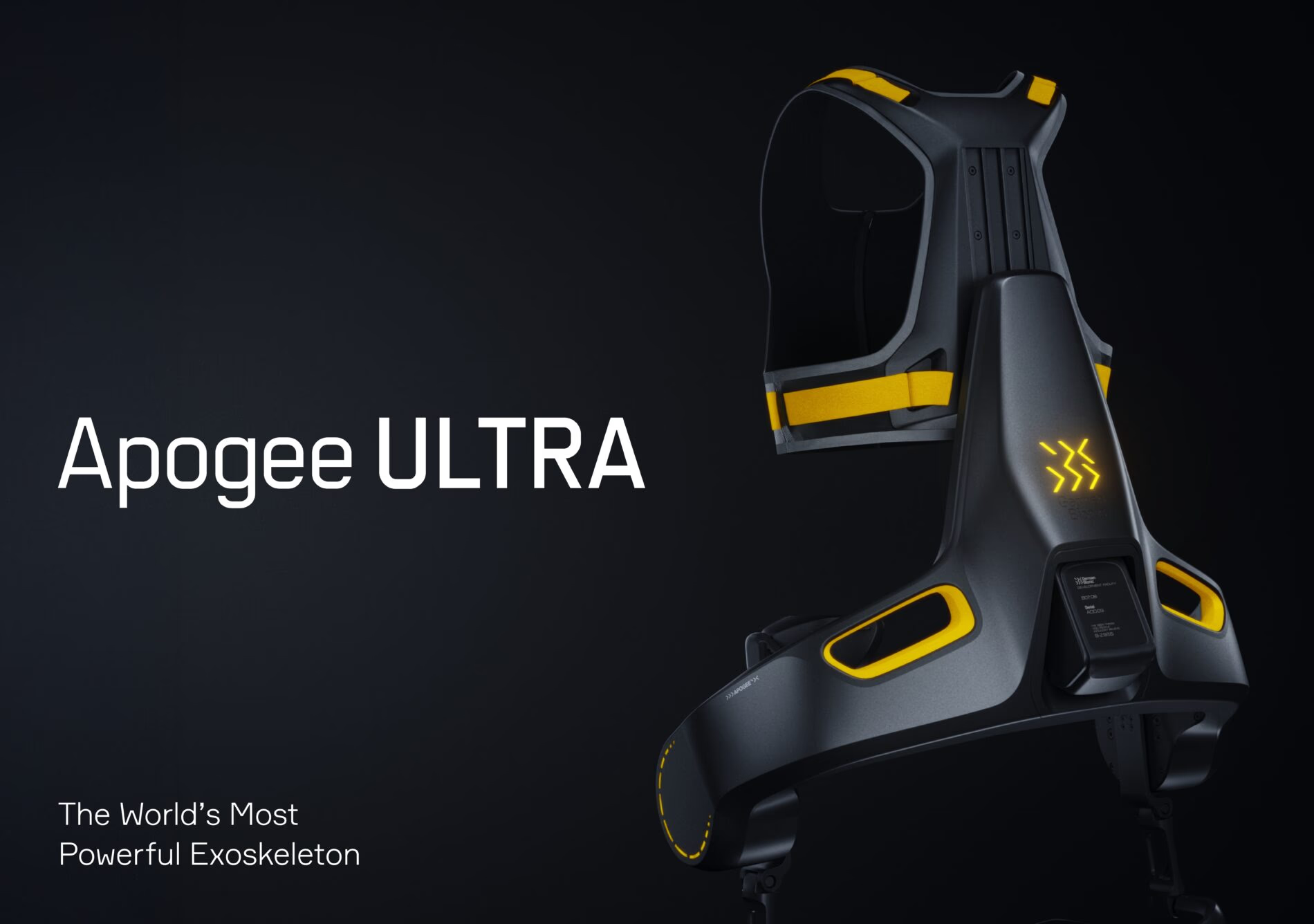
One of the most widely known applications of bionic technology is the development of robotic exoskeletons. These wearable devices are designed to support and enhance the body’s movement, allowing individuals with paralysis to walk again. Exoskeletons are equipped with sensors that detect muscle signals or brain activity, which are then translated into motor commands that control the suit’s movements. These devices provide crucial mobility for individuals with paralysis, offering not just physical benefits but also psychological improvements as users regain a sense of autonomy and independence.

Examples such as ReWalk and EksoGT are already being used in clinical settings and have shown significant promise in rehabilitation. These devices help patients regain some functional movement by stimulating the muscles, even if the spinal cord injury has severed the neural pathways.

2. Brain-Computer Interfaces (BCIs): Direct Neural Control

Another groundbreaking bionic technology for reversing paralysis involves the use of brain-computer interfaces (BCIs). These systems allow direct communication between the brain and external devices, bypassing the damaged spinal cord altogether. BCIs operate by detecting and interpreting neural activity from the brain, which can then be used to control a robotic arm, a wheelchair, or even a paralyzed limb.

Recent advances in BCIs have enabled paralyzed individuals to control robotic limbs or exoskeletons with just their thoughts. For example, Neuralink, a company co-founded by Elon Musk, is working on creating brain implants that allow users to control devices and even communicate directly through their neural signals. While this technology is still in the experimental phase, its potential for restoring independence to individuals with paralysis is enormous.

3. Functional Electrical Stimulation (FES): Reawakening Muscles

Another technique that shows promise in reversing paralysis is functional electrical stimulation (FES). FES involves using electrical impulses to stimulate muscles and nerves, effectively reactivating the motor functions of paralyzed muscles. When paired with robotics, FES can enable individuals to move their limbs in ways that would otherwise be impossible due to spinal cord injuries.

FES can be used to restore functions like handgrip, walking, and standing, improving the quality of life for those with spinal cord injuries. Moreover, FES has been combined with neural interfaces to create hybrid systems that provide even greater control over paralyzed muscles. This method has seen considerable success in clinical trials and is considered one of the most effective non-invasive treatments for spinal cord injuries.

4. Neural Regeneration: The Ultimate Goal

In the long run, the most effective treatment for paralysis may involve regenerating the damaged neurons within the spinal cord. Though nerve cells do not naturally regenerate in humans, advances in stem cell therapy and gene editing offer hope for the future. By transplanting stem cells into the spinal cord or modifying the genetic code of existing cells, researchers aim to create conditions for nerve regeneration.

While this approach is still in its infancy, the combination of bionics and neural regeneration could pave the way for the full reversal of paralysis. For example, stem cell transplants and gene therapies are being investigated to repair damaged spinal cord tissue and stimulate the regrowth of neurons. In the future, we may see a convergence of bionic devices with biological regeneration therapies, offering patients the best of both worlds.


New Hope for Spinal Cord Injury: Innovative Therapies on the Horizon

Success Stories and Clinical Applications

Several real-world cases highlight the promise of bionics in reversing paralysis. A landmark achievement was the case of Jaimie Wilson, a paralyzed patient who, after receiving a brain implant, was able to control a robotic arm using only his thoughts. Wilson’s ability to grasp and move objects, a task once thought impossible, demonstrated the potential for BCIs to restore functionality in individuals with severe spinal cord injuries.

Additionally, patients using exoskeletons like EksoGT have shown significant improvements in mobility and quality of life. These devices, now available in clinical settings and rehabilitation centers, allow users to walk again after spinal cord injuries. While exoskeletons are not a cure for paralysis, they offer a significant leap forward in enhancing patient mobility and independence.

Another promising development comes from the field of FES, where patients with spinal cord injuries are regaining basic motor functions. The integration of FES with exoskeletons has allowed individuals to stand and even walk, providing a sense of agency and freedom that was once unimaginable.


The Future of Bionics in Treating Paralysis

As the field of bionics continues to evolve, several factors will determine its success in treating paralysis:

  1. Advances in AI and Robotics: The development of more intelligent, adaptive bionic systems will enhance their effectiveness. AI-driven algorithms can help tailor rehabilitation strategies and improve the precision of movement, creating more natural and intuitive interactions between users and bionic devices.
  2. Cost and Accessibility: Currently, many bionic technologies remain prohibitively expensive, limiting access for many people who could benefit from them. As manufacturing processes improve and demand increases, prices may drop, making bionic solutions more widely available.
  3. Integration with Neuroscience: Ongoing research into neural pathways, neuroplasticity, and brain-computer interfaces will refine our understanding of how to best interface bionics with the human nervous system. The more we understand how the brain communicates with the body, the more effectively we can design devices that mimic natural movement.
  4. Regulatory and Ethical Considerations: As with any new technology, ethical and regulatory challenges will arise. Issues related to privacy, data security, and the long-term effects of implantable devices must be carefully addressed to ensure that bionics can be used safely and responsibly.

Conclusion

Bionics holds immense potential for revolutionizing the treatment of paralysis. While the full reversal of paralysis may remain elusive for now, technologies such as exoskeletons, brain-computer interfaces, and functional electrical stimulation are providing unprecedented opportunities for individuals to regain independence and improve their quality of life.

The convergence of cutting-edge robotics, neuroengineering, and regenerative medicine could one day lead to the restoration of lost motor functions and a cure for paralysis. Until then, bionics will continue to evolve, offering hope to millions of individuals living with the challenges of paralysis.


Tags: BioengineeringDisabilityHealthcareProsthetics
ShareTweetShare

Related Posts

Bionics: The Key to Human Immortality?
Bionics

Bionics: The Key to Human Immortality?

December 2, 2025
Bionic Organs: Can They Save Lives or Create New Ethical Dilemmas?
Bionics

Bionic Organs: Can They Save Lives or Create New Ethical Dilemmas?

December 1, 2025
The Future of Prosthetics: Is It Fully Bionic?
Bionics

The Future of Prosthetics: Is It Fully Bionic?

November 30, 2025
What Happens When Bionics Merge with Artificial Intelligence?
Bionics

What Happens When Bionics Merge with Artificial Intelligence?

November 29, 2025
Bionic Enhancements: Could They Improve Our Cognitive Abilities?
Bionics

Bionic Enhancements: Could They Improve Our Cognitive Abilities?

November 28, 2025
How Far Can Bionic Eyes Take Us Beyond Human Vision?
Bionics

How Far Can Bionic Eyes Take Us Beyond Human Vision?

November 27, 2025
Leave Comment
  • Trending
  • Comments
  • Latest
Can Sustainability Drive Profits in Competitive Markets?

Can Sustainability Drive Profits in Competitive Markets?

October 17, 2025
Can the Spotlight Make or Break Your Career?

Can the Spotlight Make or Break Your Career?

October 14, 2025
Does the Spotlight Always Equal Success?

Does the Spotlight Always Equal Success?

October 16, 2025
Can the Spotlight Truly Capture the Essence of a Person?

Can the Spotlight Truly Capture the Essence of a Person?

October 16, 2025
Can Bionics Redefine Human Limitations?

Can Bionics Redefine Human Limitations?

Is Bionics the Future of Prosthetics?

Is Bionics the Future of Prosthetics?

Can We Truly Integrate Technology with Biology?

Can We Truly Integrate Technology with Biology?

How Close Are We to Creating Bionic Organs?

How Close Are We to Creating Bionic Organs?

How Can Spotlights Elevate Your Interior Design Game?

How Can Spotlights Elevate Your Interior Design Game?

December 2, 2025
Will We Ever Live on Mars? And Should We?

Will We Ever Live on Mars? And Should We?

December 2, 2025
Bionics: The Key to Human Immortality?

Bionics: The Key to Human Immortality?

December 2, 2025
How Can Data Privacy be Maintained in a Hyperconnected World?

How Can Data Privacy be Maintained in a Hyperconnected World?

December 2, 2025
CyberGait

Our content caters to engineers, researchers, and tech enthusiasts alike. Through focused articles on algorithms, biomimicry, and industry trends, we provide a comprehensive perspective on the future of movement, from laboratory breakthroughs to commercial products.

© 2025 cybergait.com. contacts:[email protected]

No Result
View All Result
  • Home
  • Bionics
  • Breakthroughs
  • Industry
  • Robotics
  • Spotlight

© 2025 cybergait.com. contacts:[email protected]

Welcome Back!

Login to your account below

Forgotten Password?

Retrieve your password

Please enter your username or email address to reset your password.

Log In