















CyberGait
  • Home
  • Bionics
    Bionics: The Key to Human Immortality?

    Bionics: The Key to Human Immortality?

    Bionic Organs: Can They Save Lives or Create New Ethical Dilemmas?

    Bionic Organs: Can They Save Lives or Create New Ethical Dilemmas?

    The Future of Prosthetics: Is It Fully Bionic?

    The Future of Prosthetics: Is It Fully Bionic?

    What Happens When Bionics Merge with Artificial Intelligence?

    What Happens When Bionics Merge with Artificial Intelligence?

    Bionic Enhancements: Could They Improve Our Cognitive Abilities?

    Bionic Enhancements: Could They Improve Our Cognitive Abilities?

    How Far Can Bionic Eyes Take Us Beyond Human Vision?

    How Far Can Bionic Eyes Take Us Beyond Human Vision?

  • Breakthroughs
    Will We Ever Live on Mars? And Should We?

    Will We Ever Live on Mars? And Should We?

    Are We on the Brink of a Green Energy Revolution?

    Are We on the Brink of a Green Energy Revolution?

    Can Mind-Controlled Technology Revolutionize Communication?

    Can Mind-Controlled Technology Revolutionize Communication?

    What If We Could 3D Print Human Organs?

    What If We Could 3D Print Human Organs?

    Can Autonomous Vehicles Surpass Human Drivers in Safety?

    Can Autonomous Vehicles Surpass Human Drivers in Safety?

    Genomic Editing the Key to Immortality?

    Genomic Editing the Key to Immortality?

  • Industry
    How Can Data Privacy be Maintained in a Hyperconnected World?

    How Can Data Privacy be Maintained in a Hyperconnected World?

    Is the Gig Economy the Future of Employment?

    Is the Gig Economy the Future of Employment?

    Can Startups Compete with Corporate Giants in Innovation?

    Can Startups Compete with Corporate Giants in Innovation?

    The Future of Work: Truly Remote or Hybrid?

    The Future of Work: Truly Remote or Hybrid?

    How Does Blockchain Impact Global Supply Chains?

    How Does Blockchain Impact Global Supply Chains?

    Are We Overestimating the Power of Automation?

    Are We Overestimating the Power of Automation?

  • Robotics
    Can Robots Adapt to Unpredictable Real-World Environments?

    Can Robots Adapt to Unpredictable Real-World Environments?

    Will Robots Achieve True Autonomy or Always Need Human Oversight?

    Will Robots Achieve True Autonomy or Always Need Human Oversight?

    What Happens When Robots Start Designing Robots?

    What Happens When Robots Start Designing Robots?

    Are We Ready for Robots to Shape Our Creative Industries?

    Are We Ready for Robots to Shape Our Creative Industries?

    Could Robots One Day Replace Human Emotions in Caregiving?

    Could Robots One Day Replace Human Emotions in Caregiving?

    How Do We Ensure Robot Ethics in Autonomous Machines?

    How Do We Ensure Robot Ethics in Autonomous Machines?

  • Spotlight
    How Can Spotlights Elevate Your Interior Design Game?

    How Can Spotlights Elevate Your Interior Design Game?

    What Happens When You Use a Spotlight for Intimate Portraits?

    What Happens When You Use a Spotlight for Intimate Portraits?

    Why Do Spotlight Effects Matter in Cinematic Storytelling?

    Why Do Spotlight Effects Matter in Cinematic Storytelling?

    Could Spotlighting Be the Key to Perfect Product Photography?

    Could Spotlighting Be the Key to Perfect Product Photography?

    Spotlight Technology Changing the Future of Stage Design

    Spotlight Technology Changing the Future of Stage Design

    How Do Different Spotlights Affect Mood and Atmosphere?

    How Do Different Spotlights Affect Mood and Atmosphere?

CyberGait
  • Home
  • Bionics
    Bionics: The Key to Human Immortality?

    Bionics: The Key to Human Immortality?

    Bionic Organs: Can They Save Lives or Create New Ethical Dilemmas?

    Bionic Organs: Can They Save Lives or Create New Ethical Dilemmas?

    The Future of Prosthetics: Is It Fully Bionic?

    The Future of Prosthetics: Is It Fully Bionic?

    What Happens When Bionics Merge with Artificial Intelligence?

    What Happens When Bionics Merge with Artificial Intelligence?

    Bionic Enhancements: Could They Improve Our Cognitive Abilities?

    Bionic Enhancements: Could They Improve Our Cognitive Abilities?

    How Far Can Bionic Eyes Take Us Beyond Human Vision?

    How Far Can Bionic Eyes Take Us Beyond Human Vision?

  • Breakthroughs
    Will We Ever Live on Mars? And Should We?

    Will We Ever Live on Mars? And Should We?

    Are We on the Brink of a Green Energy Revolution?

    Are We on the Brink of a Green Energy Revolution?

    Can Mind-Controlled Technology Revolutionize Communication?

    Can Mind-Controlled Technology Revolutionize Communication?

    What If We Could 3D Print Human Organs?

    What If We Could 3D Print Human Organs?

    Can Autonomous Vehicles Surpass Human Drivers in Safety?

    Can Autonomous Vehicles Surpass Human Drivers in Safety?

    Genomic Editing the Key to Immortality?

    Genomic Editing the Key to Immortality?

  • Industry
    How Can Data Privacy be Maintained in a Hyperconnected World?

    How Can Data Privacy be Maintained in a Hyperconnected World?

    Is the Gig Economy the Future of Employment?

    Is the Gig Economy the Future of Employment?

    Can Startups Compete with Corporate Giants in Innovation?

    Can Startups Compete with Corporate Giants in Innovation?

    The Future of Work: Truly Remote or Hybrid?

    The Future of Work: Truly Remote or Hybrid?

    How Does Blockchain Impact Global Supply Chains?

    How Does Blockchain Impact Global Supply Chains?

    Are We Overestimating the Power of Automation?

    Are We Overestimating the Power of Automation?

  • Robotics
    Can Robots Adapt to Unpredictable Real-World Environments?

    Can Robots Adapt to Unpredictable Real-World Environments?

    Will Robots Achieve True Autonomy or Always Need Human Oversight?

    Will Robots Achieve True Autonomy or Always Need Human Oversight?

    What Happens When Robots Start Designing Robots?

    What Happens When Robots Start Designing Robots?

    Are We Ready for Robots to Shape Our Creative Industries?

    Are We Ready for Robots to Shape Our Creative Industries?

    Could Robots One Day Replace Human Emotions in Caregiving?

    Could Robots One Day Replace Human Emotions in Caregiving?

    How Do We Ensure Robot Ethics in Autonomous Machines?

    How Do We Ensure Robot Ethics in Autonomous Machines?

  • Spotlight
    How Can Spotlights Elevate Your Interior Design Game?

    How Can Spotlights Elevate Your Interior Design Game?

    What Happens When You Use a Spotlight for Intimate Portraits?

    What Happens When You Use a Spotlight for Intimate Portraits?

    Why Do Spotlight Effects Matter in Cinematic Storytelling?

    Why Do Spotlight Effects Matter in Cinematic Storytelling?

    Could Spotlighting Be the Key to Perfect Product Photography?

    Could Spotlighting Be the Key to Perfect Product Photography?

    Spotlight Technology Changing the Future of Stage Design

    Spotlight Technology Changing the Future of Stage Design

    How Do Different Spotlights Affect Mood and Atmosphere?

    How Do Different Spotlights Affect Mood and Atmosphere?

CyberGait
No Result
View All Result
Home Industry

Are We Overestimating the Power of Automation?

November 27, 2025
in Industry
Are We Overestimating the Power of Automation?

In today’s world, automation is often touted as the key to the future—ushering in a new era of productivity, efficiency, and limitless possibility. From self-driving cars to AI-driven customer service, we are constantly surrounded by promises of a revolution led by machines. But is automation really the miracle solution that it’s cracked up to be? Are we overestimating its potential to reshape industries and our daily lives? The truth might be more nuanced than the hyperbole suggests.

In this article, we’ll explore the various facets of automation, examining its strengths, limitations, and the potential pitfalls of assuming it can solve all our problems. Whether you are a technophile, a skeptic, or somewhere in between, this discussion will offer a balanced perspective on one of the most talked-about phenomena of our time.

The Allure of Automation

Automation promises a future where machines handle the repetitive, mundane tasks that humans have long struggled with. Its allure is clear—no more menial labor, faster production cycles, and perhaps most enticing, fewer human errors. At its core, automation promises efficiency, freeing up human workers to focus on creative, complex, or high-level decision-making tasks. It’s easy to see why so many are enthusiastic about it.

The Progress So Far

From factory floors to offices, automation is already making waves. Consider the role of robotic arms in assembly lines, for example. These machines have long replaced human workers for repetitive tasks like welding, painting, or assembling products with high precision. In the retail sector, self-checkout systems are now commonplace, reducing the need for cashiers. Even more advanced applications, such as AI in data analysis, machine learning in healthcare diagnostics, and automation in supply chains, are redefining what we can expect from our industries.

The results are indeed impressive. Productivity is rising, costs are falling, and industries are becoming more streamlined. For businesses, automation can be a game-changer, offering the ability to operate at scale while minimizing human error. For workers, it promises the chance to engage in more fulfilling and intellectually stimulating roles, moving away from tasks that are seen as tedious and physically demanding.

But is this the full picture?

The Limits of Automation

Despite the excitement, there are significant limitations to automation, both in terms of technology and societal impact. While robots can be programmed to perform repetitive tasks with incredible precision, they still lack the ability to handle unstructured problems or adapt to changing environments in the way humans can. This is why we still need people in many industries, even as machines take over certain tasks.

Complexity of Human Interaction
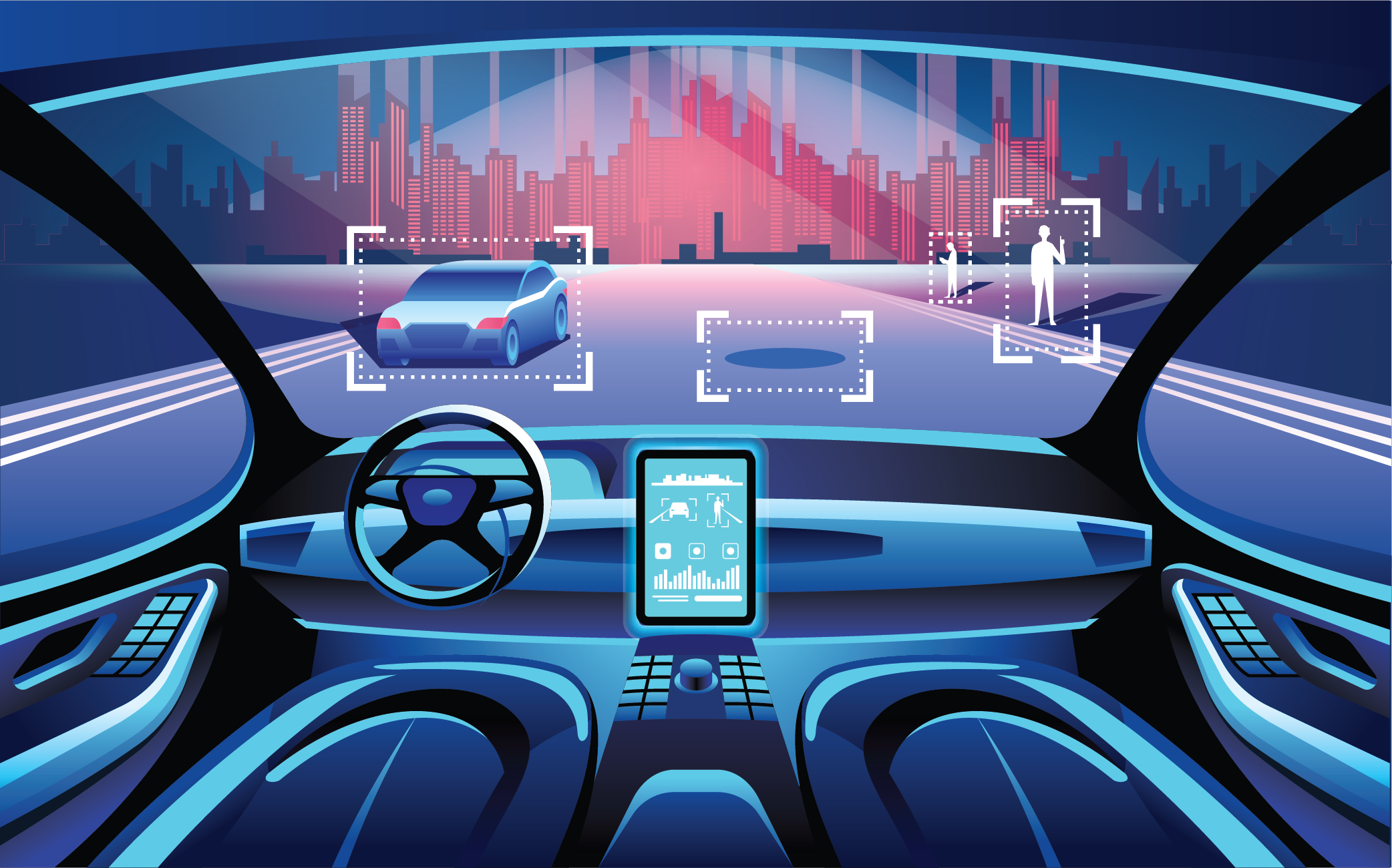
Are Self-Driving Cars Safe? | Dakota Digital Review

One of the primary challenges automation faces is dealing with the complexity of human interaction. Take customer service as an example. While AI-powered chatbots can handle basic inquiries with efficiency, they still struggle when confronted with more complicated or nuanced problems. Humans are needed to provide empathy, creativity, and personalized solutions—qualities that machines, at least for now, simply cannot replicate.

Even in industries like healthcare, where AI holds great promise, automation can only go so far. Algorithms can analyze medical data and help doctors make diagnoses, but they lack the intuition and bedside manner that human practitioners bring to patient care. Machines cannot replace the relationship-building aspects of caregiving, which are often just as critical to patient outcomes as medical procedures themselves.

Limitations in Flexibility

Another significant challenge to automation is its lack of flexibility. Machines excel when performing tasks that are repetitive and predictable. However, when situations deviate from the norm, automation struggles. For instance, self-driving cars have made impressive strides in controlled environments, but in real-world traffic scenarios—where the unexpected is the norm—these systems still fall short. In an unpredictable world, the adaptability of human judgment remains essential.

Moreover, there are many tasks in industries like construction, farming, and the arts that require a level of creativity and adaptability that automation cannot replicate. These sectors may benefit from automation in terms of tools or assistive devices, but they still require human insight, ingenuity, and expertise to succeed.

The Economic and Social Impact of Automation

Beyond the technological limits, we must consider the broader economic and social implications of automation. While automation can increase productivity and profits for businesses, it also raises concerns about job displacement and economic inequality.

Job Displacement: The Elephant in the Room

One of the most pressing concerns about automation is its potential to displace large numbers of workers. A McKinsey Global Institute report estimated that up to 800 million jobs could be lost globally by 2030 due to automation. While this shift could lead to the creation of new types of jobs, there is no guarantee that these new roles will be as accessible or as well-paying as those they replace.

Workers in low-skilled, repetitive jobs are particularly vulnerable. Industries like manufacturing, retail, and logistics are already seeing significant changes as robots and AI take over tasks that were once performed by people. The question remains: if a significant portion of the workforce is displaced by machines, what will become of the workers who are left behind?
AI in Healthcare: Uses, Examples & Benefits | Built In

The Rise of the ‘Creative Class’

On the flip side, automation proponents argue that it will lead to the rise of the “creative class”—workers who can engage in high-level, creative, and intellectually demanding work. In theory, as machines take over mundane tasks, people will have the opportunity to focus on more stimulating roles that require human intuition, problem-solving, and emotional intelligence.

However, this shift requires significant investment in education and training. The skills needed for the new economy are different from those required in previous generations, and there’s a risk that the workforce will be left behind unless there’s a concerted effort to reskill and upskill workers.

Economic Inequality

Automation also exacerbates economic inequality. Large companies that can afford the latest robotic technologies stand to gain the most, while smaller businesses or workers in low-wage sectors may be left behind. The uneven distribution of automation’s benefits could further concentrate wealth and power in the hands of a few, potentially leading to greater economic disparity.

Moreover, automation tends to favor jobs that require high levels of education and expertise—leaving those with fewer skills or lower levels of education at a disadvantage. The result is a two-tier workforce: one segment of workers who benefit from the automation boom, and another that faces increasing job insecurity and lower wages.

The Human Element: Will We Adapt?

Despite the many concerns surrounding automation, it’s important to remember that humans have a long history of adapting to new technologies. The Industrial Revolution brought about massive job displacement, yet it also paved the way for the creation of entirely new industries. The key question is not whether automation will displace workers, but how society will adapt to these changes.

The Need for Education and Retraining

To successfully navigate the age of automation, the workforce must be equipped with new skills. This means a greater focus on STEM education, as well as the development of soft skills like creativity, emotional intelligence, and critical thinking. Retraining programs will also be crucial in ensuring that workers whose jobs are automated can transition to new roles that require different skill sets.

The Role of Government and Policy

Governments have a critical role to play in ensuring that the benefits of automation are shared widely. This includes investing in education, providing safety nets for displaced workers, and implementing policies that support economic mobility. The goal should be to create an environment where automation complements human workers, rather than replacing them.

Conclusion: Automation as a Tool, Not a Savior

In the end, automation is not a panacea. While it holds the potential to drive significant advances in productivity, it also comes with its own set of challenges and limitations. The idea that automation can solve all of our problems—eliminating jobs, improving efficiency, and creating a utopian future—is overly simplistic. The real challenge lies in balancing the benefits of automation with the need for human input, adaptability, and empathy.

Automation is a tool, not a savior. It can augment human capabilities, enhance productivity, and create new opportunities, but it cannot replace the ingenuity, creativity, and complexity that make us human. The future of work will not be one where machines replace people, but rather one where humans and machines work together to tackle the challenges of tomorrow.

Tags: AutomationFuture of WorkLabor CrisisRobot Intelligence
ShareTweetShare

Related Posts

How Can Data Privacy be Maintained in a Hyperconnected World?
Industry

How Can Data Privacy be Maintained in a Hyperconnected World?

December 2, 2025
Is the Gig Economy the Future of Employment?
Industry

Is the Gig Economy the Future of Employment?

December 1, 2025
Can Startups Compete with Corporate Giants in Innovation?
Industry

Can Startups Compete with Corporate Giants in Innovation?

November 30, 2025
The Future of Work: Truly Remote or Hybrid?
Industry

The Future of Work: Truly Remote or Hybrid?

November 29, 2025
How Does Blockchain Impact Global Supply Chains?
Industry

How Does Blockchain Impact Global Supply Chains?

November 28, 2025
Is Sustainability in Manufacturing Really Achievable?
Industry

Is Sustainability in Manufacturing Really Achievable?

November 26, 2025
Leave Comment
  • Trending
  • Comments
  • Latest
Can Sustainability Drive Profits in Competitive Markets?

Can Sustainability Drive Profits in Competitive Markets?

October 17, 2025
Can the Spotlight Make or Break Your Career?

Can the Spotlight Make or Break Your Career?

October 14, 2025
Does the Spotlight Always Equal Success?

Does the Spotlight Always Equal Success?

October 16, 2025
Can the Spotlight Truly Capture the Essence of a Person?

Can the Spotlight Truly Capture the Essence of a Person?

October 16, 2025
Can Bionics Redefine Human Limitations?

Can Bionics Redefine Human Limitations?

Is Bionics the Future of Prosthetics?

Is Bionics the Future of Prosthetics?

Can We Truly Integrate Technology with Biology?

Can We Truly Integrate Technology with Biology?

How Close Are We to Creating Bionic Organs?

How Close Are We to Creating Bionic Organs?

How Can Spotlights Elevate Your Interior Design Game?

How Can Spotlights Elevate Your Interior Design Game?

December 2, 2025
Will We Ever Live on Mars? And Should We?

Will We Ever Live on Mars? And Should We?

December 2, 2025
Bionics: The Key to Human Immortality?

Bionics: The Key to Human Immortality?

December 2, 2025
How Can Data Privacy be Maintained in a Hyperconnected World?

How Can Data Privacy be Maintained in a Hyperconnected World?

December 2, 2025
CyberGait

Our content caters to engineers, researchers, and tech enthusiasts alike. Through focused articles on algorithms, biomimicry, and industry trends, we provide a comprehensive perspective on the future of movement, from laboratory breakthroughs to commercial products.

© 2025 cybergait.com. contacts:[email protected]

No Result
View All Result
  • Home
  • Bionics
  • Breakthroughs
  • Industry
  • Robotics
  • Spotlight

© 2025 cybergait.com. contacts:[email protected]

Welcome Back!

Login to your account below

Forgotten Password?

Retrieve your password

Please enter your username or email address to reset your password.

Log In