















CyberGait
  • Home
  • Bionics
    Bionics: The Key to Human Immortality?

    Bionics: The Key to Human Immortality?

    Bionic Organs: Can They Save Lives or Create New Ethical Dilemmas?

    Bionic Organs: Can They Save Lives or Create New Ethical Dilemmas?

    The Future of Prosthetics: Is It Fully Bionic?

    The Future of Prosthetics: Is It Fully Bionic?

    What Happens When Bionics Merge with Artificial Intelligence?

    What Happens When Bionics Merge with Artificial Intelligence?

    Bionic Enhancements: Could They Improve Our Cognitive Abilities?

    Bionic Enhancements: Could They Improve Our Cognitive Abilities?

    How Far Can Bionic Eyes Take Us Beyond Human Vision?

    How Far Can Bionic Eyes Take Us Beyond Human Vision?

  • Breakthroughs
    Will We Ever Live on Mars? And Should We?

    Will We Ever Live on Mars? And Should We?

    Are We on the Brink of a Green Energy Revolution?

    Are We on the Brink of a Green Energy Revolution?

    Can Mind-Controlled Technology Revolutionize Communication?

    Can Mind-Controlled Technology Revolutionize Communication?

    What If We Could 3D Print Human Organs?

    What If We Could 3D Print Human Organs?

    Can Autonomous Vehicles Surpass Human Drivers in Safety?

    Can Autonomous Vehicles Surpass Human Drivers in Safety?

    Genomic Editing the Key to Immortality?

    Genomic Editing the Key to Immortality?

  • Industry
    How Can Data Privacy be Maintained in a Hyperconnected World?

    How Can Data Privacy be Maintained in a Hyperconnected World?

    Is the Gig Economy the Future of Employment?

    Is the Gig Economy the Future of Employment?

    Can Startups Compete with Corporate Giants in Innovation?

    Can Startups Compete with Corporate Giants in Innovation?

    The Future of Work: Truly Remote or Hybrid?

    The Future of Work: Truly Remote or Hybrid?

    How Does Blockchain Impact Global Supply Chains?

    How Does Blockchain Impact Global Supply Chains?

    Are We Overestimating the Power of Automation?

    Are We Overestimating the Power of Automation?

  • Robotics
    Can Robots Adapt to Unpredictable Real-World Environments?

    Can Robots Adapt to Unpredictable Real-World Environments?

    Will Robots Achieve True Autonomy or Always Need Human Oversight?

    Will Robots Achieve True Autonomy or Always Need Human Oversight?

    What Happens When Robots Start Designing Robots?

    What Happens When Robots Start Designing Robots?

    Are We Ready for Robots to Shape Our Creative Industries?

    Are We Ready for Robots to Shape Our Creative Industries?

    Could Robots One Day Replace Human Emotions in Caregiving?

    Could Robots One Day Replace Human Emotions in Caregiving?

    How Do We Ensure Robot Ethics in Autonomous Machines?

    How Do We Ensure Robot Ethics in Autonomous Machines?

  • Spotlight
    How Can Spotlights Elevate Your Interior Design Game?

    How Can Spotlights Elevate Your Interior Design Game?

    What Happens When You Use a Spotlight for Intimate Portraits?

    What Happens When You Use a Spotlight for Intimate Portraits?

    Why Do Spotlight Effects Matter in Cinematic Storytelling?

    Why Do Spotlight Effects Matter in Cinematic Storytelling?

    Could Spotlighting Be the Key to Perfect Product Photography?

    Could Spotlighting Be the Key to Perfect Product Photography?

    Spotlight Technology Changing the Future of Stage Design

    Spotlight Technology Changing the Future of Stage Design

    How Do Different Spotlights Affect Mood and Atmosphere?

    How Do Different Spotlights Affect Mood and Atmosphere?

CyberGait
  • Home
  • Bionics
    Bionics: The Key to Human Immortality?

    Bionics: The Key to Human Immortality?

    Bionic Organs: Can They Save Lives or Create New Ethical Dilemmas?

    Bionic Organs: Can They Save Lives or Create New Ethical Dilemmas?

    The Future of Prosthetics: Is It Fully Bionic?

    The Future of Prosthetics: Is It Fully Bionic?

    What Happens When Bionics Merge with Artificial Intelligence?

    What Happens When Bionics Merge with Artificial Intelligence?

    Bionic Enhancements: Could They Improve Our Cognitive Abilities?

    Bionic Enhancements: Could They Improve Our Cognitive Abilities?

    How Far Can Bionic Eyes Take Us Beyond Human Vision?

    How Far Can Bionic Eyes Take Us Beyond Human Vision?

  • Breakthroughs
    Will We Ever Live on Mars? And Should We?

    Will We Ever Live on Mars? And Should We?

    Are We on the Brink of a Green Energy Revolution?

    Are We on the Brink of a Green Energy Revolution?

    Can Mind-Controlled Technology Revolutionize Communication?

    Can Mind-Controlled Technology Revolutionize Communication?

    What If We Could 3D Print Human Organs?

    What If We Could 3D Print Human Organs?

    Can Autonomous Vehicles Surpass Human Drivers in Safety?

    Can Autonomous Vehicles Surpass Human Drivers in Safety?

    Genomic Editing the Key to Immortality?

    Genomic Editing the Key to Immortality?

  • Industry
    How Can Data Privacy be Maintained in a Hyperconnected World?

    How Can Data Privacy be Maintained in a Hyperconnected World?

    Is the Gig Economy the Future of Employment?

    Is the Gig Economy the Future of Employment?

    Can Startups Compete with Corporate Giants in Innovation?

    Can Startups Compete with Corporate Giants in Innovation?

    The Future of Work: Truly Remote or Hybrid?

    The Future of Work: Truly Remote or Hybrid?

    How Does Blockchain Impact Global Supply Chains?

    How Does Blockchain Impact Global Supply Chains?

    Are We Overestimating the Power of Automation?

    Are We Overestimating the Power of Automation?

  • Robotics
    Can Robots Adapt to Unpredictable Real-World Environments?

    Can Robots Adapt to Unpredictable Real-World Environments?

    Will Robots Achieve True Autonomy or Always Need Human Oversight?

    Will Robots Achieve True Autonomy or Always Need Human Oversight?

    What Happens When Robots Start Designing Robots?

    What Happens When Robots Start Designing Robots?

    Are We Ready for Robots to Shape Our Creative Industries?

    Are We Ready for Robots to Shape Our Creative Industries?

    Could Robots One Day Replace Human Emotions in Caregiving?

    Could Robots One Day Replace Human Emotions in Caregiving?

    How Do We Ensure Robot Ethics in Autonomous Machines?

    How Do We Ensure Robot Ethics in Autonomous Machines?

  • Spotlight
    How Can Spotlights Elevate Your Interior Design Game?

    How Can Spotlights Elevate Your Interior Design Game?

    What Happens When You Use a Spotlight for Intimate Portraits?

    What Happens When You Use a Spotlight for Intimate Portraits?

    Why Do Spotlight Effects Matter in Cinematic Storytelling?

    Why Do Spotlight Effects Matter in Cinematic Storytelling?

    Could Spotlighting Be the Key to Perfect Product Photography?

    Could Spotlighting Be the Key to Perfect Product Photography?

    Spotlight Technology Changing the Future of Stage Design

    Spotlight Technology Changing the Future of Stage Design

    How Do Different Spotlights Affect Mood and Atmosphere?

    How Do Different Spotlights Affect Mood and Atmosphere?

CyberGait
No Result
View All Result
Home Bionics

Can Bionics Redefine Human Limitations?

October 14, 2025
in Bionics
Can Bionics Redefine Human Limitations?

In the last few decades, the confluence of biology, technology, and engineering has brought us to the precipice of redefining human potential. From prosthetic limbs to neural interfaces, bionics—biological augmentation with technological enhancement—promises to challenge the very nature of what it means to be human. The integration of these technologies offers not only an expansion of physical capabilities but a deep transformation in the way we perceive disability, endurance, and even human identity.

At its core, bionics is a field dedicated to improving human abilities through the use of advanced technology that mimics or augments biological functions. This revolutionary approach spans various domains, from robotics and prosthetics to brain-machine interfaces, holding the potential to alter our understanding of human limitations forever.

The Evolution of Bionics

From Prosthetics to Superhuman Capabilities

The roots of bionics are firmly planted in the development of prosthetics. Early prosthetic devices were rudimentary—often nothing more than crude wooden or metal substitutes for lost limbs. However, as materials science advanced, so too did the design of these devices. Today, prosthetics have evolved into sophisticated, highly functional replacements, capable of restoring not only the appearance of a missing limb but also its functionality.

A remarkable leap in this journey was the development of myoelectric prosthetics, which use electrical signals from the muscles to control artificial limbs. These devices can allow for complex movements like grasping, turning, and lifting, providing users with a new level of autonomy and independence. But this is just the beginning.

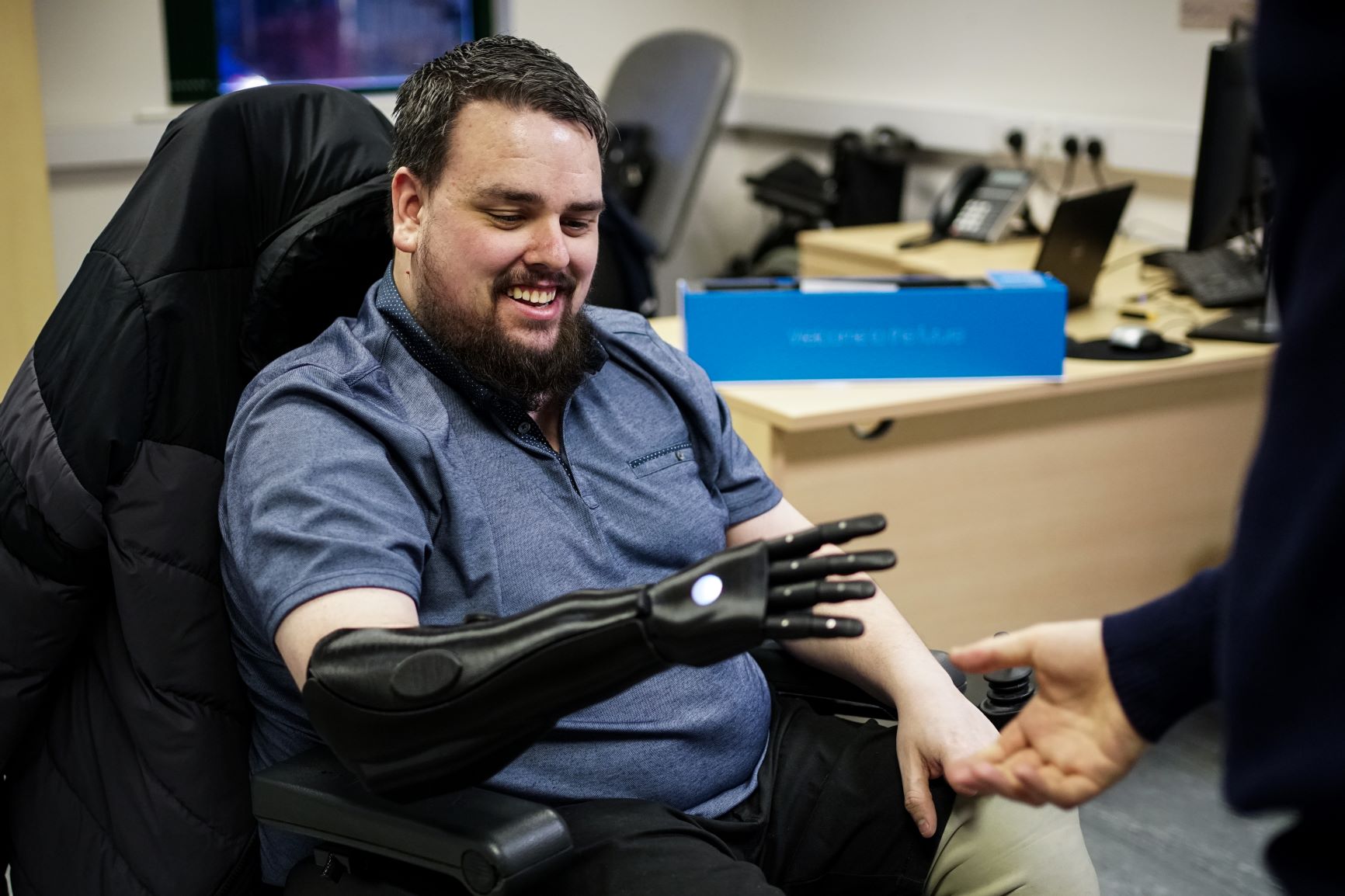
In recent years, the field has shifted from simple functional replacements to prosthetics that enhance human capabilities. The development of bionic limbs with advanced sensors and actuators, such as the “bebionic” hand, has made it possible to mimic the natural range of motion of a human hand. These prosthetics use motors and sensors to replicate the nuanced motions of a human hand—grasping a delicate object, performing intricate tasks, or even typing on a keyboard.

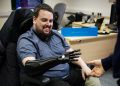
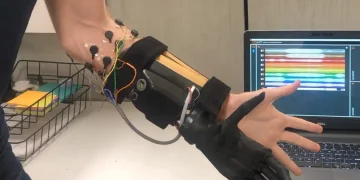
Researcher from WUT in a team developing a bionic hand prosthesis / News /  Home - Warsaw University of Technology

Neural Interfaces and Brain-Machine Connectivity

One of the most exciting areas of bionics is the realm of brain-machine interfaces (BMIs). BMIs allow for direct communication between the brain and external devices, creating the potential for restoring lost sensory or motor function, as well as augmenting human abilities in unprecedented ways.

Take, for example, the development of systems that allow paralyzed individuals to control robotic limbs or even their own prosthetic limbs through thought alone. These systems work by decoding the electrical signals produced by the brain when an individual intends to move a part of their body, then translating these signals into commands for a machine. Research in this area, spearheaded by companies like Neuralink and DARPA, is already making strides, with trials showing promising results in people regaining the ability to control prosthetics.

But this technology is not confined to the realm of disability. BMIs also hold the potential to enhance human cognitive and sensory capabilities. The potential to directly interface with computers or even “download” information directly into the brain could redefine the limits of human knowledge, memory, and skill acquisition. Imagine a world where you could learn a new language, play a musical instrument, or master complex subjects simply by connecting to a digital network.

Rehabilitating and Enhancing Human Function

Beyond Disability: The Promise of Augmented Abilities

The fundamental aim of bionics has traditionally been to rehabilitate people who have lost function due to injury, disease, or congenital conditions. However, this field has expanded far beyond merely compensating for disabilities. Now, bionics is becoming a tool for enhancing human capabilities, potentially allowing individuals to transcend their natural biological limitations.

One prominent example is the development of exoskeletons—wearable robotic suits designed to augment a person’s strength and mobility. These exoskeletons can help individuals with limited mobility regain the ability to walk or stand, but they also have applications for healthy individuals, particularly in professions where physical strain is common. Construction workers, soldiers, and even astronauts might benefit from exoskeletons, enhancing endurance, reducing fatigue, and preventing injury.

Beyond physical enhancement, there are discussions around using bionics to enhance cognitive function. For example, imagine augmenting the brain’s ability to focus, process information, or even interact with artificial intelligence in real time. In the future, people may not need to rely on smartphones or computers to access vast amounts of information; instead, they could have direct, seamless access to the world’s knowledge through an implanted neural interface.

Sensory Augmentation: Seeing the Unseen

Perhaps one of the most fascinating aspects of bionics is the potential to extend our sensory capabilities. In 2009, a team of researchers created a device called the “retina implant,” which helped a blind individual regain some degree of sight by stimulating the retina through electrical impulses. This is only the beginning of a broader trend in sensory augmentation. Future developments could allow individuals to not only restore lost senses, like sight or hearing, but also gain entirely new senses.

Consider, for example, the potential for bionically enhanced vision that extends into the infrared or ultraviolet spectrum, enabling us to see beyond the limits of natural human sight. Devices could allow people to perceive electromagnetic fields, or even “hear” radio waves, opening up entirely new ways of experiencing the world around us. Through bionics, humans could gain sensory abilities that were once thought to be beyond our reach.

The Ethics of Bionics: Where Do We Draw the Line?

With all these incredible possibilities, however, comes a host of ethical questions. If bionics can enhance human abilities, where do we draw the line between enhancement and modification? And more importantly, what implications do these advancements have for issues like privacy, identity, and equity?

For instance, as we begin to explore cognitive enhancement through neural implants, one must ask: Should this be available only to those who need it due to a disability, or should it be available to anyone who can afford it? If cognitive enhancements are available to all, might we see the emergence of a new class divide based on access to these technologies?

Another question involves the very nature of human identity. As bionics begin to augment our abilities in ways that seem almost “superhuman,” will we lose something essential in the process? Will we still be able to define ourselves as human if we are constantly evolving into something different, more machine than flesh?

And lastly, there is the issue of privacy. With brain-machine interfaces, there is the potential for new types of surveillance and control. If a device can read and influence the brain, what happens to an individual’s sense of autonomy and privacy?

Finger-waggling Sony CSL exoskeleton helps pianists play faster

The Future of Bionics: A New Frontier for Humanity

Bionics is not merely a futuristic concept—it’s rapidly becoming a reality. Advances in materials science, robotics, and neural engineering are pushing the boundaries of what is possible. What was once the realm of science fiction is now a dynamic field with real-world applications that are saving lives and improving human functioning.

The question, however, is not whether bionics will redefine human limitations, but how we choose to integrate these technologies into society. As we stand on the threshold of this new era, it is clear that bionics could lead to a future where human potential is no longer constrained by biology.

In this future, we may be able to heal the body, enhance the mind, and push the boundaries of human capability in ways we once thought were impossible. But this future must be approached with care, considering not only the scientific and technological advancements but the profound ethical and social questions they raise.

Conclusion: Embracing the Limitless Possibilities

Bionics holds a profound promise to redefine human limitations, transcending the physical and cognitive barriers that have historically defined us. As technology advances, so too does our ability to overcome disability, enhance our natural abilities, and even augment our senses and intellect. Yet, with these advancements come complex ethical and societal questions that must be addressed.

We are on the cusp of a new frontier, one where the line between man and machine blurs, and human potential is no longer confined by the limits of biology. The possibilities are limitless, but it will be up to us to navigate this new world thoughtfully and responsibly.


Tags: BioengineeringDisabilityHuman EnhancementRobotics
ShareTweetShare

Related Posts

Bionics: The Key to Human Immortality?
Bionics

Bionics: The Key to Human Immortality?

December 2, 2025
Bionic Organs: Can They Save Lives or Create New Ethical Dilemmas?
Bionics

Bionic Organs: Can They Save Lives or Create New Ethical Dilemmas?

December 1, 2025
The Future of Prosthetics: Is It Fully Bionic?
Bionics

The Future of Prosthetics: Is It Fully Bionic?

November 30, 2025
What Happens When Bionics Merge with Artificial Intelligence?
Bionics

What Happens When Bionics Merge with Artificial Intelligence?

November 29, 2025
Bionic Enhancements: Could They Improve Our Cognitive Abilities?
Bionics

Bionic Enhancements: Could They Improve Our Cognitive Abilities?

November 28, 2025
How Far Can Bionic Eyes Take Us Beyond Human Vision?
Bionics

How Far Can Bionic Eyes Take Us Beyond Human Vision?

November 27, 2025
Leave Comment
  • Trending
  • Comments
  • Latest
Can Sustainability Drive Profits in Competitive Markets?

Can Sustainability Drive Profits in Competitive Markets?

October 17, 2025
Can the Spotlight Make or Break Your Career?

Can the Spotlight Make or Break Your Career?

October 14, 2025
Does the Spotlight Always Equal Success?

Does the Spotlight Always Equal Success?

October 16, 2025
Can the Spotlight Truly Capture the Essence of a Person?

Can the Spotlight Truly Capture the Essence of a Person?

October 16, 2025
Can Bionics Redefine Human Limitations?

Can Bionics Redefine Human Limitations?

Is Bionics the Future of Prosthetics?

Is Bionics the Future of Prosthetics?

Can We Truly Integrate Technology with Biology?

Can We Truly Integrate Technology with Biology?

How Close Are We to Creating Bionic Organs?

How Close Are We to Creating Bionic Organs?

How Can Spotlights Elevate Your Interior Design Game?

How Can Spotlights Elevate Your Interior Design Game?

December 2, 2025
Will We Ever Live on Mars? And Should We?

Will We Ever Live on Mars? And Should We?

December 2, 2025
Bionics: The Key to Human Immortality?

Bionics: The Key to Human Immortality?

December 2, 2025
How Can Data Privacy be Maintained in a Hyperconnected World?

How Can Data Privacy be Maintained in a Hyperconnected World?

December 2, 2025
CyberGait

Our content caters to engineers, researchers, and tech enthusiasts alike. Through focused articles on algorithms, biomimicry, and industry trends, we provide a comprehensive perspective on the future of movement, from laboratory breakthroughs to commercial products.

© 2025 cybergait.com. contacts:[email protected]

No Result
View All Result
  • Home
  • Bionics
  • Breakthroughs
  • Industry
  • Robotics
  • Spotlight

© 2025 cybergait.com. contacts:[email protected]

Welcome Back!

Login to your account below

Forgotten Password?

Retrieve your password

Please enter your username or email address to reset your password.

Log In