
















CyberGait
  • Home
  • Bionics
    Bionics: The Key to Human Immortality?

    Bionics: The Key to Human Immortality?

    Bionic Organs: Can They Save Lives or Create New Ethical Dilemmas?

    Bionic Organs: Can They Save Lives or Create New Ethical Dilemmas?

    The Future of Prosthetics: Is It Fully Bionic?

    The Future of Prosthetics: Is It Fully Bionic?

    What Happens When Bionics Merge with Artificial Intelligence?

    What Happens When Bionics Merge with Artificial Intelligence?

    Bionic Enhancements: Could They Improve Our Cognitive Abilities?

    Bionic Enhancements: Could They Improve Our Cognitive Abilities?

    How Far Can Bionic Eyes Take Us Beyond Human Vision?

    How Far Can Bionic Eyes Take Us Beyond Human Vision?

  • Breakthroughs
    Will We Ever Live on Mars? And Should We?

    Will We Ever Live on Mars? And Should We?

    Are We on the Brink of a Green Energy Revolution?

    Are We on the Brink of a Green Energy Revolution?

    Can Mind-Controlled Technology Revolutionize Communication?

    Can Mind-Controlled Technology Revolutionize Communication?

    What If We Could 3D Print Human Organs?

    What If We Could 3D Print Human Organs?

    Can Autonomous Vehicles Surpass Human Drivers in Safety?

    Can Autonomous Vehicles Surpass Human Drivers in Safety?

    Genomic Editing the Key to Immortality?

    Genomic Editing the Key to Immortality?

  • Industry
    How Can Data Privacy be Maintained in a Hyperconnected World?

    How Can Data Privacy be Maintained in a Hyperconnected World?

    Is the Gig Economy the Future of Employment?

    Is the Gig Economy the Future of Employment?

    Can Startups Compete with Corporate Giants in Innovation?

    Can Startups Compete with Corporate Giants in Innovation?

    The Future of Work: Truly Remote or Hybrid?

    The Future of Work: Truly Remote or Hybrid?

    How Does Blockchain Impact Global Supply Chains?

    How Does Blockchain Impact Global Supply Chains?

    Are We Overestimating the Power of Automation?

    Are We Overestimating the Power of Automation?

  • Robotics
    Can Robots Adapt to Unpredictable Real-World Environments?

    Can Robots Adapt to Unpredictable Real-World Environments?

    Will Robots Achieve True Autonomy or Always Need Human Oversight?

    Will Robots Achieve True Autonomy or Always Need Human Oversight?

    What Happens When Robots Start Designing Robots?

    What Happens When Robots Start Designing Robots?

    Are We Ready for Robots to Shape Our Creative Industries?

    Are We Ready for Robots to Shape Our Creative Industries?

    Could Robots One Day Replace Human Emotions in Caregiving?

    Could Robots One Day Replace Human Emotions in Caregiving?

    How Do We Ensure Robot Ethics in Autonomous Machines?

    How Do We Ensure Robot Ethics in Autonomous Machines?

  • Spotlight
    How Can Spotlights Elevate Your Interior Design Game?

    How Can Spotlights Elevate Your Interior Design Game?

    What Happens When You Use a Spotlight for Intimate Portraits?

    What Happens When You Use a Spotlight for Intimate Portraits?

    Why Do Spotlight Effects Matter in Cinematic Storytelling?

    Why Do Spotlight Effects Matter in Cinematic Storytelling?

    Could Spotlighting Be the Key to Perfect Product Photography?

    Could Spotlighting Be the Key to Perfect Product Photography?

    Spotlight Technology Changing the Future of Stage Design

    Spotlight Technology Changing the Future of Stage Design

    How Do Different Spotlights Affect Mood and Atmosphere?

    How Do Different Spotlights Affect Mood and Atmosphere?

CyberGait
  • Home
  • Bionics
    Bionics: The Key to Human Immortality?

    Bionics: The Key to Human Immortality?

    Bionic Organs: Can They Save Lives or Create New Ethical Dilemmas?

    Bionic Organs: Can They Save Lives or Create New Ethical Dilemmas?

    The Future of Prosthetics: Is It Fully Bionic?

    The Future of Prosthetics: Is It Fully Bionic?

    What Happens When Bionics Merge with Artificial Intelligence?

    What Happens When Bionics Merge with Artificial Intelligence?

    Bionic Enhancements: Could They Improve Our Cognitive Abilities?

    Bionic Enhancements: Could They Improve Our Cognitive Abilities?

    How Far Can Bionic Eyes Take Us Beyond Human Vision?

    How Far Can Bionic Eyes Take Us Beyond Human Vision?

  • Breakthroughs
    Will We Ever Live on Mars? And Should We?

    Will We Ever Live on Mars? And Should We?

    Are We on the Brink of a Green Energy Revolution?

    Are We on the Brink of a Green Energy Revolution?

    Can Mind-Controlled Technology Revolutionize Communication?

    Can Mind-Controlled Technology Revolutionize Communication?

    What If We Could 3D Print Human Organs?

    What If We Could 3D Print Human Organs?

    Can Autonomous Vehicles Surpass Human Drivers in Safety?

    Can Autonomous Vehicles Surpass Human Drivers in Safety?

    Genomic Editing the Key to Immortality?

    Genomic Editing the Key to Immortality?

  • Industry
    How Can Data Privacy be Maintained in a Hyperconnected World?

    How Can Data Privacy be Maintained in a Hyperconnected World?

    Is the Gig Economy the Future of Employment?

    Is the Gig Economy the Future of Employment?

    Can Startups Compete with Corporate Giants in Innovation?

    Can Startups Compete with Corporate Giants in Innovation?

    The Future of Work: Truly Remote or Hybrid?

    The Future of Work: Truly Remote or Hybrid?

    How Does Blockchain Impact Global Supply Chains?

    How Does Blockchain Impact Global Supply Chains?

    Are We Overestimating the Power of Automation?

    Are We Overestimating the Power of Automation?

  • Robotics
    Can Robots Adapt to Unpredictable Real-World Environments?

    Can Robots Adapt to Unpredictable Real-World Environments?

    Will Robots Achieve True Autonomy or Always Need Human Oversight?

    Will Robots Achieve True Autonomy or Always Need Human Oversight?

    What Happens When Robots Start Designing Robots?

    What Happens When Robots Start Designing Robots?

    Are We Ready for Robots to Shape Our Creative Industries?

    Are We Ready for Robots to Shape Our Creative Industries?

    Could Robots One Day Replace Human Emotions in Caregiving?

    Could Robots One Day Replace Human Emotions in Caregiving?

    How Do We Ensure Robot Ethics in Autonomous Machines?

    How Do We Ensure Robot Ethics in Autonomous Machines?

  • Spotlight
    How Can Spotlights Elevate Your Interior Design Game?

    How Can Spotlights Elevate Your Interior Design Game?

    What Happens When You Use a Spotlight for Intimate Portraits?

    What Happens When You Use a Spotlight for Intimate Portraits?

    Why Do Spotlight Effects Matter in Cinematic Storytelling?

    Why Do Spotlight Effects Matter in Cinematic Storytelling?

    Could Spotlighting Be the Key to Perfect Product Photography?

    Could Spotlighting Be the Key to Perfect Product Photography?

    Spotlight Technology Changing the Future of Stage Design

    Spotlight Technology Changing the Future of Stage Design

    How Do Different Spotlights Affect Mood and Atmosphere?

    How Do Different Spotlights Affect Mood and Atmosphere?

CyberGait
No Result
View All Result
Home Bionics

How Do Bionic Limbs Mimic Nature? The Science Behind Artificial Prosthetics

October 17, 2025
in Bionics
How Do Bionic Limbs Mimic Nature? The Science Behind Artificial Prosthetics

Introduction

Bionic limbs—prosthetic devices that mimic the function and appearance of human limbs—have evolved dramatically over the past few decades. While early prosthetics were purely mechanical, modern bionic limbs integrate cutting-edge technology to restore not just basic functionality, but in some cases, even enhance the wearer’s abilities. The science behind these devices draws heavily from biomimicry, where engineers and scientists study the human body’s natural movements to create artificial counterparts that are intuitive, functional, and life-like. This article explores how bionic limbs mimic nature, the breakthroughs in their design, and how they continue to improve the lives of amputees.

The Evolution of Prosthetics: From Wood and Leather to High-Tech Marvels

Historically, prosthetics were rudimentary devices. Ancient prostheses were made of wood, metal, or leather and served as simple aids for mobility. Over time, they evolved to become more functional, but it wasn’t until the 20th century that significant advancements in materials and biomechanics transformed the field.

The invention of the myoelectric prosthesis in the 1940s marked a pivotal moment. These early devices used electrical signals from the muscles to control movements, opening the door to more sophisticated, functional prosthetics. With the advent of digital and sensor technologies in the 21st century, bionic limbs began to mimic nature more accurately, restoring not just mobility but also dexterity and sensory feedback.

Biomimicry: The Core Concept

At the heart of bionic limb development is biomimicry—the practice of designing products and systems inspired by natural forms, processes, and ecosystems. In the case of bionic limbs, biomimicry involves studying human anatomy, muscle movements, and the neural pathways that control movement. The goal is to recreate or enhance these functions in a way that feels as natural as possible.

Everything You Need to Know About Myoelectric Prosthesis

The Human Hand: A Masterpiece of Engineering

The human hand is an extraordinary marvel of evolutionary design. It’s capable of both gross and fine motor skills, from gripping heavy objects to typing on a keyboard. This versatility poses a significant challenge for engineers creating bionic hands. Modern bionic hands aim to replicate this fine motor control and dexterity through a combination of sensors, motors, and sophisticated software.

The Role of Myoelectric Technology

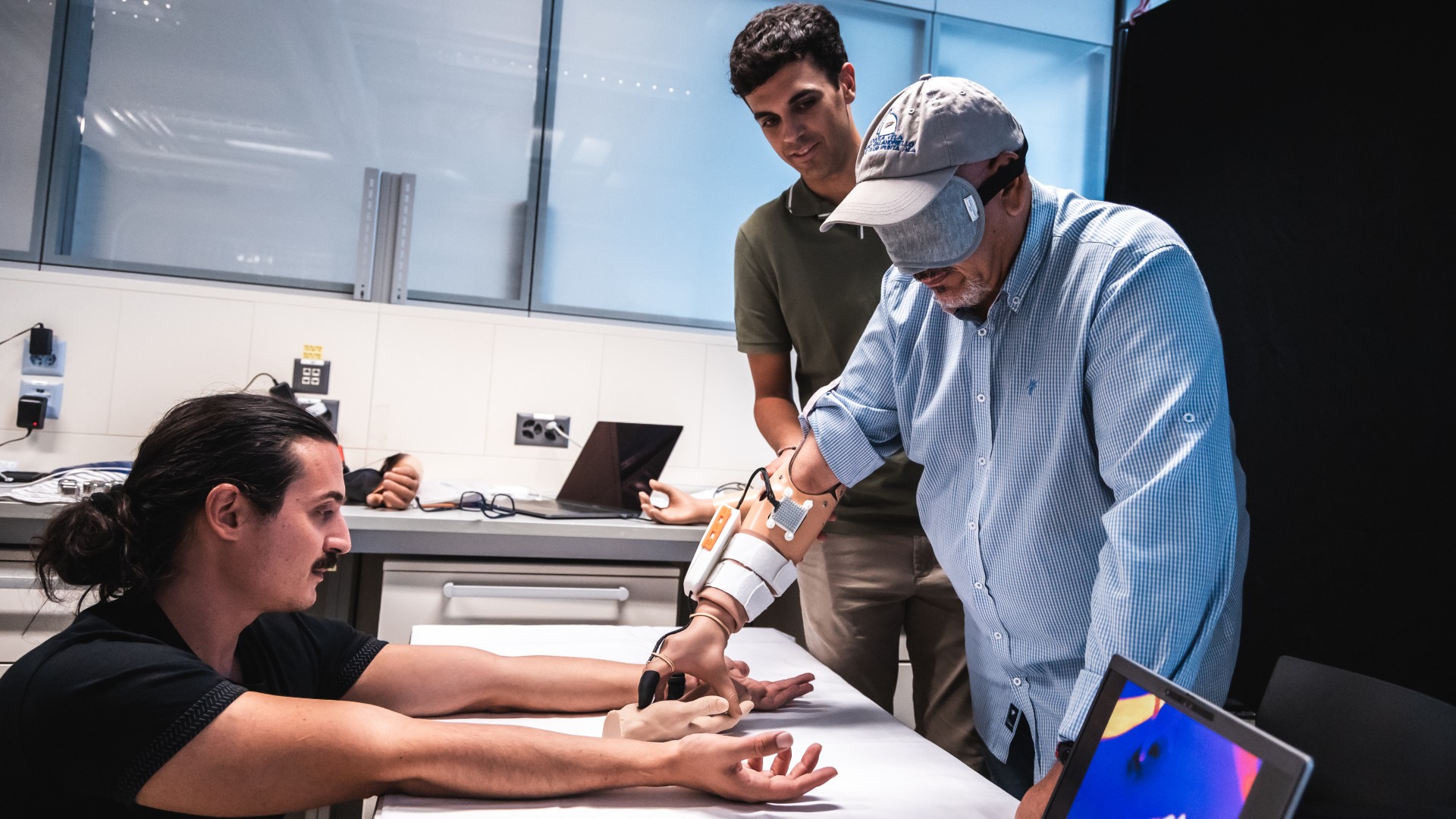
Myoelectric prosthetics are the most common type of bionic limb in use today. These devices rely on electrical signals generated by the user’s muscles to control the movement of the prosthetic. When a user flexes or contracts their remaining muscle, sensors detect the signal and convert it into a corresponding motion in the prosthetic limb.

For example, in a myoelectric arm, when the user contracts their bicep muscle, the prosthetic arm’s motor receives the signal and moves the forearm. The more advanced versions of these limbs can even allow the user to perform complex tasks like rotating their wrist or holding delicate objects.

Sensors and Feedback: Creating a Natural Connection

One of the key components that make bionic limbs feel more natural is the inclusion of sensory feedback systems. In nature, when we move our limbs, we get immediate feedback from our body: we feel the weight of an object, we sense its texture, and we have a constant awareness of our limb’s position in space. Recreating this “sense of touch” in prosthetics has been a major hurdle, but recent advancements in haptic feedback technology are starting to address this challenge.

The Promise of Haptic Feedback

Haptic feedback involves the use of sensors to relay sensations such as pressure, texture, or temperature to the user. For example, some bionic hands now incorporate sensors that detect when the user is gripping something too tightly, offering gentle feedback to avoid damage. Similarly, researchers are experimenting with tactile sensors that can simulate the sensation of touch, giving the wearer a more intuitive sense of how their prosthetic interacts with the environment.

The integration of sensory feedback doesn’t stop at touch. Proprioception, the sense of knowing where your body is in space, is also a vital aspect of movement. Some advanced bionic limbs now provide users with a sense of their limb’s position relative to the rest of their body, making movement smoother and more coordinated.

Material Innovation: Lightweight Yet Strong

The materials used in bionic limbs have advanced significantly over the years. Early prosthetics were bulky and heavy, but modern materials have made bionic limbs much lighter, stronger, and more flexible. One of the most significant innovations has been the development of carbon fiber. This lightweight material is not only strong but also allows for the flexibility required for complex movements.

In addition to carbon fiber, the use of 3D printing has enabled more customizable and affordable prosthetic designs. With 3D printing, manufacturers can create prosthetic limbs that are tailored specifically to the user’s body, making the fit more comfortable and functional. Furthermore, the ability to quickly prototype new designs has accelerated the development of new technologies in bionic limbs.

Neural Interfaces: Connecting the Brain and Prosthetic

The ultimate goal of bionic limb development is to create a seamless connection between the brain and the prosthetic device, restoring the user’s natural ability to control the limb. This field is known as neural interface technology, and it represents the frontier of bionic limb innovation.

How Neural Interfaces Work

Neural interfaces work by detecting signals directly from the brain and transmitting them to the prosthetic device. The most common method involves surgically implanted electrodes that interface with the nervous system. These electrodes can read the electrical impulses generated by the brain when the user thinks about moving their limb, allowing the prosthetic to respond to the user’s mental commands.

Prosthetic Neural Interface Surgery For Electronic Prosthesis​

This direct brain-machine interface is still in its early stages, but progress is being made. Researchers have already developed systems that allow users to control bionic limbs with remarkable precision, such as moving individual fingers or controlling the amount of force applied in a grip. As this technology matures, it holds the potential to restore a near-normal level of dexterity and functionality to amputees.

The Emotional and Psychological Impact of Bionic Limbs

While the technological advancements in bionic limbs are impressive, the emotional and psychological aspects are equally important. For amputees, receiving a bionic limb can significantly improve their quality of life, but it also comes with challenges.

One of the major challenges is body image. The appearance of a prosthetic limb can impact how the wearer perceives themselves and how others perceive them. Early prosthetics were often bulky and conspicuous, leading some users to feel self-conscious or alienated. Today, prosthetic manufacturers offer more aesthetically pleasing designs that blend functionality with appearance, and some even provide customization options to make the limb feel more personal.

Furthermore, the psychological aspect of prosthetic use cannot be underestimated. The adjustment period can be difficult as the user learns to integrate the prosthetic into their daily life. However, studies have shown that the more natural and intuitive the prosthetic, the more likely users are to accept it and use it effectively.

The Future of Bionic Limbs: Toward Fully Integrated Prosthetics

The future of bionic limbs holds exciting possibilities. Some of the most promising areas of research include:

  • Brain-Computer Interfaces (BCIs): In the coming years, BCIs could enable more direct communication between the brain and prosthetics, allowing users to control their limbs with even greater precision and ease.
  • Artificial Intelligence (AI) and Machine Learning: AI can be used to help bionic limbs “learn” from their user’s movements, adapting over time to improve functionality and responsiveness.
  • Regenerative Medicine: In the long term, breakthroughs in stem cell research and tissue engineering may enable the growth of prosthetic limbs directly from a person’s own cells, potentially eliminating the need for external devices altogether.

Conclusion: The Convergence of Nature and Technology

Bionic limbs are a testament to the remarkable capabilities of human ingenuity and the power of biomimicry. By studying nature—particularly human anatomy and biomechanics—scientists and engineers have developed prosthetic devices that restore function, enhance mobility, and even replicate the delicate dexterity of human hands. The future holds even more promise, as technologies like neural interfaces and AI continue to advance, bringing us closer to prosthetic limbs that are truly indistinguishable from the real thing.

In the end, the science behind bionic limbs is not just about replacing a lost limb—it’s about restoring the ability to interact with the world in a deeply personal and meaningful way.


Tags: Artificial LimbsBioengineeringProstheticsRobotics
ShareTweetShare

Related Posts

Bionics: The Key to Human Immortality?
Bionics

Bionics: The Key to Human Immortality?

December 2, 2025
Bionic Organs: Can They Save Lives or Create New Ethical Dilemmas?
Bionics

Bionic Organs: Can They Save Lives or Create New Ethical Dilemmas?

December 1, 2025
The Future of Prosthetics: Is It Fully Bionic?
Bionics

The Future of Prosthetics: Is It Fully Bionic?

November 30, 2025
What Happens When Bionics Merge with Artificial Intelligence?
Bionics

What Happens When Bionics Merge with Artificial Intelligence?

November 29, 2025
Bionic Enhancements: Could They Improve Our Cognitive Abilities?
Bionics

Bionic Enhancements: Could They Improve Our Cognitive Abilities?

November 28, 2025
How Far Can Bionic Eyes Take Us Beyond Human Vision?
Bionics

How Far Can Bionic Eyes Take Us Beyond Human Vision?

November 27, 2025
Leave Comment
  • Trending
  • Comments
  • Latest
Can Sustainability Drive Profits in Competitive Markets?

Can Sustainability Drive Profits in Competitive Markets?

October 17, 2025
Can the Spotlight Make or Break Your Career?

Can the Spotlight Make or Break Your Career?

October 14, 2025
Does the Spotlight Always Equal Success?

Does the Spotlight Always Equal Success?

October 16, 2025
Can the Spotlight Truly Capture the Essence of a Person?

Can the Spotlight Truly Capture the Essence of a Person?

October 16, 2025
Can Bionics Redefine Human Limitations?

Can Bionics Redefine Human Limitations?

Is Bionics the Future of Prosthetics?

Is Bionics the Future of Prosthetics?

Can We Truly Integrate Technology with Biology?

Can We Truly Integrate Technology with Biology?

How Close Are We to Creating Bionic Organs?

How Close Are We to Creating Bionic Organs?

How Can Spotlights Elevate Your Interior Design Game?

How Can Spotlights Elevate Your Interior Design Game?

December 2, 2025
Will We Ever Live on Mars? And Should We?

Will We Ever Live on Mars? And Should We?

December 2, 2025
Bionics: The Key to Human Immortality?

Bionics: The Key to Human Immortality?

December 2, 2025
How Can Data Privacy be Maintained in a Hyperconnected World?

How Can Data Privacy be Maintained in a Hyperconnected World?

December 2, 2025
CyberGait

Our content caters to engineers, researchers, and tech enthusiasts alike. Through focused articles on algorithms, biomimicry, and industry trends, we provide a comprehensive perspective on the future of movement, from laboratory breakthroughs to commercial products.

© 2025 cybergait.com. contacts:[email protected]

No Result
View All Result
  • Home
  • Bionics
  • Breakthroughs
  • Industry
  • Robotics
  • Spotlight

© 2025 cybergait.com. contacts:[email protected]

Welcome Back!

Login to your account below

Forgotten Password?

Retrieve your password

Please enter your username or email address to reset your password.

Log In