















CyberGait
  • Home
  • Bionics
    Bionics: The Key to Human Immortality?

    Bionics: The Key to Human Immortality?

    Bionic Organs: Can They Save Lives or Create New Ethical Dilemmas?

    Bionic Organs: Can They Save Lives or Create New Ethical Dilemmas?

    The Future of Prosthetics: Is It Fully Bionic?

    The Future of Prosthetics: Is It Fully Bionic?

    What Happens When Bionics Merge with Artificial Intelligence?

    What Happens When Bionics Merge with Artificial Intelligence?

    Bionic Enhancements: Could They Improve Our Cognitive Abilities?

    Bionic Enhancements: Could They Improve Our Cognitive Abilities?

    How Far Can Bionic Eyes Take Us Beyond Human Vision?

    How Far Can Bionic Eyes Take Us Beyond Human Vision?

  • Breakthroughs
    Will We Ever Live on Mars? And Should We?

    Will We Ever Live on Mars? And Should We?

    Are We on the Brink of a Green Energy Revolution?

    Are We on the Brink of a Green Energy Revolution?

    Can Mind-Controlled Technology Revolutionize Communication?

    Can Mind-Controlled Technology Revolutionize Communication?

    What If We Could 3D Print Human Organs?

    What If We Could 3D Print Human Organs?

    Can Autonomous Vehicles Surpass Human Drivers in Safety?

    Can Autonomous Vehicles Surpass Human Drivers in Safety?

    Genomic Editing the Key to Immortality?

    Genomic Editing the Key to Immortality?

  • Industry
    How Can Data Privacy be Maintained in a Hyperconnected World?

    How Can Data Privacy be Maintained in a Hyperconnected World?

    Is the Gig Economy the Future of Employment?

    Is the Gig Economy the Future of Employment?

    Can Startups Compete with Corporate Giants in Innovation?

    Can Startups Compete with Corporate Giants in Innovation?

    The Future of Work: Truly Remote or Hybrid?

    The Future of Work: Truly Remote or Hybrid?

    How Does Blockchain Impact Global Supply Chains?

    How Does Blockchain Impact Global Supply Chains?

    Are We Overestimating the Power of Automation?

    Are We Overestimating the Power of Automation?

  • Robotics
    Can Robots Adapt to Unpredictable Real-World Environments?

    Can Robots Adapt to Unpredictable Real-World Environments?

    Will Robots Achieve True Autonomy or Always Need Human Oversight?

    Will Robots Achieve True Autonomy or Always Need Human Oversight?

    What Happens When Robots Start Designing Robots?

    What Happens When Robots Start Designing Robots?

    Are We Ready for Robots to Shape Our Creative Industries?

    Are We Ready for Robots to Shape Our Creative Industries?

    Could Robots One Day Replace Human Emotions in Caregiving?

    Could Robots One Day Replace Human Emotions in Caregiving?

    How Do We Ensure Robot Ethics in Autonomous Machines?

    How Do We Ensure Robot Ethics in Autonomous Machines?

  • Spotlight
    How Can Spotlights Elevate Your Interior Design Game?

    How Can Spotlights Elevate Your Interior Design Game?

    What Happens When You Use a Spotlight for Intimate Portraits?

    What Happens When You Use a Spotlight for Intimate Portraits?

    Why Do Spotlight Effects Matter in Cinematic Storytelling?

    Why Do Spotlight Effects Matter in Cinematic Storytelling?

    Could Spotlighting Be the Key to Perfect Product Photography?

    Could Spotlighting Be the Key to Perfect Product Photography?

    Spotlight Technology Changing the Future of Stage Design

    Spotlight Technology Changing the Future of Stage Design

    How Do Different Spotlights Affect Mood and Atmosphere?

    How Do Different Spotlights Affect Mood and Atmosphere?

CyberGait
  • Home
  • Bionics
    Bionics: The Key to Human Immortality?

    Bionics: The Key to Human Immortality?

    Bionic Organs: Can They Save Lives or Create New Ethical Dilemmas?

    Bionic Organs: Can They Save Lives or Create New Ethical Dilemmas?

    The Future of Prosthetics: Is It Fully Bionic?

    The Future of Prosthetics: Is It Fully Bionic?

    What Happens When Bionics Merge with Artificial Intelligence?

    What Happens When Bionics Merge with Artificial Intelligence?

    Bionic Enhancements: Could They Improve Our Cognitive Abilities?

    Bionic Enhancements: Could They Improve Our Cognitive Abilities?

    How Far Can Bionic Eyes Take Us Beyond Human Vision?

    How Far Can Bionic Eyes Take Us Beyond Human Vision?

  • Breakthroughs
    Will We Ever Live on Mars? And Should We?

    Will We Ever Live on Mars? And Should We?

    Are We on the Brink of a Green Energy Revolution?

    Are We on the Brink of a Green Energy Revolution?

    Can Mind-Controlled Technology Revolutionize Communication?

    Can Mind-Controlled Technology Revolutionize Communication?

    What If We Could 3D Print Human Organs?

    What If We Could 3D Print Human Organs?

    Can Autonomous Vehicles Surpass Human Drivers in Safety?

    Can Autonomous Vehicles Surpass Human Drivers in Safety?

    Genomic Editing the Key to Immortality?

    Genomic Editing the Key to Immortality?

  • Industry
    How Can Data Privacy be Maintained in a Hyperconnected World?

    How Can Data Privacy be Maintained in a Hyperconnected World?

    Is the Gig Economy the Future of Employment?

    Is the Gig Economy the Future of Employment?

    Can Startups Compete with Corporate Giants in Innovation?

    Can Startups Compete with Corporate Giants in Innovation?

    The Future of Work: Truly Remote or Hybrid?

    The Future of Work: Truly Remote or Hybrid?

    How Does Blockchain Impact Global Supply Chains?

    How Does Blockchain Impact Global Supply Chains?

    Are We Overestimating the Power of Automation?

    Are We Overestimating the Power of Automation?

  • Robotics
    Can Robots Adapt to Unpredictable Real-World Environments?

    Can Robots Adapt to Unpredictable Real-World Environments?

    Will Robots Achieve True Autonomy or Always Need Human Oversight?

    Will Robots Achieve True Autonomy or Always Need Human Oversight?

    What Happens When Robots Start Designing Robots?

    What Happens When Robots Start Designing Robots?

    Are We Ready for Robots to Shape Our Creative Industries?

    Are We Ready for Robots to Shape Our Creative Industries?

    Could Robots One Day Replace Human Emotions in Caregiving?

    Could Robots One Day Replace Human Emotions in Caregiving?

    How Do We Ensure Robot Ethics in Autonomous Machines?

    How Do We Ensure Robot Ethics in Autonomous Machines?

  • Spotlight
    How Can Spotlights Elevate Your Interior Design Game?

    How Can Spotlights Elevate Your Interior Design Game?

    What Happens When You Use a Spotlight for Intimate Portraits?

    What Happens When You Use a Spotlight for Intimate Portraits?

    Why Do Spotlight Effects Matter in Cinematic Storytelling?

    Why Do Spotlight Effects Matter in Cinematic Storytelling?

    Could Spotlighting Be the Key to Perfect Product Photography?

    Could Spotlighting Be the Key to Perfect Product Photography?

    Spotlight Technology Changing the Future of Stage Design

    Spotlight Technology Changing the Future of Stage Design

    How Do Different Spotlights Affect Mood and Atmosphere?

    How Do Different Spotlights Affect Mood and Atmosphere?

CyberGait
No Result
View All Result
Home Industry

Will Artificial Intelligence Replace Human Labor in Industry?

October 14, 2025
in Industry
Will Artificial Intelligence Replace Human Labor in Industry?

The question of whether Artificial Intelligence (AI) will replace human labor in industries has become a pressing topic in both technological circles and everyday conversations. As AI technology advances at an exponential rate, there’s no shortage of opinions on both sides of the debate. Some argue that AI will free humanity from menial tasks and push society toward a more creative and innovative future. Others fear mass unemployment, economic collapse, and the erosion of human dignity.

In this article, we’ll dive deep into the various aspects of AI’s impact on industry, exploring the potential benefits, challenges, and future trajectories of this technological revolution. We’ll also consider a more philosophical angle: should we fear AI’s rise, or embrace it?

The Rise of AI in Industry

Before delving into the potential ramifications of AI on the workforce, let’s first understand how AI is already making strides in industry. Whether it’s manufacturing, logistics, healthcare, or even customer service, AI has slowly but surely been integrated into multiple sectors. Machines, powered by algorithms, are capable of learning and performing tasks that would have once required human hands.

1. Manufacturing Automation: The Age of the Robots

AI-driven robots have already become a cornerstone of modern manufacturing. Factories across the globe are increasingly adopting robotic systems to handle tasks ranging from assembly lines to quality control. In Tesla’s Gigafactory, for example, thousands of robots work alongside humans to produce electric vehicles at an unprecedented pace.

While some fear that robots will displace jobs, the truth is more nuanced. The integration of AI in manufacturing has indeed replaced some roles, such as those requiring repetitive tasks like assembly and packing. However, it has also created new jobs in fields like robotics maintenance, AI development, and system integration. The question then becomes: Will we create enough new roles to offset the jobs AI might render obsolete?

2. AI in Logistics: Smarter, Faster, and More Efficient
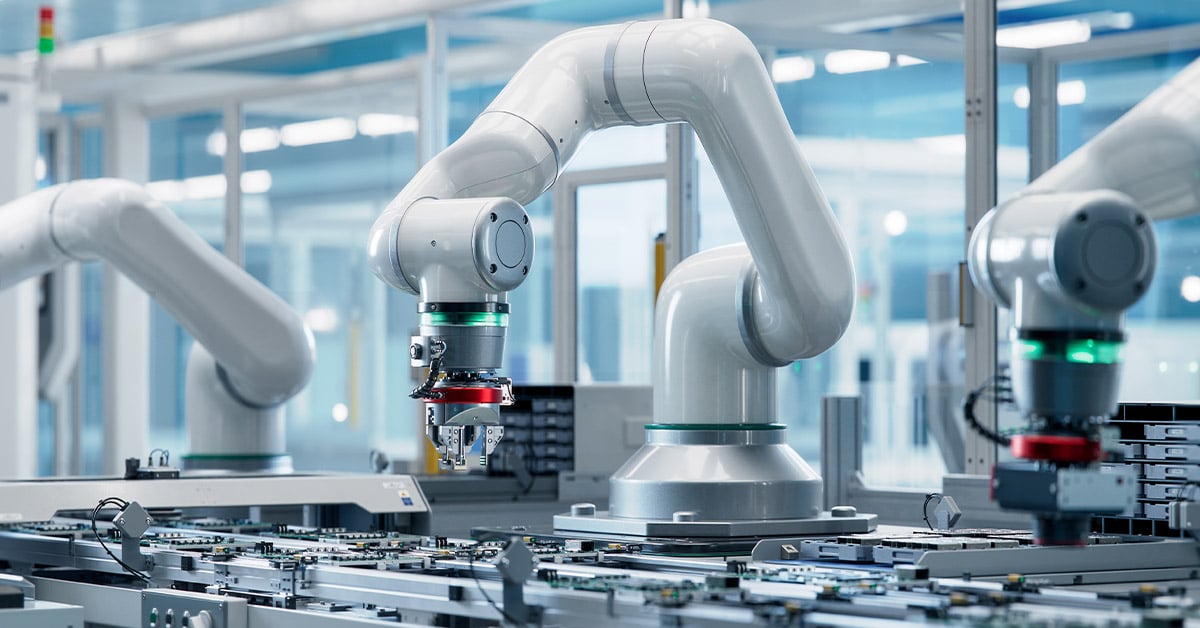
Industrial Manufacturing Robots and AI | ATS

AI is also revolutionizing logistics and supply chain management. Machine learning algorithms are being used to predict demand, optimize routes, and reduce fuel consumption. Companies like Amazon use AI-powered robots in their warehouses to move goods more efficiently, while self-driving trucks are being tested to replace long-haul drivers. These technologies could drastically lower operational costs, but they also present a challenge for workers in industries like transportation, warehousing, and delivery services.

As AI makes the logistics process faster and more efficient, businesses can respond to market demands in real time, creating a new era of supply chain management. But will this improve the quality of life for workers, or will it lead to widespread job losses in the transportation sector?

3. AI in Healthcare: Diagnosis and Treatment in Real Time

In healthcare, AI is increasingly being used for diagnostics, personalized treatment plans, and even robotic surgery. AI models trained on vast datasets of medical images and patient histories can identify patterns that human doctors might miss. For example, Google Health’s AI algorithm can detect breast cancer in mammograms more accurately than human radiologists.

While AI’s role in healthcare is mostly supportive rather than replacement-driven, there’s a growing concern that even highly skilled medical professionals could be impacted by automation. From administrative roles like scheduling to complex diagnostic procedures, AI is capable of performing tasks that were once deemed exclusive to humans. Will the medical profession eventually see fewer doctors, or will AI help create a new partnership between human expertise and artificial intelligence?

The Future of Human Labor in the Age of AI

So, what does the future hold for human labor in an AI-powered world? There are several key factors that will influence the outcome of AI integration in the workforce.

1. Job Creation vs. Job Destruction

AI has the potential to eliminate some jobs, but it also has the power to create entirely new industries and job categories. For example, the rise of AI necessitates a surge in demand for AI specialists, data scientists, and AI ethics professionals. Even roles like AI trainers, who help teach machines how to behave appropriately, are emerging.

Furthermore, as AI automates mundane tasks, it frees up human workers to engage in more creative, strategic, and high-level work. We could see a transformation of the workforce, where the emphasis shifts from manual labor to intellectual labor. In this sense, AI could be a tool for human progress rather than a harbinger of dystopian unemployment.

2. The Human Element: Emotional Intelligence and Creativity

Despite AI’s advancements, there are certain aspects of human labor that it simply cannot replace. These include tasks that require emotional intelligence, such as therapy, teaching, or leadership. Creativity is another area where humans still have the upper hand. AI can help generate ideas, but it lacks the nuance, empathy, and understanding that come with human creativity.

Additionally, jobs that rely on complex human interactions, such as those in hospitality, sales, and customer service, are less likely to be replaced by AI in the foreseeable future. While AI can assist in tasks like answering basic inquiries or providing recommendations, the emotional connection and subtle nuances of human interaction are difficult for machines to replicate.

3. Upskilling and Lifelong Learning
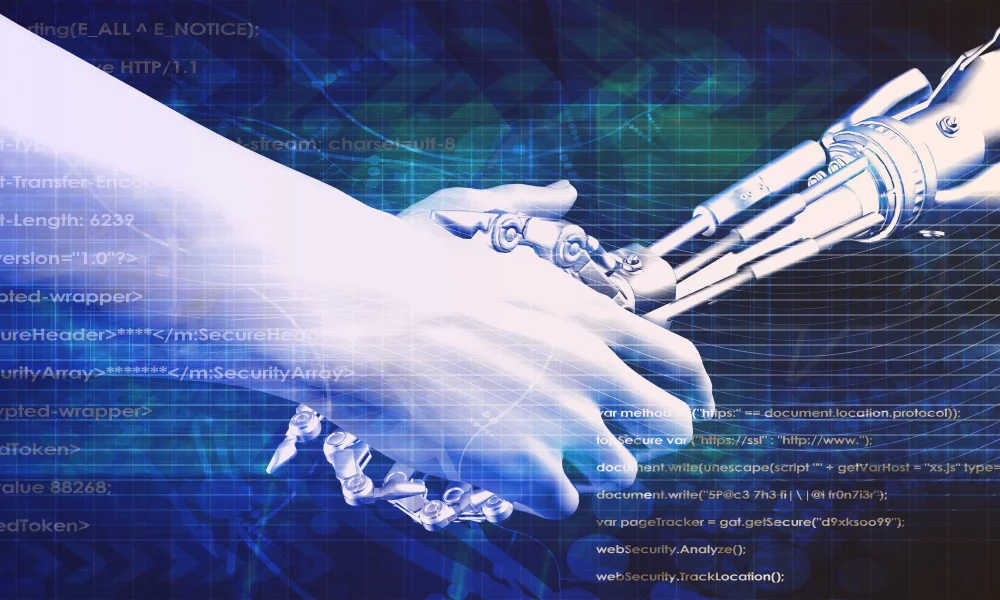
Human-AI Collaboration: Key to Success in the Automation Age

The key to ensuring that AI doesn’t lead to widespread job loss lies in education and upskilling. As industries evolve, workers will need to adapt by learning new skills and engaging in lifelong learning. Governments, businesses, and educational institutions will have to collaborate to provide training programs that equip workers with the skills needed to thrive in an AI-driven world.

For example, workers in traditional industries like manufacturing could be trained in robotics maintenance, data analysis, or AI programming. This shift towards reskilling could prevent massive job displacement and help individuals transition to the new opportunities created by AI.

The Ethics of AI in the Workforce

AI’s impact on human labor is not just a technical or economic issue—it’s an ethical one as well. The widespread adoption of AI in industries raises several moral questions:

  • Job Displacement: If machines can do the work of humans more efficiently and cheaply, should companies be incentivized to replace workers?
  • Privacy Concerns: AI systems often rely on massive amounts of data, some of which may be personal. How can we ensure that AI systems respect privacy and don’t compromise sensitive information?
  • Bias in AI: AI models are only as good as the data they’re trained on. If these datasets contain bias, AI systems may perpetuate or even exacerbate inequalities in the workforce. How do we ensure that AI is fair and inclusive?

Addressing these concerns will require a balanced approach—one that incorporates not only technological advancement but also human-centric policies and ethical frameworks.

Conclusion: The Human-AI Collaboration

While AI is undoubtedly transforming industries, it is unlikely to completely replace human labor across the board. Instead, we are moving towards a future where AI and humans work together in a complementary manner. Automation will handle repetitive, mundane tasks, while humans will focus on complex, creative, and emotionally driven roles.

The key to this future lies in upskilling, ethical considerations, and creating new roles that leverage both human creativity and AI efficiency. Rather than fearing AI’s rise, we should see it as an opportunity to create a more efficient, dynamic, and innovative world. In the end, it’s not a question of whether AI will replace human labor, but how we choose to adapt and integrate AI into our lives and work.


Tags: AIAutomationIndustry 4.0Labor Crisis
ShareTweetShare

Related Posts

How Can Data Privacy be Maintained in a Hyperconnected World?
Industry

How Can Data Privacy be Maintained in a Hyperconnected World?

December 2, 2025
Is the Gig Economy the Future of Employment?
Industry

Is the Gig Economy the Future of Employment?

December 1, 2025
Can Startups Compete with Corporate Giants in Innovation?
Industry

Can Startups Compete with Corporate Giants in Innovation?

November 30, 2025
The Future of Work: Truly Remote or Hybrid?
Industry

The Future of Work: Truly Remote or Hybrid?

November 29, 2025
How Does Blockchain Impact Global Supply Chains?
Industry

How Does Blockchain Impact Global Supply Chains?

November 28, 2025
Are We Overestimating the Power of Automation?
Industry

Are We Overestimating the Power of Automation?

November 27, 2025
Leave Comment
  • Trending
  • Comments
  • Latest
Can Sustainability Drive Profits in Competitive Markets?

Can Sustainability Drive Profits in Competitive Markets?

October 17, 2025
Can the Spotlight Make or Break Your Career?

Can the Spotlight Make or Break Your Career?

October 14, 2025
Does the Spotlight Always Equal Success?

Does the Spotlight Always Equal Success?

October 16, 2025
Can the Spotlight Truly Capture the Essence of a Person?

Can the Spotlight Truly Capture the Essence of a Person?

October 16, 2025
Can Bionics Redefine Human Limitations?

Can Bionics Redefine Human Limitations?

Is Bionics the Future of Prosthetics?

Is Bionics the Future of Prosthetics?

Can We Truly Integrate Technology with Biology?

Can We Truly Integrate Technology with Biology?

How Close Are We to Creating Bionic Organs?

How Close Are We to Creating Bionic Organs?

How Can Spotlights Elevate Your Interior Design Game?

How Can Spotlights Elevate Your Interior Design Game?

December 2, 2025
Will We Ever Live on Mars? And Should We?

Will We Ever Live on Mars? And Should We?

December 2, 2025
Bionics: The Key to Human Immortality?

Bionics: The Key to Human Immortality?

December 2, 2025
How Can Data Privacy be Maintained in a Hyperconnected World?

How Can Data Privacy be Maintained in a Hyperconnected World?

December 2, 2025
CyberGait

Our content caters to engineers, researchers, and tech enthusiasts alike. Through focused articles on algorithms, biomimicry, and industry trends, we provide a comprehensive perspective on the future of movement, from laboratory breakthroughs to commercial products.

© 2025 cybergait.com. contacts:[email protected]

No Result
View All Result
  • Home
  • Bionics
  • Breakthroughs
  • Industry
  • Robotics
  • Spotlight

© 2025 cybergait.com. contacts:[email protected]

Welcome Back!

Login to your account below

Forgotten Password?

Retrieve your password

Please enter your username or email address to reset your password.

Log In