


























Introduction: A New Frontier
The cosmos has always fascinated humanity. From the first telescopic glimpse of the stars to the ambitions of spacefaring nations, our eyes have been set beyond the Earth’s surface, dreaming of exploration, discovery, and, importantly, the wealth that lies hidden in the infinite blackness of space. Today, the most audacious of these dreams—space mining—has evolved from science fiction into a promising frontier for exploration and resource extraction.
Space mining, the process of extracting valuable minerals and resources from asteroids, moons, and other celestial bodies, is gaining momentum. The technology is evolving, and industries are gearing up for what some are calling the next “Gold Rush.” But is this truly the case? Could space mining be the future of wealth generation, or is it simply another pipe dream waiting to crash? This article will explore the potential of space mining, its challenges, technological hurdles, and the massive opportunities that could emerge from tapping into extraterrestrial resources.
The Case for Space Mining: The Riches of the Cosmos
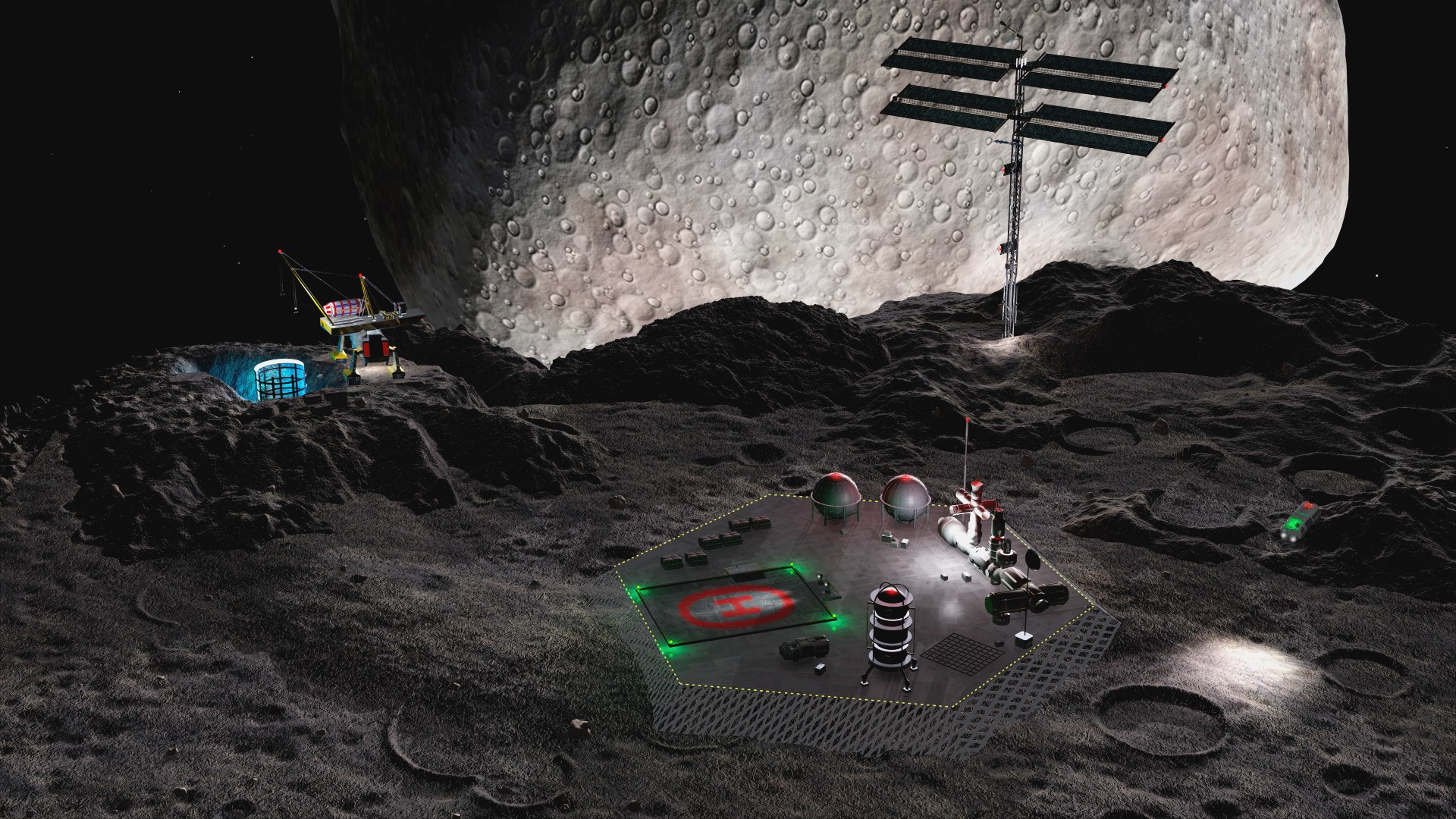
Imagine a resource so abundant that it could revolutionize industries back on Earth. Asteroids, which pepper our solar system, hold vast quantities of precious metals and rare materials. Some estimates suggest that a single asteroid could hold resources worth trillions of dollars. For example, asteroid 16 Psyche, one of the largest asteroids in our solar system, is thought to be made up of metal—primarily iron, nickel, and cobalt—and could be worth around $10,000 quadrillion. But why are these metals important? And what makes space mining so appealing?
- Scarcity of Earthly Resources
Earth’s supply of precious metals such as gold, platinum, and rare-earth elements is limited. Mining operations on Earth are becoming more difficult and costly as these resources are extracted from harder-to-reach deposits. In contrast, celestial bodies like asteroids contain far more of these metals, making them an ideal target for future mining operations. As the demand for these metals increases in industries like electronics, green energy, and aerospace, space mining could offer an alternative supply that reduces reliance on terrestrial sources. - Energy Resources and Water
Aside from metals, asteroids and moons could also provide valuable resources like water—an essential component for sustaining life and generating rocket fuel. Water extracted from asteroids could be converted into hydrogen and oxygen, creating rocket fuel for further exploration or even supporting future lunar and Martian colonies. This is known as in-situ resource utilization (ISRU), and it’s a key factor in reducing the cost of long-term space missions. - Mining for Scientific Discovery
Space mining isn’t just about wealth—it’s also about knowledge. Asteroids are considered to be remnants of the early solar system, holding clues about its formation and the origins of life. By mining these celestial bodies, we could uncover data that helps scientists better understand the history of our solar system and the processes that led to the creation of Earth.
The Technological Leap: From Dream to Reality
Space mining is not without its challenges. The technology required to extract resources from asteroids is still in its infancy, but the good news is that progress is being made at an impressive rate. There are several companies and organizations that are actively working on space mining technologies, including private startups like Planetary Resources, Deep Space Industries, and Blue Origin, as well as governmental agencies like NASA.
- Spacecraft and Robotic Mining Technology
One of the biggest challenges is developing spacecraft capable of reaching asteroids, landing on them, and conducting mining operations. In recent years, advancements in spacecraft technology have made this more feasible. Spacecraft like NASA’s OSIRIS-REx have successfully reached asteroids, collected samples, and returned them to Earth. The next step is to develop autonomous or semi-autonomous robotic miners capable of landing on asteroids, drilling into them, and extracting resources. This will require breakthroughs in robotics, artificial intelligence, and remote operation technologies. - Mining Techniques for Low-Gravity Environments
Unlike Earth, where gravity pulls resources to the ground, asteroids and moons have extremely low gravity. This creates a unique challenge for mining operations. Traditional mining techniques, which rely on the force of gravity, would not work in these environments. Innovative solutions such as electrostatic mining, which uses electrical fields to attract and capture particles, or laser-based mining, which uses lasers to vaporize materials and collect the vaporized materials, are currently being explored. - Material Processing in Space
Once the resources are extracted, they need to be processed into usable forms. On Earth, this is a complex process that involves high heat, chemicals, and energy. In space, transporting these materials back to Earth could be prohibitively expensive. As such, new methods of material processing will be required that can be done in space, reducing the need to transport raw resources back to Earth. The ability to refine and process materials in space will be crucial to the viability of space mining. - Economic Feasibility
While the potential rewards of space mining are immense, the initial costs are equally daunting. Developing the necessary spacecraft, mining technology, and infrastructure will require significant investment. Companies like SpaceX, Blue Origin, and others are already reducing the cost of space travel, which will help lower the barriers to entry for space mining. However, profitability will only come once mining operations are scaled, and resources are efficiently brought back to Earth or used in space for other purposes like space-based manufacturing.
The Legal and Ethical Landscape
Before any space mining operation can begin, there are significant legal and ethical issues that must be addressed. The current space law framework, governed by international treaties like the Outer Space Treaty of 1967, states that no nation can claim sovereignty over celestial bodies. While the treaty ensures that space remains free for exploration, it is unclear how it applies to resource extraction.
![Space Station Asteroid Mining Facility - Download Free 3D model by Inditrion Dradnon (@dradnon) [be146cb]](https://media.sketchfab.com/models/be146cbcc43e4049ac0236e9e269877e/thumbnails/3484ad09cd7d46009e4e2f2676e34dc6/33a40ab290e941d88e617e8d12f587a9.jpeg)
- Ownership and Property Rights
If a company successfully mines an asteroid and extracts valuable resources, who owns those resources? The Outer Space Treaty prohibits any country from claiming sovereignty over an asteroid, but it does not address private ownership of resources. The U.S. has passed legislation, the U.S. Commercial Space Launch Competitiveness Act of 2015, which allows private companies to extract and own resources from asteroids, but this is not universally accepted, and international consensus is still lacking. - Environmental Impact
There are also concerns about the environmental impact of space mining. While asteroids themselves are not likely to be “damaged” in the traditional sense, the extraction of resources from them could have unintended consequences. For instance, disrupting an asteroid’s trajectory could potentially cause it to collide with Earth or other celestial bodies. Environmental considerations will need to be factored into mining plans to ensure the safety of the solar system as a whole. - Ethical Questions of Exploitation
Space mining also raises ethical questions about exploitation. Just as Earth’s historical gold rushes led to exploitation of native peoples and resources, space mining could exacerbate the inequalities between rich and poor nations. While the wealth generated by space mining could benefit humanity as a whole, there is the potential for it to disproportionately benefit the wealthiest nations and corporations, leaving others behind.
The Road Ahead: Challenges and Opportunities
While the technological, legal, and ethical challenges are significant, the potential rewards of space mining make it an enticing prospect. The next few decades will be critical in determining whether space mining can be scaled up into a viable industry.
- Collaboration vs. Competition
The space mining industry could benefit from international collaboration, much like the way space exploration has been a collaborative effort. However, as with any new industry, there will be competition, both between nations and private companies. The challenge will be to find a balance that encourages innovation while ensuring fairness and sustainability. - The Role of Space Tourism and Commercial Spaceflight
The rise of commercial spaceflight, led by companies like SpaceX and Blue Origin, could indirectly benefit space mining. As space tourism becomes more common and affordable, the demand for infrastructure in space—such as space stations, lunar bases, and even asteroid mining outposts—could create an ecosystem that supports mining operations. Space tourism could also help fund further technological advancements in mining. - Long-Term Sustainability
While space mining could generate immense wealth, the long-term sustainability of the industry will depend on how well it is regulated, how resources are managed, and how technology evolves. If the industry develops in a way that prioritizes environmental protection, equitable distribution of wealth, and international cooperation, space mining could help usher in a new era of prosperity for humanity.
Conclusion: The Final Frontier of Wealth
Space mining is far from a guaranteed success, but it represents one of the most exciting frontiers in modern technology and exploration. If we can overcome the technological, legal, and ethical hurdles, space mining could be the next big leap for humanity, akin to the gold rushes of the 19th century, but on a much grander scale. The wealth and resources unlocked in space could revolutionize industries on Earth, and pave the way for a future where humanity is no longer confined to a single planet.
The vision of extracting trillions of dollars’ worth of metals from asteroids is not just a distant dream; it is a real possibility within our lifetimes. But for now, space mining is still a work in progress—an ambitious endeavor that will require international cooperation, unprecedented technological innovation, and a willingness to take risks in the face of uncertainty.
The next few years will be crucial in determining whether space mining becomes the next gold rush or just another speculative venture. But one thing is certain: the race to mine the stars has already begun, and the rewards, should we succeed, are beyond our wildest imaginations.