















CyberGait
  • Home
  • Bionics
    Bionics: The Key to Human Immortality?

    Bionics: The Key to Human Immortality?

    Bionic Organs: Can They Save Lives or Create New Ethical Dilemmas?

    Bionic Organs: Can They Save Lives or Create New Ethical Dilemmas?

    The Future of Prosthetics: Is It Fully Bionic?

    The Future of Prosthetics: Is It Fully Bionic?

    What Happens When Bionics Merge with Artificial Intelligence?

    What Happens When Bionics Merge with Artificial Intelligence?

    Bionic Enhancements: Could They Improve Our Cognitive Abilities?

    Bionic Enhancements: Could They Improve Our Cognitive Abilities?

    How Far Can Bionic Eyes Take Us Beyond Human Vision?

    How Far Can Bionic Eyes Take Us Beyond Human Vision?

  • Breakthroughs
    Will We Ever Live on Mars? And Should We?

    Will We Ever Live on Mars? And Should We?

    Are We on the Brink of a Green Energy Revolution?

    Are We on the Brink of a Green Energy Revolution?

    Can Mind-Controlled Technology Revolutionize Communication?

    Can Mind-Controlled Technology Revolutionize Communication?

    What If We Could 3D Print Human Organs?

    What If We Could 3D Print Human Organs?

    Can Autonomous Vehicles Surpass Human Drivers in Safety?

    Can Autonomous Vehicles Surpass Human Drivers in Safety?

    Genomic Editing the Key to Immortality?

    Genomic Editing the Key to Immortality?

  • Industry
    How Can Data Privacy be Maintained in a Hyperconnected World?

    How Can Data Privacy be Maintained in a Hyperconnected World?

    Is the Gig Economy the Future of Employment?

    Is the Gig Economy the Future of Employment?

    Can Startups Compete with Corporate Giants in Innovation?

    Can Startups Compete with Corporate Giants in Innovation?

    The Future of Work: Truly Remote or Hybrid?

    The Future of Work: Truly Remote or Hybrid?

    How Does Blockchain Impact Global Supply Chains?

    How Does Blockchain Impact Global Supply Chains?

    Are We Overestimating the Power of Automation?

    Are We Overestimating the Power of Automation?

  • Robotics
    Can Robots Adapt to Unpredictable Real-World Environments?

    Can Robots Adapt to Unpredictable Real-World Environments?

    Will Robots Achieve True Autonomy or Always Need Human Oversight?

    Will Robots Achieve True Autonomy or Always Need Human Oversight?

    What Happens When Robots Start Designing Robots?

    What Happens When Robots Start Designing Robots?

    Are We Ready for Robots to Shape Our Creative Industries?

    Are We Ready for Robots to Shape Our Creative Industries?

    Could Robots One Day Replace Human Emotions in Caregiving?

    Could Robots One Day Replace Human Emotions in Caregiving?

    How Do We Ensure Robot Ethics in Autonomous Machines?

    How Do We Ensure Robot Ethics in Autonomous Machines?

  • Spotlight
    How Can Spotlights Elevate Your Interior Design Game?

    How Can Spotlights Elevate Your Interior Design Game?

    What Happens When You Use a Spotlight for Intimate Portraits?

    What Happens When You Use a Spotlight for Intimate Portraits?

    Why Do Spotlight Effects Matter in Cinematic Storytelling?

    Why Do Spotlight Effects Matter in Cinematic Storytelling?

    Could Spotlighting Be the Key to Perfect Product Photography?

    Could Spotlighting Be the Key to Perfect Product Photography?

    Spotlight Technology Changing the Future of Stage Design

    Spotlight Technology Changing the Future of Stage Design

    How Do Different Spotlights Affect Mood and Atmosphere?

    How Do Different Spotlights Affect Mood and Atmosphere?

CyberGait
  • Home
  • Bionics
    Bionics: The Key to Human Immortality?

    Bionics: The Key to Human Immortality?

    Bionic Organs: Can They Save Lives or Create New Ethical Dilemmas?

    Bionic Organs: Can They Save Lives or Create New Ethical Dilemmas?

    The Future of Prosthetics: Is It Fully Bionic?

    The Future of Prosthetics: Is It Fully Bionic?

    What Happens When Bionics Merge with Artificial Intelligence?

    What Happens When Bionics Merge with Artificial Intelligence?

    Bionic Enhancements: Could They Improve Our Cognitive Abilities?

    Bionic Enhancements: Could They Improve Our Cognitive Abilities?

    How Far Can Bionic Eyes Take Us Beyond Human Vision?

    How Far Can Bionic Eyes Take Us Beyond Human Vision?

  • Breakthroughs
    Will We Ever Live on Mars? And Should We?

    Will We Ever Live on Mars? And Should We?

    Are We on the Brink of a Green Energy Revolution?

    Are We on the Brink of a Green Energy Revolution?

    Can Mind-Controlled Technology Revolutionize Communication?

    Can Mind-Controlled Technology Revolutionize Communication?

    What If We Could 3D Print Human Organs?

    What If We Could 3D Print Human Organs?

    Can Autonomous Vehicles Surpass Human Drivers in Safety?

    Can Autonomous Vehicles Surpass Human Drivers in Safety?

    Genomic Editing the Key to Immortality?

    Genomic Editing the Key to Immortality?

  • Industry
    How Can Data Privacy be Maintained in a Hyperconnected World?

    How Can Data Privacy be Maintained in a Hyperconnected World?

    Is the Gig Economy the Future of Employment?

    Is the Gig Economy the Future of Employment?

    Can Startups Compete with Corporate Giants in Innovation?

    Can Startups Compete with Corporate Giants in Innovation?

    The Future of Work: Truly Remote or Hybrid?

    The Future of Work: Truly Remote or Hybrid?

    How Does Blockchain Impact Global Supply Chains?

    How Does Blockchain Impact Global Supply Chains?

    Are We Overestimating the Power of Automation?

    Are We Overestimating the Power of Automation?

  • Robotics
    Can Robots Adapt to Unpredictable Real-World Environments?

    Can Robots Adapt to Unpredictable Real-World Environments?

    Will Robots Achieve True Autonomy or Always Need Human Oversight?

    Will Robots Achieve True Autonomy or Always Need Human Oversight?

    What Happens When Robots Start Designing Robots?

    What Happens When Robots Start Designing Robots?

    Are We Ready for Robots to Shape Our Creative Industries?

    Are We Ready for Robots to Shape Our Creative Industries?

    Could Robots One Day Replace Human Emotions in Caregiving?

    Could Robots One Day Replace Human Emotions in Caregiving?

    How Do We Ensure Robot Ethics in Autonomous Machines?

    How Do We Ensure Robot Ethics in Autonomous Machines?

  • Spotlight
    How Can Spotlights Elevate Your Interior Design Game?

    How Can Spotlights Elevate Your Interior Design Game?

    What Happens When You Use a Spotlight for Intimate Portraits?

    What Happens When You Use a Spotlight for Intimate Portraits?

    Why Do Spotlight Effects Matter in Cinematic Storytelling?

    Why Do Spotlight Effects Matter in Cinematic Storytelling?

    Could Spotlighting Be the Key to Perfect Product Photography?

    Could Spotlighting Be the Key to Perfect Product Photography?

    Spotlight Technology Changing the Future of Stage Design

    Spotlight Technology Changing the Future of Stage Design

    How Do Different Spotlights Affect Mood and Atmosphere?

    How Do Different Spotlights Affect Mood and Atmosphere?

CyberGait
No Result
View All Result
Home Bionics

Are We Ready for Bionic Limbs That Feel Like Real Flesh?

November 26, 2025
in Bionics
Are We Ready for Bionic Limbs That Feel Like Real Flesh?

The promise of bionic limbs that feel like real flesh has fascinated both scientists and dreamers for decades. From the moment prosthetics moved beyond simple wooden and metal replacements to the advent of modern, high-tech solutions, the idea of creating limbs that not only look like human ones but also feel like them has been one of the most exciting frontiers in bioengineering and robotics. But are we ready? Is humanity on the cusp of a revolution that will merge technology with human biology in ways we’ve only imagined in science fiction?

In this article, we will explore the current state of bionic limb technology, the challenges that still stand in the way of making them feel like real flesh, and the potential implications of this technology for our future. By understanding the science, the challenges, and the possibilities, we can begin to answer the question: are we ready for bionic limbs that feel like real flesh?

The Evolution of Bionic Limbs: From Basic Prosthetics to Advanced Robotics

For centuries, prosthetics have been designed to replace lost body parts, primarily focused on functionality rather than aesthetics or sensation. The earliest examples of prosthetic limbs date back to ancient civilizations, where rudimentary wooden legs and artificial hands were used to restore basic movement. However, it wasn’t until the 20th century, particularly in the wake of the two World Wars, that prosthetics began to see major technological advancements.

With the rise of new materials such as lightweight plastics and carbon fiber, as well as advances in biomechanics, prosthetics became lighter, stronger, and more flexible. The introduction of motorized joints and computerized systems allowed for a higher degree of control and movement, moving the field from simple static replacements to more dynamic, responsive solutions.

In recent decades, the development of bionic limbs has taken another giant leap forward. The integration of advanced sensors, microprocessors, and artificial intelligence (AI) now allows users to control prosthetics with a level of precision that was once unimaginable. Modern bionic limbs can move fluidly, mimic the motion of natural limbs, and even provide feedback to the wearer. These improvements have made prosthetics not only more functional but also more integrated into the body’s natural movement patterns.

However, the next frontier of bionic limb technology is perhaps the most ambitious: the creation of prosthetics that not only look like human limbs but also feel like them.

The Sensory Revolution: Bringing Touch Back to Prosthetics

While the development of highly functional, lifelike bionic limbs is impressive, one of the major challenges that has yet to be fully addressed is the ability to restore the sense of touch. Touch is a vital sense that provides crucial feedback about our environment and helps us navigate the world. For those who have lost a limb, the absence of this feedback can be disorienting and can hinder the effectiveness of a prosthetic. The goal, then, is to create prosthetics that don’t just move like real limbs but also provide sensory feedback that makes them feel like part of the body.

Biotechnology and Human Augmentation: Issues for National Security  Practitioners

The key to this advancement lies in the integration of sensory systems into bionic limbs. Researchers are exploring various ways to mimic the complex network of nerves and receptors that allow human skin to feel pressure, texture, temperature, and pain. One promising avenue is the development of artificial skin, a synthetic material that can sense stimuli much like human skin does. This artificial skin is embedded with sensors that can detect pressure and even temperature changes, providing the user with a richer sensory experience.

In one groundbreaking experiment, scientists in Italy created a prosthetic arm that could transmit sensory information directly to the brain. Using a technique known as sensory neuroprosthetics, researchers were able to link the prosthetic’s sensors with the nerves in the patient’s remaining limb, enabling the brain to receive signals as though the prosthetic were a real arm. The result was a remarkable restoration of the sense of touch, allowing the user to feel objects and differentiate between textures, pressure, and temperature.

However, while these advancements are promising, they are still in the early stages of development. The human sensory system is incredibly complex, and replicating its functionality in a prosthetic is no small feat. The challenge lies not just in creating sensors that can detect these stimuli but in ensuring that the brain can interpret these signals in a natural and intuitive way.

The Neuroconnection: Bridging the Gap Between Brain and Bionic Limb

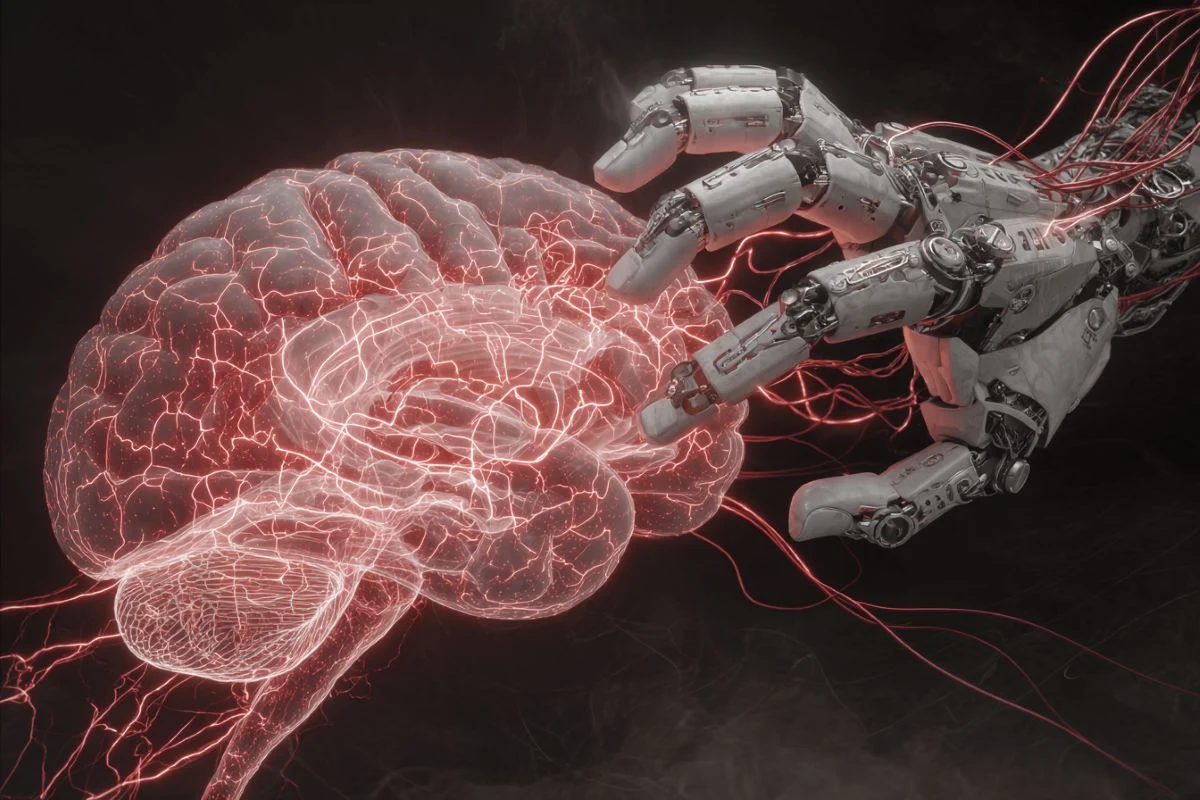
Perhaps the most fascinating and challenging aspect of creating bionic limbs that feel like real flesh is the need to connect the prosthetic directly to the brain. For a prosthetic limb to feel like part of the body, the brain must be able to communicate with it in the same way it communicates with natural limbs. This requires the development of advanced neural interfaces that can transmit signals between the brain and the prosthetic.

The concept of a brain-computer interface (BCI) has been explored for years, and recent developments have brought us closer to creating direct communication pathways between the brain and artificial limbs. In the most advanced prototypes, tiny electrodes are implanted into the brain or nervous system to detect and interpret neural signals. These signals are then used to control the prosthetic, allowing the user to perform tasks such as grasping objects, moving their arm, or even feeling sensations.

Endovascular Brain-Computer Interfaces in Poststroke Paralysis | Stroke

In some cases, researchers have used neuroplasticity—the brain’s ability to reorganize itself and form new connections—to help users learn to control bionic limbs in a way that feels natural. This technique is based on the idea that the brain can adapt to the prosthetic over time, gradually integrating it into its control systems as if it were a natural part of the body.

While these advances are exciting, they also raise significant challenges. The brain is an incredibly delicate and complex organ, and interfacing with it in this way requires extreme precision. Furthermore, the risk of rejection or complications from implanting electrodes into the brain is a concern that must be carefully managed.

The Psychological and Social Impact of Bionic Limbs

While the technological challenges of creating bionic limbs that feel like real flesh are formidable, there are also profound psychological and social considerations that must be addressed. The restoration of lost limbs has the potential to dramatically improve the quality of life for amputees, providing them with not only increased functionality but also a sense of identity and wholeness. For many amputees, a bionic limb that feels like flesh could significantly reduce the psychological strain associated with prosthetics, helping them to feel more connected to their body and the world around them.

Moreover, as bionic limbs become more advanced, there will be important questions about body image and self-perception. The idea of replacing biological body parts with artificial ones may challenge traditional concepts of identity and humanity. For some, the integration of bionic limbs into the human body may raise philosophical and ethical concerns about the nature of the human form.

At the same time, bionic limbs have the potential to redefine what it means to be human. If prosthetics can be made to feel like real flesh, the boundaries between man and machine will blur. The ability to augment the body with advanced technology could open new possibilities for individuals with disabilities, allowing them to perform tasks and experience sensations that were previously unimaginable.

The Road Ahead: Are We Ready?

So, are we ready for bionic limbs that feel like real flesh? In many ways, we are incredibly close. Advances in materials science, robotics, neurotechnology, and artificial intelligence have brought us to the brink of a new era in prosthetics. However, there are still significant hurdles to overcome before bionic limbs can truly replicate the feeling of real flesh.

One of the most immediate challenges is the complexity of the sensory system. While we have made great strides in developing artificial skin and sensory feedback mechanisms, we still have a long way to go in ensuring that these systems work seamlessly with the brain. Additionally, the integration of bionic limbs into the body’s neural and muscular systems remains a difficult and delicate process that requires further refinement.

Moreover, there are ethical and societal considerations to take into account. The potential for enhancing human capabilities through bionic limbs raises questions about accessibility, inequality, and the societal implications of integrating advanced technology into the human body.

Despite these challenges, the progress we’ve made so far is nothing short of extraordinary. Bionic limbs are already transforming the lives of individuals with disabilities, and the future holds even greater promise. As we continue to refine the technology, we may soon reach a point where prosthetics not only restore lost function but also replicate the full range of sensations that make human limbs so unique.

In conclusion, while we are not quite there yet, the dream of bionic limbs that feel like real flesh is within our grasp. With ongoing research, innovation, and collaboration, it seems that the future of prosthetics may be more exciting and human-like than we ever imagined.


Tags: Artificial LimbsBionicsBiotechnologyHuman Enhancement
ShareTweetShare

Related Posts

Bionics: The Key to Human Immortality?
Bionics

Bionics: The Key to Human Immortality?

December 2, 2025
Bionic Organs: Can They Save Lives or Create New Ethical Dilemmas?
Bionics

Bionic Organs: Can They Save Lives or Create New Ethical Dilemmas?

December 1, 2025
The Future of Prosthetics: Is It Fully Bionic?
Bionics

The Future of Prosthetics: Is It Fully Bionic?

November 30, 2025
What Happens When Bionics Merge with Artificial Intelligence?
Bionics

What Happens When Bionics Merge with Artificial Intelligence?

November 29, 2025
Bionic Enhancements: Could They Improve Our Cognitive Abilities?
Bionics

Bionic Enhancements: Could They Improve Our Cognitive Abilities?

November 28, 2025
How Far Can Bionic Eyes Take Us Beyond Human Vision?
Bionics

How Far Can Bionic Eyes Take Us Beyond Human Vision?

November 27, 2025
Leave Comment
  • Trending
  • Comments
  • Latest
Can Sustainability Drive Profits in Competitive Markets?

Can Sustainability Drive Profits in Competitive Markets?

October 17, 2025
Can the Spotlight Make or Break Your Career?

Can the Spotlight Make or Break Your Career?

October 14, 2025
Does the Spotlight Always Equal Success?

Does the Spotlight Always Equal Success?

October 16, 2025
Can the Spotlight Truly Capture the Essence of a Person?

Can the Spotlight Truly Capture the Essence of a Person?

October 16, 2025
Can Bionics Redefine Human Limitations?

Can Bionics Redefine Human Limitations?

Is Bionics the Future of Prosthetics?

Is Bionics the Future of Prosthetics?

Can We Truly Integrate Technology with Biology?

Can We Truly Integrate Technology with Biology?

How Close Are We to Creating Bionic Organs?

How Close Are We to Creating Bionic Organs?

How Can Spotlights Elevate Your Interior Design Game?

How Can Spotlights Elevate Your Interior Design Game?

December 2, 2025
Will We Ever Live on Mars? And Should We?

Will We Ever Live on Mars? And Should We?

December 2, 2025
Bionics: The Key to Human Immortality?

Bionics: The Key to Human Immortality?

December 2, 2025
How Can Data Privacy be Maintained in a Hyperconnected World?

How Can Data Privacy be Maintained in a Hyperconnected World?

December 2, 2025
CyberGait

Our content caters to engineers, researchers, and tech enthusiasts alike. Through focused articles on algorithms, biomimicry, and industry trends, we provide a comprehensive perspective on the future of movement, from laboratory breakthroughs to commercial products.

© 2025 cybergait.com. contacts:[email protected]

No Result
View All Result
  • Home
  • Bionics
  • Breakthroughs
  • Industry
  • Robotics
  • Spotlight

© 2025 cybergait.com. contacts:[email protected]

Welcome Back!

Login to your account below

Forgotten Password?

Retrieve your password

Please enter your username or email address to reset your password.

Log In