
















CyberGait
  • Home
  • Bionics
    Bionics: The Key to Human Immortality?

    Bionics: The Key to Human Immortality?

    Bionic Organs: Can They Save Lives or Create New Ethical Dilemmas?

    Bionic Organs: Can They Save Lives or Create New Ethical Dilemmas?

    The Future of Prosthetics: Is It Fully Bionic?

    The Future of Prosthetics: Is It Fully Bionic?

    What Happens When Bionics Merge with Artificial Intelligence?

    What Happens When Bionics Merge with Artificial Intelligence?

    Bionic Enhancements: Could They Improve Our Cognitive Abilities?

    Bionic Enhancements: Could They Improve Our Cognitive Abilities?

    How Far Can Bionic Eyes Take Us Beyond Human Vision?

    How Far Can Bionic Eyes Take Us Beyond Human Vision?

  • Breakthroughs
    Will We Ever Live on Mars? And Should We?

    Will We Ever Live on Mars? And Should We?

    Are We on the Brink of a Green Energy Revolution?

    Are We on the Brink of a Green Energy Revolution?

    Can Mind-Controlled Technology Revolutionize Communication?

    Can Mind-Controlled Technology Revolutionize Communication?

    What If We Could 3D Print Human Organs?

    What If We Could 3D Print Human Organs?

    Can Autonomous Vehicles Surpass Human Drivers in Safety?

    Can Autonomous Vehicles Surpass Human Drivers in Safety?

    Genomic Editing the Key to Immortality?

    Genomic Editing the Key to Immortality?

  • Industry
    How Can Data Privacy be Maintained in a Hyperconnected World?

    How Can Data Privacy be Maintained in a Hyperconnected World?

    Is the Gig Economy the Future of Employment?

    Is the Gig Economy the Future of Employment?

    Can Startups Compete with Corporate Giants in Innovation?

    Can Startups Compete with Corporate Giants in Innovation?

    The Future of Work: Truly Remote or Hybrid?

    The Future of Work: Truly Remote or Hybrid?

    How Does Blockchain Impact Global Supply Chains?

    How Does Blockchain Impact Global Supply Chains?

    Are We Overestimating the Power of Automation?

    Are We Overestimating the Power of Automation?

  • Robotics
    Can Robots Adapt to Unpredictable Real-World Environments?

    Can Robots Adapt to Unpredictable Real-World Environments?

    Will Robots Achieve True Autonomy or Always Need Human Oversight?

    Will Robots Achieve True Autonomy or Always Need Human Oversight?

    What Happens When Robots Start Designing Robots?

    What Happens When Robots Start Designing Robots?

    Are We Ready for Robots to Shape Our Creative Industries?

    Are We Ready for Robots to Shape Our Creative Industries?

    Could Robots One Day Replace Human Emotions in Caregiving?

    Could Robots One Day Replace Human Emotions in Caregiving?

    How Do We Ensure Robot Ethics in Autonomous Machines?

    How Do We Ensure Robot Ethics in Autonomous Machines?

  • Spotlight
    How Can Spotlights Elevate Your Interior Design Game?

    How Can Spotlights Elevate Your Interior Design Game?

    What Happens When You Use a Spotlight for Intimate Portraits?

    What Happens When You Use a Spotlight for Intimate Portraits?

    Why Do Spotlight Effects Matter in Cinematic Storytelling?

    Why Do Spotlight Effects Matter in Cinematic Storytelling?

    Could Spotlighting Be the Key to Perfect Product Photography?

    Could Spotlighting Be the Key to Perfect Product Photography?

    Spotlight Technology Changing the Future of Stage Design

    Spotlight Technology Changing the Future of Stage Design

    How Do Different Spotlights Affect Mood and Atmosphere?

    How Do Different Spotlights Affect Mood and Atmosphere?

CyberGait
  • Home
  • Bionics
    Bionics: The Key to Human Immortality?

    Bionics: The Key to Human Immortality?

    Bionic Organs: Can They Save Lives or Create New Ethical Dilemmas?

    Bionic Organs: Can They Save Lives or Create New Ethical Dilemmas?

    The Future of Prosthetics: Is It Fully Bionic?

    The Future of Prosthetics: Is It Fully Bionic?

    What Happens When Bionics Merge with Artificial Intelligence?

    What Happens When Bionics Merge with Artificial Intelligence?

    Bionic Enhancements: Could They Improve Our Cognitive Abilities?

    Bionic Enhancements: Could They Improve Our Cognitive Abilities?

    How Far Can Bionic Eyes Take Us Beyond Human Vision?

    How Far Can Bionic Eyes Take Us Beyond Human Vision?

  • Breakthroughs
    Will We Ever Live on Mars? And Should We?

    Will We Ever Live on Mars? And Should We?

    Are We on the Brink of a Green Energy Revolution?

    Are We on the Brink of a Green Energy Revolution?

    Can Mind-Controlled Technology Revolutionize Communication?

    Can Mind-Controlled Technology Revolutionize Communication?

    What If We Could 3D Print Human Organs?

    What If We Could 3D Print Human Organs?

    Can Autonomous Vehicles Surpass Human Drivers in Safety?

    Can Autonomous Vehicles Surpass Human Drivers in Safety?

    Genomic Editing the Key to Immortality?

    Genomic Editing the Key to Immortality?

  • Industry
    How Can Data Privacy be Maintained in a Hyperconnected World?

    How Can Data Privacy be Maintained in a Hyperconnected World?

    Is the Gig Economy the Future of Employment?

    Is the Gig Economy the Future of Employment?

    Can Startups Compete with Corporate Giants in Innovation?

    Can Startups Compete with Corporate Giants in Innovation?

    The Future of Work: Truly Remote or Hybrid?

    The Future of Work: Truly Remote or Hybrid?

    How Does Blockchain Impact Global Supply Chains?

    How Does Blockchain Impact Global Supply Chains?

    Are We Overestimating the Power of Automation?

    Are We Overestimating the Power of Automation?

  • Robotics
    Can Robots Adapt to Unpredictable Real-World Environments?

    Can Robots Adapt to Unpredictable Real-World Environments?

    Will Robots Achieve True Autonomy or Always Need Human Oversight?

    Will Robots Achieve True Autonomy or Always Need Human Oversight?

    What Happens When Robots Start Designing Robots?

    What Happens When Robots Start Designing Robots?

    Are We Ready for Robots to Shape Our Creative Industries?

    Are We Ready for Robots to Shape Our Creative Industries?

    Could Robots One Day Replace Human Emotions in Caregiving?

    Could Robots One Day Replace Human Emotions in Caregiving?

    How Do We Ensure Robot Ethics in Autonomous Machines?

    How Do We Ensure Robot Ethics in Autonomous Machines?

  • Spotlight
    How Can Spotlights Elevate Your Interior Design Game?

    How Can Spotlights Elevate Your Interior Design Game?

    What Happens When You Use a Spotlight for Intimate Portraits?

    What Happens When You Use a Spotlight for Intimate Portraits?

    Why Do Spotlight Effects Matter in Cinematic Storytelling?

    Why Do Spotlight Effects Matter in Cinematic Storytelling?

    Could Spotlighting Be the Key to Perfect Product Photography?

    Could Spotlighting Be the Key to Perfect Product Photography?

    Spotlight Technology Changing the Future of Stage Design

    Spotlight Technology Changing the Future of Stage Design

    How Do Different Spotlights Affect Mood and Atmosphere?

    How Do Different Spotlights Affect Mood and Atmosphere?

CyberGait
No Result
View All Result
Home Robotics

How Close Are We to Creating Human-like Robots?

October 20, 2025
in Robotics
How Close Are We to Creating Human-like Robots?

Introduction

The pursuit of creating human-like robots has fascinated humanity for centuries. From early mechanical automatons to modern-day advanced robotics, the idea of machines that can mimic human behavior, appearance, and intelligence has captured our imagination. Today, with advancements in AI, robotics, and materials science, we are closer than ever to turning this dream into reality. But how close are we really? Can we expect fully autonomous, emotionally intelligent robots to walk among us in the near future? Let’s dive into the fascinating world of robotics and explore the progress, challenges, and implications of creating human-like robots.


The Evolution of Human-like Robots

Early Concepts and Early Automata

The idea of robots dates back to ancient civilizations. Myths and legends spoke of mechanical beings that could mimic human actions. However, it wasn’t until the 15th century that Leonardo da Vinci sketched plans for a humanoid robot, designed to mimic human motion. Yet, it wasn’t until the 20th century that robotics evolved from mere imagination into a serious scientific endeavor.

The Rise of Modern Robotics

The 1950s and 1960s marked the beginning of significant technological breakthroughs, with pioneers like George Devol and Joseph Engelberger laying the foundation for industrial robotics. These early robots were mechanical arms designed for factory work. Human-like robots—often referred to as “humanoids”—began to emerge, but their capabilities were limited, restricted mostly to rigid motions and basic tasks.

In the 1990s, the world saw its first humanoid robots, like Honda’s ASIMO, which could walk and interact with humans, albeit with jerky movements and limited responses.
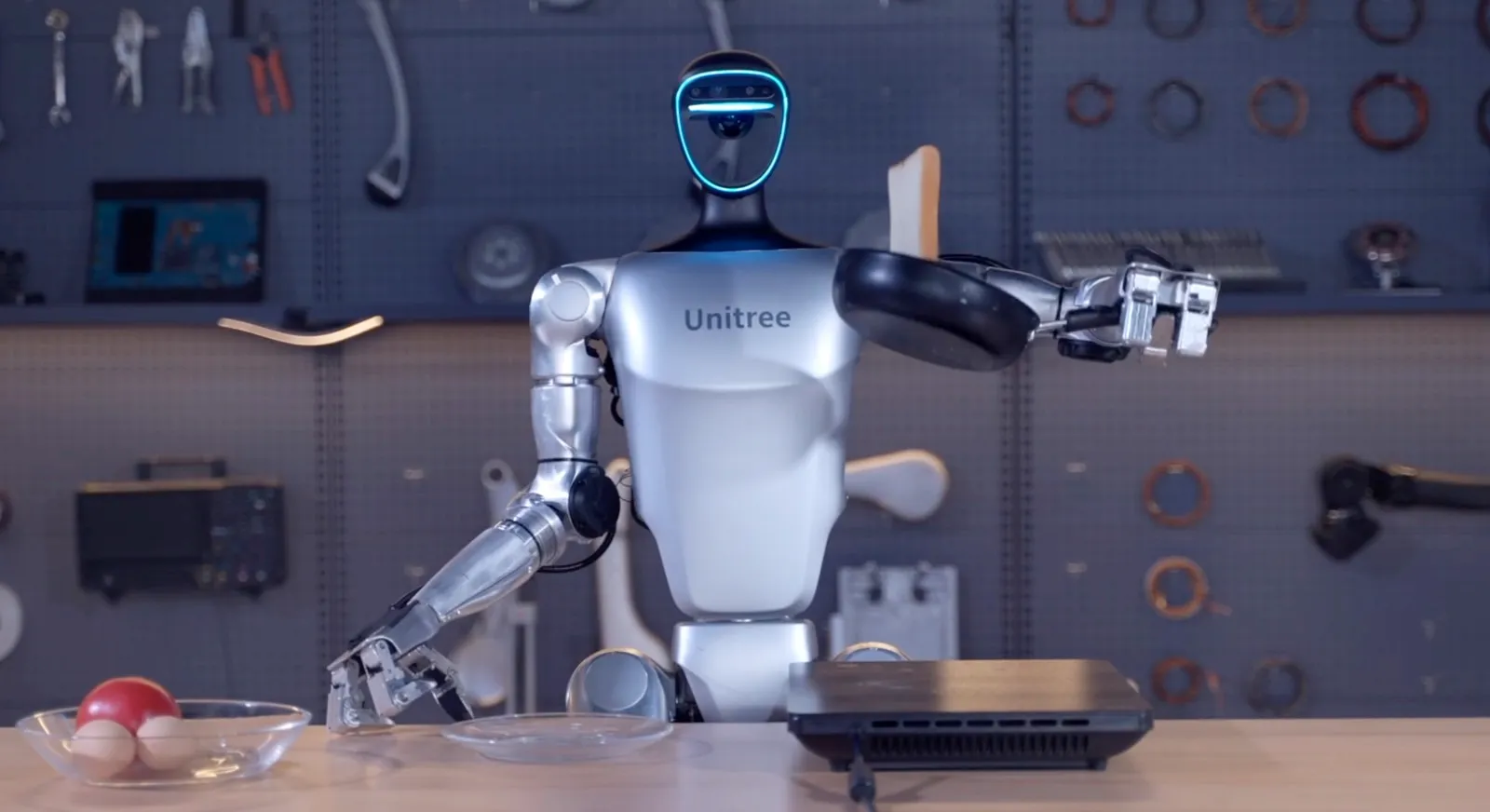
How Humanoid Robots Work: Complete Guide - Qviro Blog

Advancements in Human-like Robotics

Artificial Intelligence: The Brain Behind the Robot

One of the most significant breakthroughs in human-like robotics is the integration of artificial intelligence (AI). AI algorithms allow robots to process information, learn from their environment, and make decisions based on data. This evolution marks a shift from simple pre-programmed machines to robots that can adapt, learn, and evolve over time. Companies like Boston Dynamics, Hanson Robotics, and Toyota are leading the charge, developing robots that not only mimic human movements but also exhibit complex behaviors.

Human-like Movements and Dexterity

In the early 21st century, robotics engineers began focusing on achieving more natural movements and dexterity. Robots like Boston Dynamics’ Atlas, capable of running, jumping, and performing backflips, showcase extraordinary advancements in balance and agility. Meanwhile, advancements in soft robotics have given rise to robots with more human-like flexibility, allowing them to perform delicate tasks such as handling fragile objects or assisting in medical procedures.

Facial Expressions and Emotional Intelligence

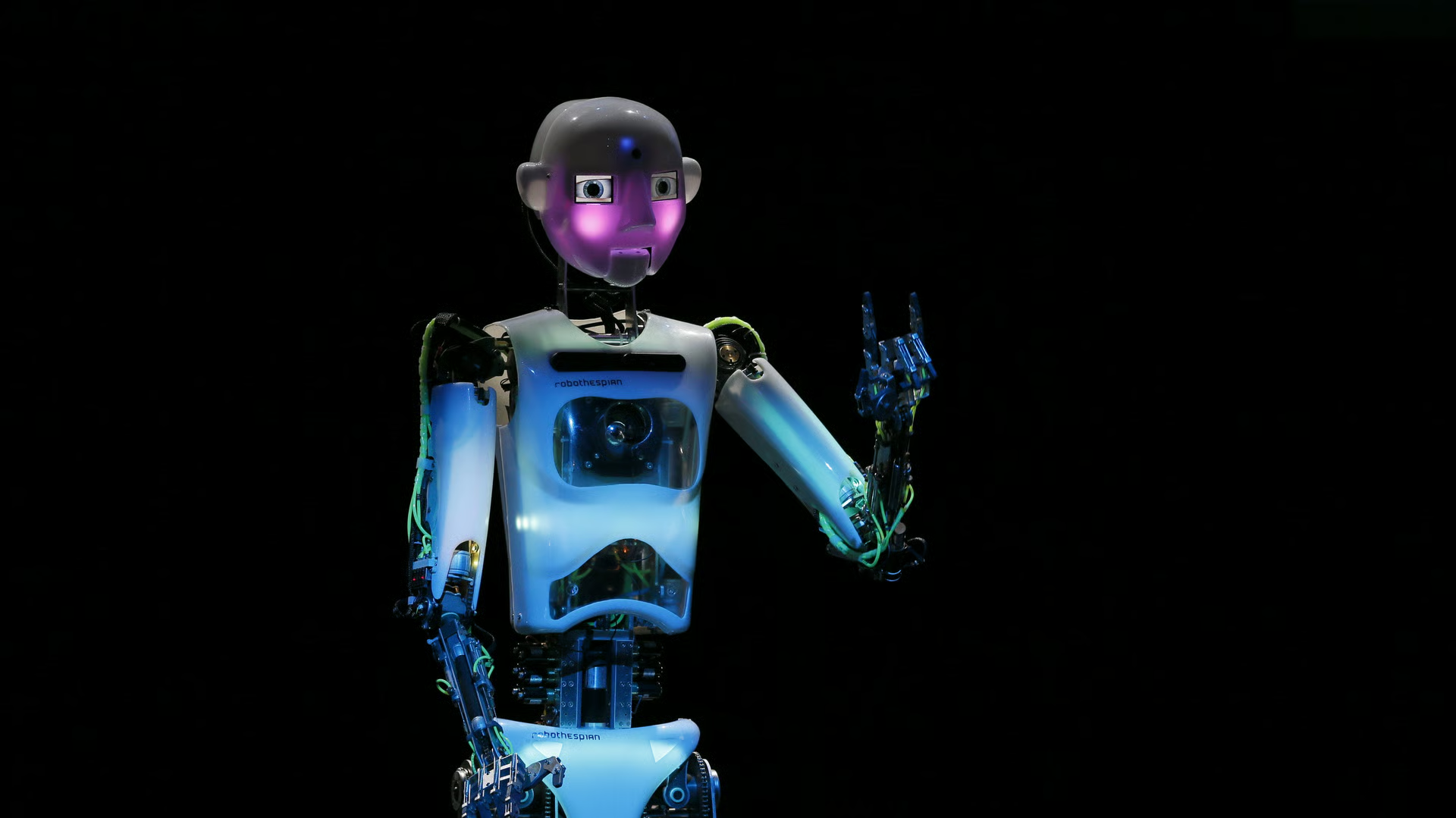
A critical aspect of making robots human-like is their ability to express emotions. This is not just about looking like a human, but about creating machines that can understand, process, and respond to human emotions. Robots like Hanson Robotics’ Sophia and Softbank’s Pepper are designed to read human emotions through facial expressions and voice tone. They can hold conversations and even exhibit facial expressions that mimic joy, sadness, or surprise. This emotional intelligence is crucial for applications in customer service, therapy, and education.


Challenges on the Path to Human-like Robots

Technical Challenges: Building the “Whole” Robot

While we’ve made impressive strides in various fields of robotics, creating a fully functional human-like robot remains an immense challenge. Some of the major hurdles include:

  1. Power Sources: Most robots rely on batteries, which limit their range and functionality. Until we develop more efficient and long-lasting power sources, robots will remain confined to short tasks or stationary roles.
  2. Mobility and Stability: The human body is extraordinarily complex. Achieving the dexterity of a human hand or the fluidity of human walking requires sophisticated design and materials that can mimic human anatomy. Even the most advanced humanoid robots today struggle with balance and coordination in dynamic environments.
  3. Sensor Integration: Robots need an extensive array of sensors to perceive their environment in real-time. This includes visual sensors (like cameras), tactile sensors (to feel), and auditory sensors (to hear). Integrating all these sensors to create a seamless interaction with the environment is a significant engineering challenge.

Ethical and Social Challenges

As robots become more advanced, ethical concerns begin to surface. These concerns are not just about the technology itself but also about how society will interact with these robots.

  • Human-Robot Interaction: As robots become more human-like, the lines between humans and machines blur. This raises questions about how we should treat these robots—can we assign them rights? What happens when they start mimicking emotional connections?
  • Job Displacement: With robots capable of performing tasks traditionally carried out by humans, there is an increasing concern about the displacement of workers in industries like manufacturing, healthcare, and retail.
  • Security and Privacy: As robots gain more autonomy, they could become potential vectors for cyberattacks, raising concerns about data privacy, security breaches, and misuse of technology.
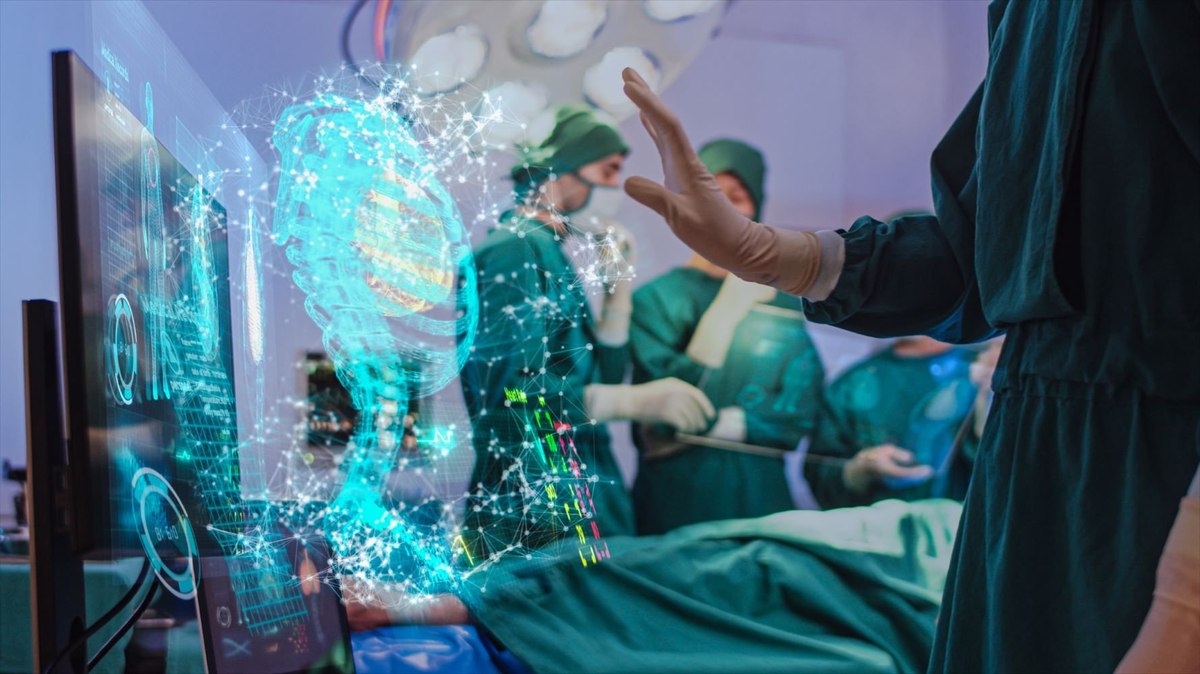
AI in healthcare: Are patients open to medical services powered by artificial  intelligence & robots? | YouGov

Applications of Human-like Robots

Healthcare and Assistance

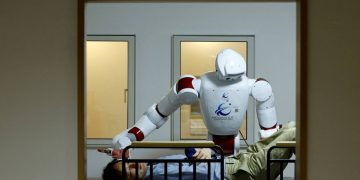
One of the most promising areas for human-like robots is in healthcare. Robots like “Robear” in Japan and “Care-O-bot” in Europe are already being used in elder care facilities to assist with lifting and supporting elderly patients. Human-like robots can provide companionship and support, reducing the loneliness that many elderly individuals experience.

Moreover, robots can be designed to assist doctors in complex surgeries. With the help of AI, they can analyze patient data and even perform precision tasks, such as minimally invasive surgeries.

Customer Service and Hospitality

As robots become more adept at recognizing and understanding human emotions, their use in customer service will become more prevalent. Robots like Pepper are already deployed in retail stores to greet customers, provide information, and improve the customer experience.

In hospitality, humanoid robots can take over tasks like check-in, room service, or even acting as tour guides, offering personalized interactions with guests.

Entertainment and Companionship

The entertainment industry has also embraced humanoid robots. Robots like Sophia and the humanoid robots from the “Westworld” series showcase how robots can entertain, engage, and even form relationships with humans. These robots could become companions for people seeking social interaction in the future.


What Does the Future Hold?

The future of human-like robots is both exciting and uncertain. In the next few decades, we can expect several developments:

  1. Improved Human-Robot Integration: Future robots will likely be able to work alongside humans in complex environments like factories, hospitals, and homes, performing tasks with greater accuracy and efficiency.
  2. Enhanced AI Capabilities: As AI becomes more advanced, robots will be able to understand and predict human emotions more accurately, opening the door for deeper human-robot relationships.
  3. Ethical Regulation: Governments and tech companies will need to establish ethical guidelines and regulations to ensure robots are developed and used responsibly.
  4. Personal Robots: In the future, we may all have personal robots in our homes, capable of performing a variety of tasks, from cleaning to cooking to personal care.

Conclusion

While we are still far from achieving the fully autonomous, human-like robots depicted in science fiction, the progress we’ve made thus far is remarkable. As technology continues to evolve, the line between human and robot will become increasingly blurred. Yet, with these advancements come serious ethical, social, and technical challenges that we must navigate carefully. In the coming years, expect to see more robots in our everyday lives—whether as companions, helpers, or workers. The future is bright, but we must ensure we create these robots responsibly, with a clear understanding of the impact they will have on society.



Tags: AI in RoboticsEmotional RobotsHuman-Robot InteractionRobot Intelligence
ShareTweetShare

Related Posts

Can Robots Adapt to Unpredictable Real-World Environments?
Robotics

Can Robots Adapt to Unpredictable Real-World Environments?

December 2, 2025
Will Robots Achieve True Autonomy or Always Need Human Oversight?
Robotics

Will Robots Achieve True Autonomy or Always Need Human Oversight?

December 1, 2025
What Happens When Robots Start Designing Robots?
Robotics

What Happens When Robots Start Designing Robots?

November 30, 2025
Are We Ready for Robots to Shape Our Creative Industries?
Robotics

Are We Ready for Robots to Shape Our Creative Industries?

November 29, 2025
Could Robots One Day Replace Human Emotions in Caregiving?
Robotics

Could Robots One Day Replace Human Emotions in Caregiving?

November 28, 2025
How Do We Ensure Robot Ethics in Autonomous Machines?
Robotics

How Do We Ensure Robot Ethics in Autonomous Machines?

November 27, 2025
Leave Comment
  • Trending
  • Comments
  • Latest
Can Sustainability Drive Profits in Competitive Markets?

Can Sustainability Drive Profits in Competitive Markets?

October 17, 2025
Can the Spotlight Make or Break Your Career?

Can the Spotlight Make or Break Your Career?

October 14, 2025
Does the Spotlight Always Equal Success?

Does the Spotlight Always Equal Success?

October 16, 2025
Can the Spotlight Truly Capture the Essence of a Person?

Can the Spotlight Truly Capture the Essence of a Person?

October 16, 2025
Can Bionics Redefine Human Limitations?

Can Bionics Redefine Human Limitations?

Is Bionics the Future of Prosthetics?

Is Bionics the Future of Prosthetics?

Can We Truly Integrate Technology with Biology?

Can We Truly Integrate Technology with Biology?

How Close Are We to Creating Bionic Organs?

How Close Are We to Creating Bionic Organs?

How Can Spotlights Elevate Your Interior Design Game?

How Can Spotlights Elevate Your Interior Design Game?

December 2, 2025
Will We Ever Live on Mars? And Should We?

Will We Ever Live on Mars? And Should We?

December 2, 2025
Bionics: The Key to Human Immortality?

Bionics: The Key to Human Immortality?

December 2, 2025
How Can Data Privacy be Maintained in a Hyperconnected World?

How Can Data Privacy be Maintained in a Hyperconnected World?

December 2, 2025
CyberGait

Our content caters to engineers, researchers, and tech enthusiasts alike. Through focused articles on algorithms, biomimicry, and industry trends, we provide a comprehensive perspective on the future of movement, from laboratory breakthroughs to commercial products.

© 2025 cybergait.com. contacts:[email protected]

No Result
View All Result
  • Home
  • Bionics
  • Breakthroughs
  • Industry
  • Robotics
  • Spotlight

© 2025 cybergait.com. contacts:[email protected]

Welcome Back!

Login to your account below

Forgotten Password?

Retrieve your password

Please enter your username or email address to reset your password.

Log In