






















CyberGait
  • Home
  • Bionics
    Bionics: The Key to Human Immortality?

    Bionics: The Key to Human Immortality?

    Bionic Organs: Can They Save Lives or Create New Ethical Dilemmas?

    Bionic Organs: Can They Save Lives or Create New Ethical Dilemmas?

    The Future of Prosthetics: Is It Fully Bionic?

    The Future of Prosthetics: Is It Fully Bionic?

    What Happens When Bionics Merge with Artificial Intelligence?

    What Happens When Bionics Merge with Artificial Intelligence?

    Bionic Enhancements: Could They Improve Our Cognitive Abilities?

    Bionic Enhancements: Could They Improve Our Cognitive Abilities?

    How Far Can Bionic Eyes Take Us Beyond Human Vision?

    How Far Can Bionic Eyes Take Us Beyond Human Vision?

  • Breakthroughs
    Will We Ever Live on Mars? And Should We?

    Will We Ever Live on Mars? And Should We?

    Are We on the Brink of a Green Energy Revolution?

    Are We on the Brink of a Green Energy Revolution?

    Can Mind-Controlled Technology Revolutionize Communication?

    Can Mind-Controlled Technology Revolutionize Communication?

    What If We Could 3D Print Human Organs?

    What If We Could 3D Print Human Organs?

    Can Autonomous Vehicles Surpass Human Drivers in Safety?

    Can Autonomous Vehicles Surpass Human Drivers in Safety?

    Genomic Editing the Key to Immortality?

    Genomic Editing the Key to Immortality?

  • Industry
    How Can Data Privacy be Maintained in a Hyperconnected World?

    How Can Data Privacy be Maintained in a Hyperconnected World?

    Is the Gig Economy the Future of Employment?

    Is the Gig Economy the Future of Employment?

    Can Startups Compete with Corporate Giants in Innovation?

    Can Startups Compete with Corporate Giants in Innovation?

    The Future of Work: Truly Remote or Hybrid?

    The Future of Work: Truly Remote or Hybrid?

    How Does Blockchain Impact Global Supply Chains?

    How Does Blockchain Impact Global Supply Chains?

    Are We Overestimating the Power of Automation?

    Are We Overestimating the Power of Automation?

  • Robotics
    Can Robots Adapt to Unpredictable Real-World Environments?

    Can Robots Adapt to Unpredictable Real-World Environments?

    Will Robots Achieve True Autonomy or Always Need Human Oversight?

    Will Robots Achieve True Autonomy or Always Need Human Oversight?

    What Happens When Robots Start Designing Robots?

    What Happens When Robots Start Designing Robots?

    Are We Ready for Robots to Shape Our Creative Industries?

    Are We Ready for Robots to Shape Our Creative Industries?

    Could Robots One Day Replace Human Emotions in Caregiving?

    Could Robots One Day Replace Human Emotions in Caregiving?

    How Do We Ensure Robot Ethics in Autonomous Machines?

    How Do We Ensure Robot Ethics in Autonomous Machines?

  • Spotlight
    How Can Spotlights Elevate Your Interior Design Game?

    How Can Spotlights Elevate Your Interior Design Game?

    What Happens When You Use a Spotlight for Intimate Portraits?

    What Happens When You Use a Spotlight for Intimate Portraits?

    Why Do Spotlight Effects Matter in Cinematic Storytelling?

    Why Do Spotlight Effects Matter in Cinematic Storytelling?

    Could Spotlighting Be the Key to Perfect Product Photography?

    Could Spotlighting Be the Key to Perfect Product Photography?

    Spotlight Technology Changing the Future of Stage Design

    Spotlight Technology Changing the Future of Stage Design

    How Do Different Spotlights Affect Mood and Atmosphere?

    How Do Different Spotlights Affect Mood and Atmosphere?

CyberGait
  • Home
  • Bionics
    Bionics: The Key to Human Immortality?

    Bionics: The Key to Human Immortality?

    Bionic Organs: Can They Save Lives or Create New Ethical Dilemmas?

    Bionic Organs: Can They Save Lives or Create New Ethical Dilemmas?

    The Future of Prosthetics: Is It Fully Bionic?

    The Future of Prosthetics: Is It Fully Bionic?

    What Happens When Bionics Merge with Artificial Intelligence?

    What Happens When Bionics Merge with Artificial Intelligence?

    Bionic Enhancements: Could They Improve Our Cognitive Abilities?

    Bionic Enhancements: Could They Improve Our Cognitive Abilities?

    How Far Can Bionic Eyes Take Us Beyond Human Vision?

    How Far Can Bionic Eyes Take Us Beyond Human Vision?

  • Breakthroughs
    Will We Ever Live on Mars? And Should We?

    Will We Ever Live on Mars? And Should We?

    Are We on the Brink of a Green Energy Revolution?

    Are We on the Brink of a Green Energy Revolution?

    Can Mind-Controlled Technology Revolutionize Communication?

    Can Mind-Controlled Technology Revolutionize Communication?

    What If We Could 3D Print Human Organs?

    What If We Could 3D Print Human Organs?

    Can Autonomous Vehicles Surpass Human Drivers in Safety?

    Can Autonomous Vehicles Surpass Human Drivers in Safety?

    Genomic Editing the Key to Immortality?

    Genomic Editing the Key to Immortality?

  • Industry
    How Can Data Privacy be Maintained in a Hyperconnected World?

    How Can Data Privacy be Maintained in a Hyperconnected World?

    Is the Gig Economy the Future of Employment?

    Is the Gig Economy the Future of Employment?

    Can Startups Compete with Corporate Giants in Innovation?

    Can Startups Compete with Corporate Giants in Innovation?

    The Future of Work: Truly Remote or Hybrid?

    The Future of Work: Truly Remote or Hybrid?

    How Does Blockchain Impact Global Supply Chains?

    How Does Blockchain Impact Global Supply Chains?

    Are We Overestimating the Power of Automation?

    Are We Overestimating the Power of Automation?

  • Robotics
    Can Robots Adapt to Unpredictable Real-World Environments?

    Can Robots Adapt to Unpredictable Real-World Environments?

    Will Robots Achieve True Autonomy or Always Need Human Oversight?

    Will Robots Achieve True Autonomy or Always Need Human Oversight?

    What Happens When Robots Start Designing Robots?

    What Happens When Robots Start Designing Robots?

    Are We Ready for Robots to Shape Our Creative Industries?

    Are We Ready for Robots to Shape Our Creative Industries?

    Could Robots One Day Replace Human Emotions in Caregiving?

    Could Robots One Day Replace Human Emotions in Caregiving?

    How Do We Ensure Robot Ethics in Autonomous Machines?

    How Do We Ensure Robot Ethics in Autonomous Machines?

  • Spotlight
    How Can Spotlights Elevate Your Interior Design Game?

    How Can Spotlights Elevate Your Interior Design Game?

    What Happens When You Use a Spotlight for Intimate Portraits?

    What Happens When You Use a Spotlight for Intimate Portraits?

    Why Do Spotlight Effects Matter in Cinematic Storytelling?

    Why Do Spotlight Effects Matter in Cinematic Storytelling?

    Could Spotlighting Be the Key to Perfect Product Photography?

    Could Spotlighting Be the Key to Perfect Product Photography?

    Spotlight Technology Changing the Future of Stage Design

    Spotlight Technology Changing the Future of Stage Design

    How Do Different Spotlights Affect Mood and Atmosphere?

    How Do Different Spotlights Affect Mood and Atmosphere?

CyberGait
No Result
View All Result
Home Bionics

Bionic Skin: The Next Frontier in Medical Technology?

October 20, 2025
in Bionics
Bionic Skin: The Next Frontier in Medical Technology?

Introduction

Bionic skin—an intriguing fusion of biology and technology—has the potential to reshape the future of medicine. From restoring lost senses to improving the quality of life for those with severe injuries, this cutting-edge innovation is capturing the imagination of scientists, doctors, and tech enthusiasts alike. But what exactly is bionic skin, and why is it generating so much excitement in the field of medical technology? This article takes you on a journey into the world of bionic skin, exploring its history, current breakthroughs, and potential future applications.


What is Bionic Skin?

Bionic skin refers to a synthetic material that mimics the sensory functions of human skin. It is designed to be flexible, stretchable, and responsive, much like the skin of a human being. Bionic skin can sense touch, temperature, and even pain, making it an incredibly valuable asset in medical technology. It combines electronics, bioengineering, and nanotechnology to achieve results that seem to blur the lines between human anatomy and artificial intelligence.

Unlike traditional prosthetic limbs or external devices, bionic skin doesn’t just cover the body. It integrates with the wearer’s body, acting as an interface between the biological and the mechanical, allowing the user to experience the world through a tactile sense.


The History of Bionic Skin Development

The concept of bionic skin has been around for decades, but recent advancements have brought the idea closer to reality. The first experiments with bionic skin began in the early 20th century when scientists sought to create prosthetic limbs that could replicate human functionality. Over the years, researchers have developed various types of prosthetic skin, but the technology has advanced significantly in the past two decades.

In 2008, researchers at the University of Tokyo developed the first version of a “smart skin” that could respond to touch. This was a critical step forward, as it demonstrated that synthetic materials could be integrated into human prosthetics to allow sensory feedback. By 2012, scientists at Stanford University developed a bionic skin capable of not only feeling pressure but also sensing temperature changes, a critical step toward mimicking human skin’s complex abilities.

More recently, developments have shifted from merely replicating the touch sensation to creating skins that can even interface with the brain, enabling users to “feel” through their bionic skins in a way that closely mimics natural sensory perception.
Flexible Sensors - Properties and Applications

Materials Used in Bionic Skin

One of the most impressive aspects of bionic skin is the variety of materials it uses. Early prototypes were bulky and rigid, but today’s bionic skins are made from flexible, stretchable, and self-healing materials that make them much more comfortable and functional. Let’s dive into some of the key materials involved:

1. Conductive Polymers

Conductive polymers are a class of materials that can conduct electricity like metals but have the flexibility of plastics. These materials are integral to bionic skin because they allow it to “feel” and respond to stimuli. Conductive polymers enable the skin to detect pressure and temperature changes and to transmit this information to sensors, similar to the way the nervous system sends signals to the brain.

2. Graphene

Graphene, a single layer of carbon atoms arranged in a honeycomb pattern, is another key material used in bionic skin. Known for its high strength, flexibility, and conductivity, graphene offers an ideal solution for creating flexible, durable bionic skin. Research suggests that graphene-based bionic skin could even be used to sense the environment around the wearer, allowing for an interactive experience similar to natural skin.

3. Silicone

Silicone is a versatile material often used in the production of prosthetics and bionic skin. It is soft, stretchable, and biocompatible, making it an ideal candidate for creating artificial skin that can conform to the contours of the human body. Silicone also has the advantage of being resistant to wear and tear, meaning that bionic skin made from this material could last for extended periods.

4. Nanomaterials

Nanomaterials—tiny materials at the scale of one billionth of a meter—are increasingly being used in bionic skin research. These materials are lightweight, flexible, and capable of interacting with the body’s cells at the molecular level. Nanomaterials like carbon nanotubes and silver nanowires allow for the creation of highly sensitive sensors that can respond to even the most subtle changes in pressure, temperature, and movement.


The Science Behind Bionic Skin

The core function of bionic skin revolves around its ability to sense and process stimuli in a way similar to human skin. The skin is equipped with arrays of sensors that detect physical sensations like touch, vibration, and temperature. These sensors are connected to electronic circuits, which then transmit data to a computer or neural interface that processes the information.

This sophisticated process involves several layers of technology working in tandem:

1. Sensors

Bionic skin uses advanced sensors to detect physical interactions. These sensors may include piezoelectric elements (which produce an electric charge when deformed), thermistors (which detect temperature changes), and capacitive sensors (which detect touch). Together, they mimic the sensory functions of human skin.

2. Signal Processing

Once the sensors detect stimuli, the information is transmitted through wires or wireless communication channels to a processing unit. The processing unit interprets the data and sends it to the brain or an artificial neural network. This step is crucial for enabling the skin to “feel” and respond accordingly.

3. Feedback Mechanism

One of the most exciting features of bionic skin is its ability to provide feedback. For example, when pressure is applied to the skin, the sensors detect the force and transmit a signal to the brain (or to a prosthetic device). This feedback loop is what enables bionic skin to not only detect changes but to “feel” them in a meaningful way.


Current Applications of Bionic Skin

Bionic skin has already begun to show promising results in various fields, particularly in the areas of prosthetics, rehabilitation, and robotics. Here are some of the current applications:
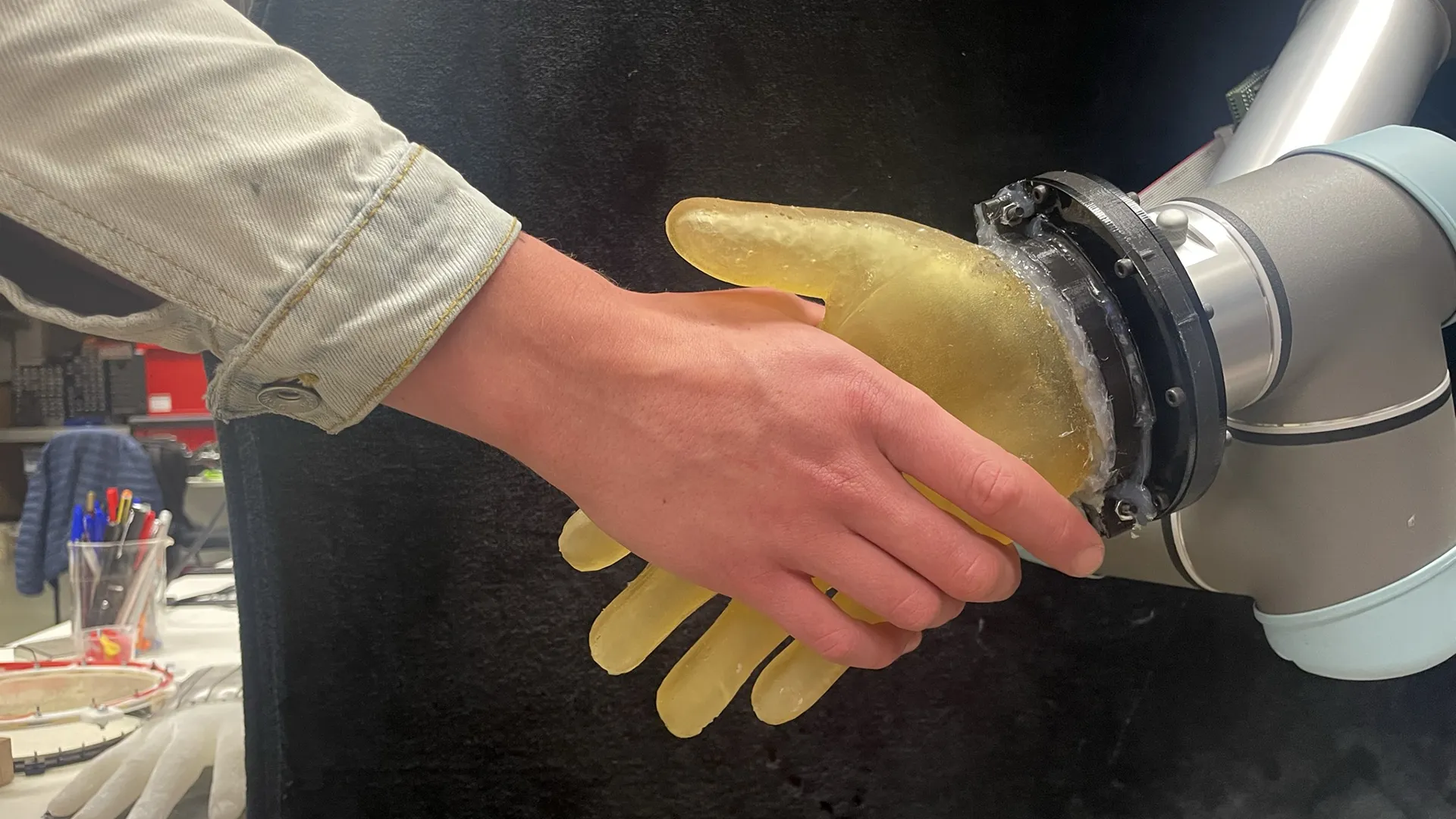
Robots that feel heat, pain, and pressure? This new “skin” makes it  possible | ScienceDaily

1. Prosthetics

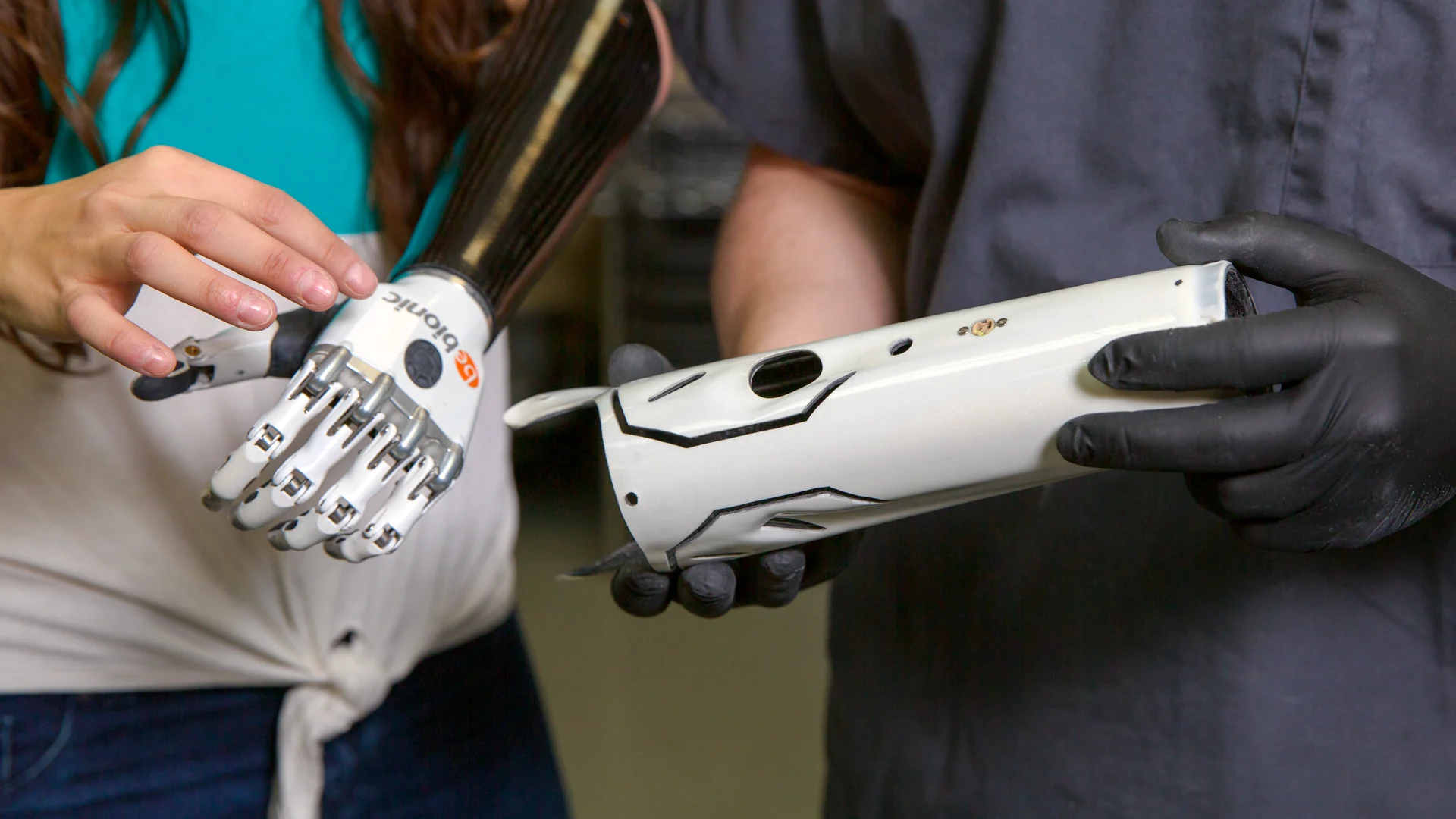
The most well-known application of bionic skin is in the field of prosthetics. Prosthetic limbs have been around for centuries, but they have often lacked the ability to provide users with sensory feedback. Modern bionic skin can provide this crucial feedback, giving users the ability to “feel” objects they touch or even sense temperature changes. This enhances the user’s experience and makes prosthetic limbs feel more natural.

2. Robotics

Bionic skin is also being integrated into robots, particularly humanoid robots, to improve their interaction with humans and the environment. By adding a layer of sensory feedback, robots can “feel” the world around them, enabling them to make more nuanced decisions. For example, robots can gently grasp objects without damaging them, improving their safety and efficiency.

3. Medical Rehabilitation

Bionic skin has immense potential in the field of medical rehabilitation, particularly for patients who have lost sensation in their limbs due to spinal cord injuries or neurological conditions. With the integration of bionic skin, these patients could regain some sensory functions, enabling them to interact with their environment in a more meaningful way. Researchers are also exploring the use of bionic skin for patients with burns, wounds, or skin conditions, allowing for more effective healing and sensory restoration.


Future Prospects of Bionic Skin

The future of bionic skin is incredibly promising. As technology continues to evolve, we can expect even more advanced versions of bionic skin with enhanced capabilities. Some of the key areas of future development include:

1. Full Sensory Integration

Researchers are working toward achieving full sensory integration, where bionic skin doesn’t just provide basic touch feedback but also mimics the complex sensory experience of human skin. This would include sensations like pain, texture, and even the ability to distinguish between different types of touch (gentle vs. forceful).

2. Neural Interface

In the future, bionic skin could be connected directly to the nervous system through a neural interface. This would allow the skin to send signals directly to the brain, enabling users to experience sensations in real-time. Neural interfaces are one of the most exciting areas of research, as they could open up entirely new possibilities for people with disabilities.

3. Self-Healing Bionic Skin

Another fascinating possibility is the development of self-healing bionic skin. Just as human skin can heal itself after a cut or scrape, scientists are working to create materials that can heal automatically when damaged. This would increase the longevity and durability of bionic skin, making it even more practical for long-term use.


Conclusion

Bionic skin is undoubtedly one of the most exciting and promising frontiers in medical technology. From prosthetics to robotics, its potential applications are vast, and its implications for improving the quality of life for millions of people around the world are enormous. Although we are still in the early stages of development, the progress made so far suggests that bionic skin could one day become a commonplace technology that revolutionizes the way we think about human-machine interaction.

With advancements in materials, sensor technology, and neural interfaces, bionic skin may soon allow people to regain sensations they have lost or never had, opening up new possibilities for medical treatment, rehabilitation, and even human augmentation. As research continues, the boundaries of what is possible with bionic skin will only expand, bringing us closer to a future where human and machine coexist in harmony.


Tags: BioengineeringBiotechnologyHealthcareProsthetics
ShareTweetShare

Related Posts

Bionics: The Key to Human Immortality?
Bionics

Bionics: The Key to Human Immortality?

December 2, 2025
Bionic Organs: Can They Save Lives or Create New Ethical Dilemmas?
Bionics

Bionic Organs: Can They Save Lives or Create New Ethical Dilemmas?

December 1, 2025
The Future of Prosthetics: Is It Fully Bionic?
Bionics

The Future of Prosthetics: Is It Fully Bionic?

November 30, 2025
What Happens When Bionics Merge with Artificial Intelligence?
Bionics

What Happens When Bionics Merge with Artificial Intelligence?

November 29, 2025
Bionic Enhancements: Could They Improve Our Cognitive Abilities?
Bionics

Bionic Enhancements: Could They Improve Our Cognitive Abilities?

November 28, 2025
How Far Can Bionic Eyes Take Us Beyond Human Vision?
Bionics

How Far Can Bionic Eyes Take Us Beyond Human Vision?

November 27, 2025
Leave Comment
  • Trending
  • Comments
  • Latest
Can Sustainability Drive Profits in Competitive Markets?

Can Sustainability Drive Profits in Competitive Markets?

October 17, 2025
Can the Spotlight Make or Break Your Career?

Can the Spotlight Make or Break Your Career?

October 14, 2025
Does the Spotlight Always Equal Success?

Does the Spotlight Always Equal Success?

October 16, 2025
Can the Spotlight Truly Capture the Essence of a Person?

Can the Spotlight Truly Capture the Essence of a Person?

October 16, 2025
Can Bionics Redefine Human Limitations?

Can Bionics Redefine Human Limitations?

Is Bionics the Future of Prosthetics?

Is Bionics the Future of Prosthetics?

Can We Truly Integrate Technology with Biology?

Can We Truly Integrate Technology with Biology?

How Close Are We to Creating Bionic Organs?

How Close Are We to Creating Bionic Organs?

How Can Spotlights Elevate Your Interior Design Game?

How Can Spotlights Elevate Your Interior Design Game?

December 2, 2025
Will We Ever Live on Mars? And Should We?

Will We Ever Live on Mars? And Should We?

December 2, 2025
Bionics: The Key to Human Immortality?

Bionics: The Key to Human Immortality?

December 2, 2025
How Can Data Privacy be Maintained in a Hyperconnected World?

How Can Data Privacy be Maintained in a Hyperconnected World?

December 2, 2025
CyberGait

Our content caters to engineers, researchers, and tech enthusiasts alike. Through focused articles on algorithms, biomimicry, and industry trends, we provide a comprehensive perspective on the future of movement, from laboratory breakthroughs to commercial products.

© 2025 cybergait.com. contacts:[email protected]

No Result
View All Result
  • Home
  • Bionics
  • Breakthroughs
  • Industry
  • Robotics
  • Spotlight

© 2025 cybergait.com. contacts:[email protected]

Welcome Back!

Login to your account below

Forgotten Password?

Retrieve your password

Please enter your username or email address to reset your password.

Log In