


















CyberGait
  • Home
  • Bionics
    Bionics: The Key to Human Immortality?

    Bionics: The Key to Human Immortality?

    Bionic Organs: Can They Save Lives or Create New Ethical Dilemmas?

    Bionic Organs: Can They Save Lives or Create New Ethical Dilemmas?

    The Future of Prosthetics: Is It Fully Bionic?

    The Future of Prosthetics: Is It Fully Bionic?

    What Happens When Bionics Merge with Artificial Intelligence?

    What Happens When Bionics Merge with Artificial Intelligence?

    Bionic Enhancements: Could They Improve Our Cognitive Abilities?

    Bionic Enhancements: Could They Improve Our Cognitive Abilities?

    How Far Can Bionic Eyes Take Us Beyond Human Vision?

    How Far Can Bionic Eyes Take Us Beyond Human Vision?

  • Breakthroughs
    Will We Ever Live on Mars? And Should We?

    Will We Ever Live on Mars? And Should We?

    Are We on the Brink of a Green Energy Revolution?

    Are We on the Brink of a Green Energy Revolution?

    Can Mind-Controlled Technology Revolutionize Communication?

    Can Mind-Controlled Technology Revolutionize Communication?

    What If We Could 3D Print Human Organs?

    What If We Could 3D Print Human Organs?

    Can Autonomous Vehicles Surpass Human Drivers in Safety?

    Can Autonomous Vehicles Surpass Human Drivers in Safety?

    Genomic Editing the Key to Immortality?

    Genomic Editing the Key to Immortality?

  • Industry
    How Can Data Privacy be Maintained in a Hyperconnected World?

    How Can Data Privacy be Maintained in a Hyperconnected World?

    Is the Gig Economy the Future of Employment?

    Is the Gig Economy the Future of Employment?

    Can Startups Compete with Corporate Giants in Innovation?

    Can Startups Compete with Corporate Giants in Innovation?

    The Future of Work: Truly Remote or Hybrid?

    The Future of Work: Truly Remote or Hybrid?

    How Does Blockchain Impact Global Supply Chains?

    How Does Blockchain Impact Global Supply Chains?

    Are We Overestimating the Power of Automation?

    Are We Overestimating the Power of Automation?

  • Robotics
    Can Robots Adapt to Unpredictable Real-World Environments?

    Can Robots Adapt to Unpredictable Real-World Environments?

    Will Robots Achieve True Autonomy or Always Need Human Oversight?

    Will Robots Achieve True Autonomy or Always Need Human Oversight?

    What Happens When Robots Start Designing Robots?

    What Happens When Robots Start Designing Robots?

    Are We Ready for Robots to Shape Our Creative Industries?

    Are We Ready for Robots to Shape Our Creative Industries?

    Could Robots One Day Replace Human Emotions in Caregiving?

    Could Robots One Day Replace Human Emotions in Caregiving?

    How Do We Ensure Robot Ethics in Autonomous Machines?

    How Do We Ensure Robot Ethics in Autonomous Machines?

  • Spotlight
    How Can Spotlights Elevate Your Interior Design Game?

    How Can Spotlights Elevate Your Interior Design Game?

    What Happens When You Use a Spotlight for Intimate Portraits?

    What Happens When You Use a Spotlight for Intimate Portraits?

    Why Do Spotlight Effects Matter in Cinematic Storytelling?

    Why Do Spotlight Effects Matter in Cinematic Storytelling?

    Could Spotlighting Be the Key to Perfect Product Photography?

    Could Spotlighting Be the Key to Perfect Product Photography?

    Spotlight Technology Changing the Future of Stage Design

    Spotlight Technology Changing the Future of Stage Design

    How Do Different Spotlights Affect Mood and Atmosphere?

    How Do Different Spotlights Affect Mood and Atmosphere?

CyberGait
  • Home
  • Bionics
    Bionics: The Key to Human Immortality?

    Bionics: The Key to Human Immortality?

    Bionic Organs: Can They Save Lives or Create New Ethical Dilemmas?

    Bionic Organs: Can They Save Lives or Create New Ethical Dilemmas?

    The Future of Prosthetics: Is It Fully Bionic?

    The Future of Prosthetics: Is It Fully Bionic?

    What Happens When Bionics Merge with Artificial Intelligence?

    What Happens When Bionics Merge with Artificial Intelligence?

    Bionic Enhancements: Could They Improve Our Cognitive Abilities?

    Bionic Enhancements: Could They Improve Our Cognitive Abilities?

    How Far Can Bionic Eyes Take Us Beyond Human Vision?

    How Far Can Bionic Eyes Take Us Beyond Human Vision?

  • Breakthroughs
    Will We Ever Live on Mars? And Should We?

    Will We Ever Live on Mars? And Should We?

    Are We on the Brink of a Green Energy Revolution?

    Are We on the Brink of a Green Energy Revolution?

    Can Mind-Controlled Technology Revolutionize Communication?

    Can Mind-Controlled Technology Revolutionize Communication?

    What If We Could 3D Print Human Organs?

    What If We Could 3D Print Human Organs?

    Can Autonomous Vehicles Surpass Human Drivers in Safety?

    Can Autonomous Vehicles Surpass Human Drivers in Safety?

    Genomic Editing the Key to Immortality?

    Genomic Editing the Key to Immortality?

  • Industry
    How Can Data Privacy be Maintained in a Hyperconnected World?

    How Can Data Privacy be Maintained in a Hyperconnected World?

    Is the Gig Economy the Future of Employment?

    Is the Gig Economy the Future of Employment?

    Can Startups Compete with Corporate Giants in Innovation?

    Can Startups Compete with Corporate Giants in Innovation?

    The Future of Work: Truly Remote or Hybrid?

    The Future of Work: Truly Remote or Hybrid?

    How Does Blockchain Impact Global Supply Chains?

    How Does Blockchain Impact Global Supply Chains?

    Are We Overestimating the Power of Automation?

    Are We Overestimating the Power of Automation?

  • Robotics
    Can Robots Adapt to Unpredictable Real-World Environments?

    Can Robots Adapt to Unpredictable Real-World Environments?

    Will Robots Achieve True Autonomy or Always Need Human Oversight?

    Will Robots Achieve True Autonomy or Always Need Human Oversight?

    What Happens When Robots Start Designing Robots?

    What Happens When Robots Start Designing Robots?

    Are We Ready for Robots to Shape Our Creative Industries?

    Are We Ready for Robots to Shape Our Creative Industries?

    Could Robots One Day Replace Human Emotions in Caregiving?

    Could Robots One Day Replace Human Emotions in Caregiving?

    How Do We Ensure Robot Ethics in Autonomous Machines?

    How Do We Ensure Robot Ethics in Autonomous Machines?

  • Spotlight
    How Can Spotlights Elevate Your Interior Design Game?

    How Can Spotlights Elevate Your Interior Design Game?

    What Happens When You Use a Spotlight for Intimate Portraits?

    What Happens When You Use a Spotlight for Intimate Portraits?

    Why Do Spotlight Effects Matter in Cinematic Storytelling?

    Why Do Spotlight Effects Matter in Cinematic Storytelling?

    Could Spotlighting Be the Key to Perfect Product Photography?

    Could Spotlighting Be the Key to Perfect Product Photography?

    Spotlight Technology Changing the Future of Stage Design

    Spotlight Technology Changing the Future of Stage Design

    How Do Different Spotlights Affect Mood and Atmosphere?

    How Do Different Spotlights Affect Mood and Atmosphere?

CyberGait
No Result
View All Result
Home Robotics

Can Robots Truly Learn Like Humans?

October 20, 2025
in Robotics
Can Robots Truly Learn Like Humans?

Introduction: The Challenge of Human-Like Learning

For decades, artificial intelligence (AI) has been an exciting and ever-evolving field, often drawing comparisons to human intelligence. While robots today can perform impressive tasks, ranging from playing chess to driving cars, a burning question lingers: can they truly learn like humans? The idea of machines acquiring human-like intelligence has been a goal for researchers and engineers, but despite significant advancements, robots are still far from replicating the full depth of human cognition.

This article dives into the question of whether robots can truly learn like humans, examining the current state of AI, the challenges involved, and where this journey may lead in the future.


What Does It Mean to “Learn Like Humans”?

Before exploring the intricacies of machine learning, it’s important to define what it means to learn like a human. Human learning is characterized by a few key features:

  1. Adaptability: Humans learn from experience and adapt to new situations, often with little guidance.
  2. Generalization: We can apply knowledge gained in one context to a completely different one.
  3. Consciousness: Human learning is not purely mechanical; it involves emotions, self-reflection, and a sense of purpose.
  4. Creativity: Humans can create new ideas, not just imitate what has already been learned.

AI and robotics, though remarkable in their own right, often excel in only one or two of these areas. For instance, a robot might be trained to perform a task like sorting objects, but it struggles to adapt when the environment changes or when faced with unfamiliar objects.


The State of Machine Learning: Impressive, But Limited

Narrow AI: The Current Standard

Currently, most AI systems are examples of narrow AI—machines that are trained to perform specific tasks. Narrow AI can learn patterns within vast datasets, but it lacks the flexibility and generalization capabilities of human learning.

For example:

  • Image recognition algorithms can accurately identify objects in images.
  • Chatbots (like the one you’re chatting with now) can process and generate natural language responses.

However, these systems don’t “understand” the information in the way humans do. They are not aware of the broader context and can struggle when they encounter scenarios outside their programming. For instance, a language model might fail to detect sarcasm or nuance in speech, something humans easily grasp through life experience.

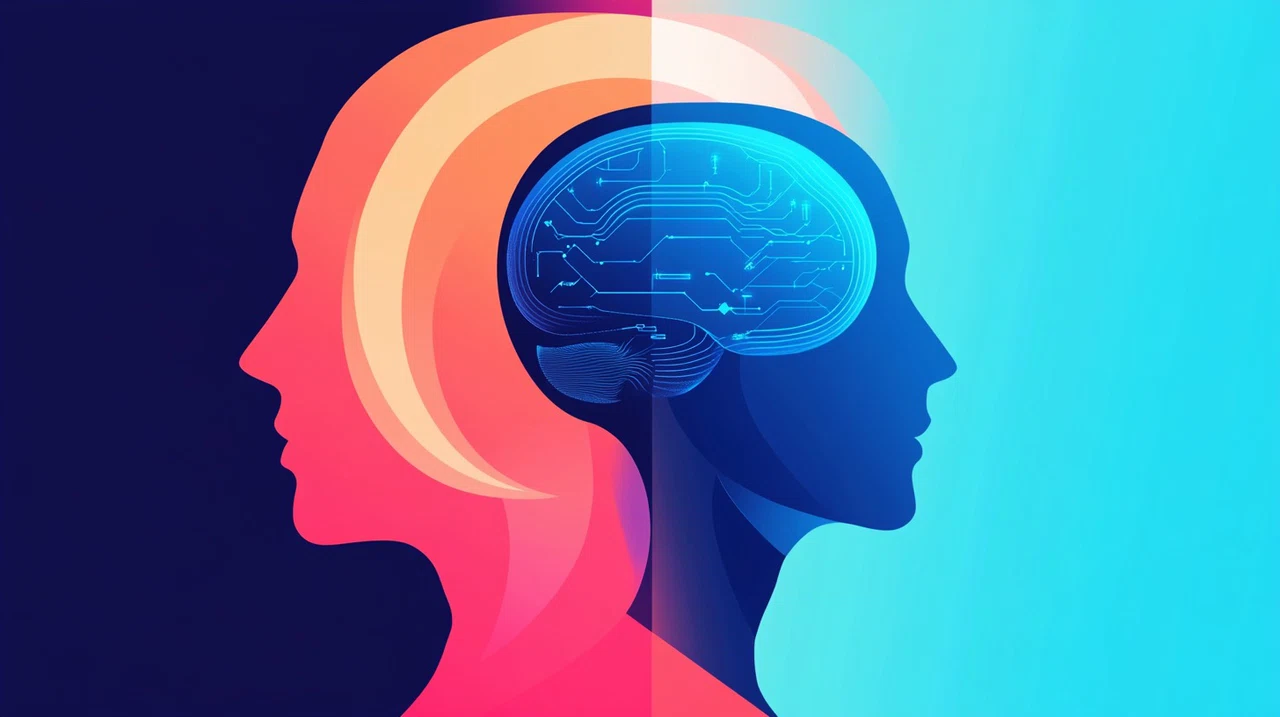
Embracing the Future: The Unparalleled Potential of Artificial General  Intelligence

The Limitations of Deep Learning

At the core of much modern AI is deep learning, a subset of machine learning modeled after the human brain. Deep learning systems use neural networks to recognize patterns in data, but they still face major challenges in mimicking human-like learning.

  1. Data Dependency: Deep learning systems need massive amounts of data to learn effectively. Human learning, on the other hand, is far more data-efficient. A child might only need to see a dog once to recognize one, whereas a machine requires thousands or even millions of examples.
  2. Generalization: Machines often struggle with transferring knowledge from one domain to another. A robot trained to play chess can’t suddenly play Go without starting from scratch.
  3. Lack of Understanding: Machines do not “understand” what they are doing. They are simply identifying patterns, unlike humans, who learn by understanding underlying concepts and relationships.

Key Milestones in Robotic Learning

While robots have not yet achieved human-like learning, there have been several notable milestones:

1. Reinforcement Learning: The Quest for Autonomy

Reinforcement learning (RL) is an area of machine learning where agents (robots) learn by interacting with their environment and receiving feedback. This method has achieved remarkable successes, such as the AlphaGo program, which defeated world champions in the ancient game of Go. In RL, robots use trial and error to improve their decision-making, much like humans do when learning new tasks. However, the complexity of this process pales in comparison to the cognitive flexibility exhibited by humans.

2. Transfer Learning: Improving Adaptability

One of the biggest challenges in AI is teaching a robot to transfer knowledge from one task to another. Transfer learning is a technique where models trained on one set of data can be applied to a different, yet related, task. While this is an exciting step forward, it is still far from the seamless adaptability of human learning. A human can easily transfer knowledge from playing one strategy game to another, even if they’ve never seen it before. AI systems, on the other hand, often require fine-tuning and adjustments to perform well in new domains.

3. Human-Robot Interaction: Learning from Humans

In some environments, robots can learn from humans through demonstration or collaborative learning. For instance, in manufacturing settings, robots can observe human workers and replicate their actions. This type of learning is akin to how humans learn by watching others, but robots still lack the intuitive grasp of the task that comes with human experience.


Why Can’t Robots Learn Like Humans?

Despite advances in AI and robotics, several key barriers prevent robots from learning in the same way humans do:

1. Absence of Common Sense

One of the most significant gaps between human and machine learning is common sense. Humans understand the world in a holistic way, drawing on a lifetime of experiences and emotions to inform their actions. Robots, however, often struggle with basic reasoning and inference. For example, while a human can instantly know that a glass is fragile and should be handled carefully, a robot might not come to this conclusion without extensive training on specific datasets.

2. Emotional Intelligence

Humans learn not just through logic, but also through emotions. Emotions provide critical feedback, guide decision-making, and influence memory. Emotional intelligence enables humans to interact with others, form relationships, and navigate social dynamics. Robots, however, are devoid of emotions, limiting their ability to truly understand or empathize with humans.
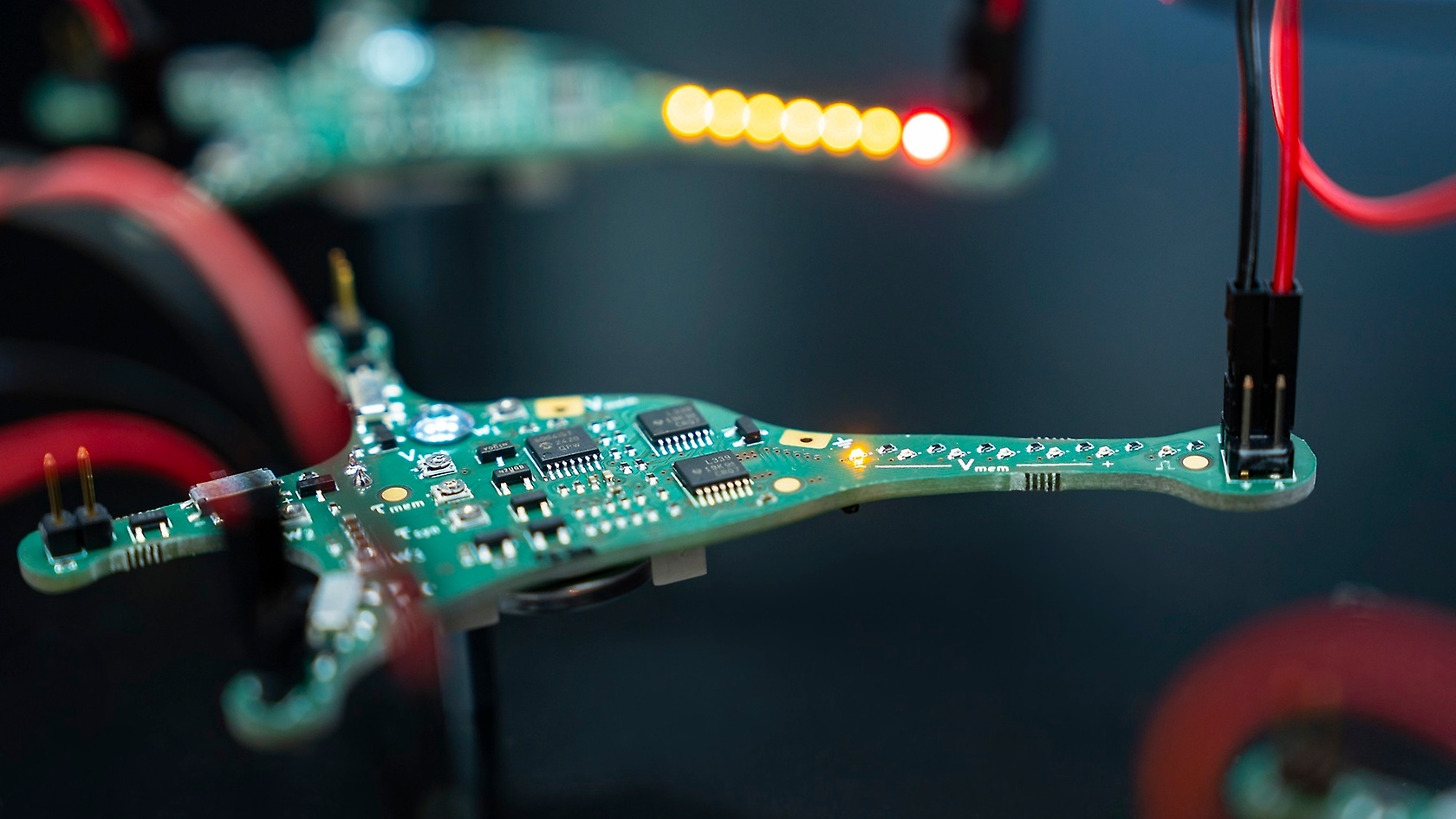
Neuromorphic computing: More energy efficiency in autonomous driving of the  future | Mercedes-Benz Group > Innovations > Product innovation >  Autonomous driving

3. Contextual Awareness

Humans are masters at understanding context. We can interpret language, gestures, and behaviors based on the environment we’re in. A robot, on the other hand, can struggle with this context awareness. For instance, it might misinterpret a human’s tone of voice or fail to understand a joke. Without context, machines lack the deeper understanding of situations that comes naturally to people.

4. Ethics and Morality

Humans are able to make ethical decisions based on complex societal norms, experiences, and emotions. While AI can be programmed with ethical frameworks, it lacks the intrinsic moral compass that humans develop through life experiences. Robots might follow the letter of the law, but they cannot “feel” the ethical weight of their decisions in the way that humans can.


The Future of Human-Like Learning in Robots

Despite these limitations, the field of AI is progressing rapidly. Researchers are investigating new approaches to make robots learn more like humans, such as combining symbolic reasoning with deep learning or developing AI systems that can simulate emotional understanding. The dream of robots that learn with human-like flexibility, creativity, and awareness may not be as far off as it once seemed.

1. Neuromorphic Computing

Neuromorphic computing involves designing computer systems that mimic the structure and function of the human brain. This approach could lead to robots that are better at generalizing knowledge and learning from fewer examples, much like humans.

2. Artificial General Intelligence (AGI)

One of the ultimate goals of AI research is to create Artificial General Intelligence (AGI)—a form of intelligence that can perform any intellectual task that a human can. AGI would possess the ability to learn and adapt across a wide range of domains, and potentially even exhibit traits like consciousness and emotions. While AGI is still far from realization, researchers are optimistic that it will one day revolutionize how robots learn and interact with the world.

3. Collaborative Learning with Humans

Future robots might not need to “learn like humans” in the traditional sense. Instead, they could work alongside humans, learning from their environment and collaborating in ways that enhance both human and robotic capabilities. This hybrid approach, where robots augment human abilities, may be more realistic and beneficial than trying to replicate human learning directly.


Conclusion: A Long Road Ahead

In conclusion, while robots have made significant strides in learning and adapting, they are still far from matching the complexity and richness of human learning. The journey toward creating machines that can learn like humans involves overcoming significant challenges, such as developing emotional intelligence, common sense, and contextual awareness.

However, with ongoing research and breakthroughs in areas like neuromorphic computing and AGI, the dream of robots with human-like learning abilities is becoming increasingly plausible. For now, robots are valuable tools in specific domains, but as AI advances, they may one day work with us in more human-like ways, learning from experience, adapting to new situations, and even collaborating on creative tasks.


Tags: AI in RoboticsEthicsHuman-Robot InteractionRobot Intelligence
ShareTweetShare

Related Posts

Can Robots Adapt to Unpredictable Real-World Environments?
Robotics

Can Robots Adapt to Unpredictable Real-World Environments?

December 2, 2025
Will Robots Achieve True Autonomy or Always Need Human Oversight?
Robotics

Will Robots Achieve True Autonomy or Always Need Human Oversight?

December 1, 2025
What Happens When Robots Start Designing Robots?
Robotics

What Happens When Robots Start Designing Robots?

November 30, 2025
Are We Ready for Robots to Shape Our Creative Industries?
Robotics

Are We Ready for Robots to Shape Our Creative Industries?

November 29, 2025
Could Robots One Day Replace Human Emotions in Caregiving?
Robotics

Could Robots One Day Replace Human Emotions in Caregiving?

November 28, 2025
How Do We Ensure Robot Ethics in Autonomous Machines?
Robotics

How Do We Ensure Robot Ethics in Autonomous Machines?

November 27, 2025
Leave Comment
  • Trending
  • Comments
  • Latest
Can Sustainability Drive Profits in Competitive Markets?

Can Sustainability Drive Profits in Competitive Markets?

October 17, 2025
Can the Spotlight Make or Break Your Career?

Can the Spotlight Make or Break Your Career?

October 14, 2025
Does the Spotlight Always Equal Success?

Does the Spotlight Always Equal Success?

October 16, 2025
Can the Spotlight Truly Capture the Essence of a Person?

Can the Spotlight Truly Capture the Essence of a Person?

October 16, 2025
Can Bionics Redefine Human Limitations?

Can Bionics Redefine Human Limitations?

Is Bionics the Future of Prosthetics?

Is Bionics the Future of Prosthetics?

Can We Truly Integrate Technology with Biology?

Can We Truly Integrate Technology with Biology?

How Close Are We to Creating Bionic Organs?

How Close Are We to Creating Bionic Organs?

How Can Spotlights Elevate Your Interior Design Game?

How Can Spotlights Elevate Your Interior Design Game?

December 2, 2025
Will We Ever Live on Mars? And Should We?

Will We Ever Live on Mars? And Should We?

December 2, 2025
Bionics: The Key to Human Immortality?

Bionics: The Key to Human Immortality?

December 2, 2025
How Can Data Privacy be Maintained in a Hyperconnected World?

How Can Data Privacy be Maintained in a Hyperconnected World?

December 2, 2025
CyberGait

Our content caters to engineers, researchers, and tech enthusiasts alike. Through focused articles on algorithms, biomimicry, and industry trends, we provide a comprehensive perspective on the future of movement, from laboratory breakthroughs to commercial products.

© 2025 cybergait.com. contacts:[email protected]

No Result
View All Result
  • Home
  • Bionics
  • Breakthroughs
  • Industry
  • Robotics
  • Spotlight

© 2025 cybergait.com. contacts:[email protected]

Welcome Back!

Login to your account below

Forgotten Password?

Retrieve your password

Please enter your username or email address to reset your password.

Log In