



















CyberGait
  • Home
  • Bionics
    Bionics: The Key to Human Immortality?

    Bionics: The Key to Human Immortality?

    Bionic Organs: Can They Save Lives or Create New Ethical Dilemmas?

    Bionic Organs: Can They Save Lives or Create New Ethical Dilemmas?

    The Future of Prosthetics: Is It Fully Bionic?

    The Future of Prosthetics: Is It Fully Bionic?

    What Happens When Bionics Merge with Artificial Intelligence?

    What Happens When Bionics Merge with Artificial Intelligence?

    Bionic Enhancements: Could They Improve Our Cognitive Abilities?

    Bionic Enhancements: Could They Improve Our Cognitive Abilities?

    How Far Can Bionic Eyes Take Us Beyond Human Vision?

    How Far Can Bionic Eyes Take Us Beyond Human Vision?

  • Breakthroughs
    Will We Ever Live on Mars? And Should We?

    Will We Ever Live on Mars? And Should We?

    Are We on the Brink of a Green Energy Revolution?

    Are We on the Brink of a Green Energy Revolution?

    Can Mind-Controlled Technology Revolutionize Communication?

    Can Mind-Controlled Technology Revolutionize Communication?

    What If We Could 3D Print Human Organs?

    What If We Could 3D Print Human Organs?

    Can Autonomous Vehicles Surpass Human Drivers in Safety?

    Can Autonomous Vehicles Surpass Human Drivers in Safety?

    Genomic Editing the Key to Immortality?

    Genomic Editing the Key to Immortality?

  • Industry
    How Can Data Privacy be Maintained in a Hyperconnected World?

    How Can Data Privacy be Maintained in a Hyperconnected World?

    Is the Gig Economy the Future of Employment?

    Is the Gig Economy the Future of Employment?

    Can Startups Compete with Corporate Giants in Innovation?

    Can Startups Compete with Corporate Giants in Innovation?

    The Future of Work: Truly Remote or Hybrid?

    The Future of Work: Truly Remote or Hybrid?

    How Does Blockchain Impact Global Supply Chains?

    How Does Blockchain Impact Global Supply Chains?

    Are We Overestimating the Power of Automation?

    Are We Overestimating the Power of Automation?

  • Robotics
    Can Robots Adapt to Unpredictable Real-World Environments?

    Can Robots Adapt to Unpredictable Real-World Environments?

    Will Robots Achieve True Autonomy or Always Need Human Oversight?

    Will Robots Achieve True Autonomy or Always Need Human Oversight?

    What Happens When Robots Start Designing Robots?

    What Happens When Robots Start Designing Robots?

    Are We Ready for Robots to Shape Our Creative Industries?

    Are We Ready for Robots to Shape Our Creative Industries?

    Could Robots One Day Replace Human Emotions in Caregiving?

    Could Robots One Day Replace Human Emotions in Caregiving?

    How Do We Ensure Robot Ethics in Autonomous Machines?

    How Do We Ensure Robot Ethics in Autonomous Machines?

  • Spotlight
    How Can Spotlights Elevate Your Interior Design Game?

    How Can Spotlights Elevate Your Interior Design Game?

    What Happens When You Use a Spotlight for Intimate Portraits?

    What Happens When You Use a Spotlight for Intimate Portraits?

    Why Do Spotlight Effects Matter in Cinematic Storytelling?

    Why Do Spotlight Effects Matter in Cinematic Storytelling?

    Could Spotlighting Be the Key to Perfect Product Photography?

    Could Spotlighting Be the Key to Perfect Product Photography?

    Spotlight Technology Changing the Future of Stage Design

    Spotlight Technology Changing the Future of Stage Design

    How Do Different Spotlights Affect Mood and Atmosphere?

    How Do Different Spotlights Affect Mood and Atmosphere?

CyberGait
  • Home
  • Bionics
    Bionics: The Key to Human Immortality?

    Bionics: The Key to Human Immortality?

    Bionic Organs: Can They Save Lives or Create New Ethical Dilemmas?

    Bionic Organs: Can They Save Lives or Create New Ethical Dilemmas?

    The Future of Prosthetics: Is It Fully Bionic?

    The Future of Prosthetics: Is It Fully Bionic?

    What Happens When Bionics Merge with Artificial Intelligence?

    What Happens When Bionics Merge with Artificial Intelligence?

    Bionic Enhancements: Could They Improve Our Cognitive Abilities?

    Bionic Enhancements: Could They Improve Our Cognitive Abilities?

    How Far Can Bionic Eyes Take Us Beyond Human Vision?

    How Far Can Bionic Eyes Take Us Beyond Human Vision?

  • Breakthroughs
    Will We Ever Live on Mars? And Should We?

    Will We Ever Live on Mars? And Should We?

    Are We on the Brink of a Green Energy Revolution?

    Are We on the Brink of a Green Energy Revolution?

    Can Mind-Controlled Technology Revolutionize Communication?

    Can Mind-Controlled Technology Revolutionize Communication?

    What If We Could 3D Print Human Organs?

    What If We Could 3D Print Human Organs?

    Can Autonomous Vehicles Surpass Human Drivers in Safety?

    Can Autonomous Vehicles Surpass Human Drivers in Safety?

    Genomic Editing the Key to Immortality?

    Genomic Editing the Key to Immortality?

  • Industry
    How Can Data Privacy be Maintained in a Hyperconnected World?

    How Can Data Privacy be Maintained in a Hyperconnected World?

    Is the Gig Economy the Future of Employment?

    Is the Gig Economy the Future of Employment?

    Can Startups Compete with Corporate Giants in Innovation?

    Can Startups Compete with Corporate Giants in Innovation?

    The Future of Work: Truly Remote or Hybrid?

    The Future of Work: Truly Remote or Hybrid?

    How Does Blockchain Impact Global Supply Chains?

    How Does Blockchain Impact Global Supply Chains?

    Are We Overestimating the Power of Automation?

    Are We Overestimating the Power of Automation?

  • Robotics
    Can Robots Adapt to Unpredictable Real-World Environments?

    Can Robots Adapt to Unpredictable Real-World Environments?

    Will Robots Achieve True Autonomy or Always Need Human Oversight?

    Will Robots Achieve True Autonomy or Always Need Human Oversight?

    What Happens When Robots Start Designing Robots?

    What Happens When Robots Start Designing Robots?

    Are We Ready for Robots to Shape Our Creative Industries?

    Are We Ready for Robots to Shape Our Creative Industries?

    Could Robots One Day Replace Human Emotions in Caregiving?

    Could Robots One Day Replace Human Emotions in Caregiving?

    How Do We Ensure Robot Ethics in Autonomous Machines?

    How Do We Ensure Robot Ethics in Autonomous Machines?

  • Spotlight
    How Can Spotlights Elevate Your Interior Design Game?

    How Can Spotlights Elevate Your Interior Design Game?

    What Happens When You Use a Spotlight for Intimate Portraits?

    What Happens When You Use a Spotlight for Intimate Portraits?

    Why Do Spotlight Effects Matter in Cinematic Storytelling?

    Why Do Spotlight Effects Matter in Cinematic Storytelling?

    Could Spotlighting Be the Key to Perfect Product Photography?

    Could Spotlighting Be the Key to Perfect Product Photography?

    Spotlight Technology Changing the Future of Stage Design

    Spotlight Technology Changing the Future of Stage Design

    How Do Different Spotlights Affect Mood and Atmosphere?

    How Do Different Spotlights Affect Mood and Atmosphere?

CyberGait
No Result
View All Result
Home Robotics

Do Robots Have the Potential to Lead Societies?

October 16, 2025
in Robotics
Do Robots Have the Potential to Lead Societies?

In a world where artificial intelligence (AI) and robotics are no longer the stuff of science fiction, the question arises: can robots, with their ever-expanding capabilities, eventually lead human societies? From self-driving cars to AI-powered assistants, machines are increasingly becoming a part of our daily lives. But could these very machines take on leadership roles traditionally held by humans? To explore this question, we must examine several key aspects: the nature of leadership, the development of artificial intelligence, and the potential societal implications of robotic governance.


The Nature of Leadership

Leadership, in its traditional form, is often defined by human qualities—empathy, ethical reasoning, intuition, and a deep understanding of social dynamics. Human leaders are expected to navigate complex relationships, adapt to unpredictable circumstances, and inspire others through shared goals and values. However, these traits are not easily replicable by machines. Leadership is about more than just decision-making; it’s about understanding people, fostering trust, and leading with a sense of moral responsibility.

Yet, as technology advances, so does the potential for robots to possess traits once thought exclusive to humans. AI systems, for example, are becoming increasingly adept at analyzing large amounts of data, identifying patterns, and making decisions based on logic and reasoning. These capabilities could theoretically enable a robot to lead with unmatched efficiency and precision. But would that make them true leaders?


The Rise of Artificial Intelligence

Artificial intelligence, at its core, is about creating machines that can think, learn, and make decisions. Current AI technologies, such as deep learning and natural language processing, have already demonstrated an ability to perform tasks traditionally requiring human intelligence. From diagnosing diseases to predicting stock market trends, AI has proven its value in various fields.
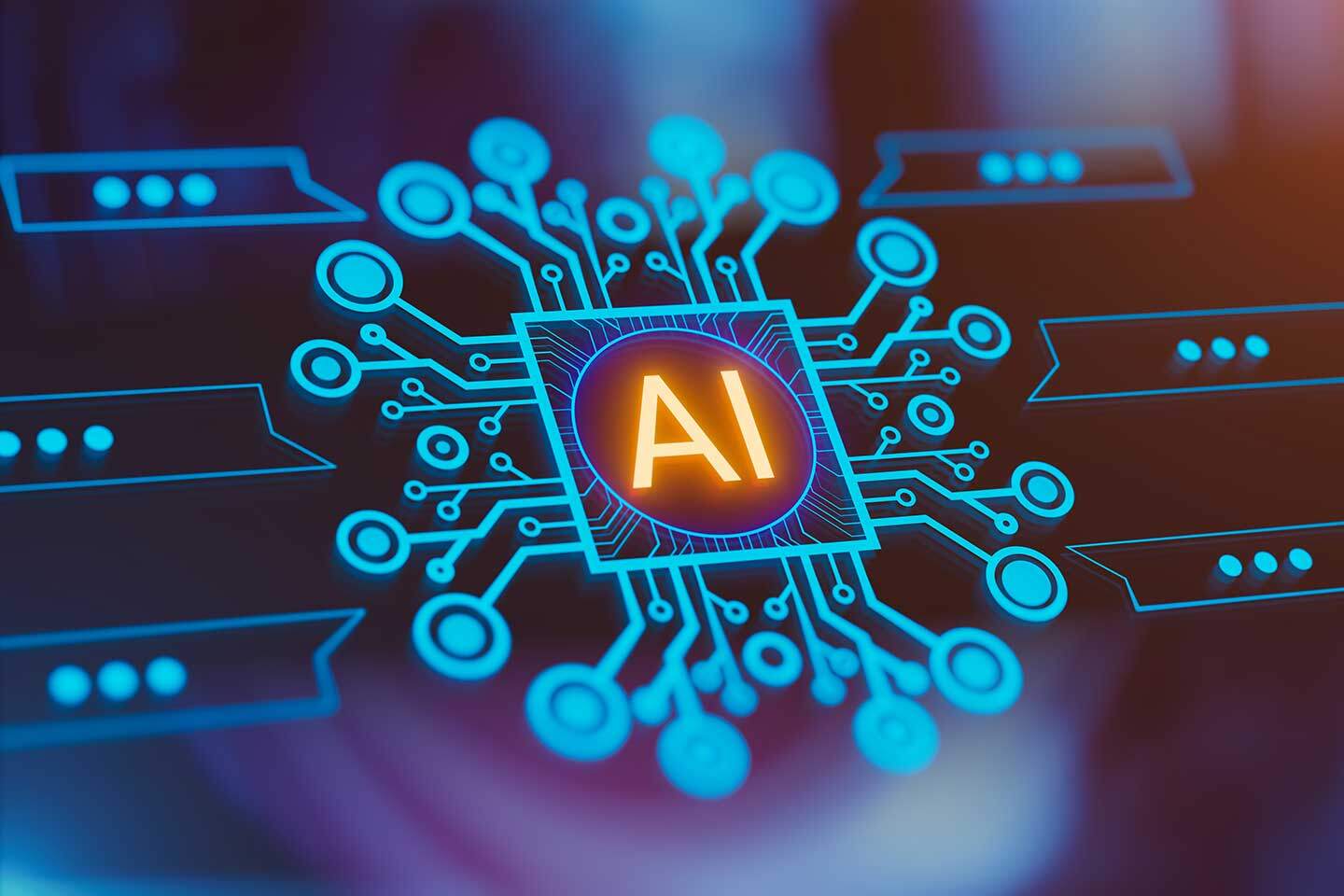
PRESS RELEASE: Lloyds Banking Group partners with Cambridge Spark to  advance AI leadership capabilities

One key advantage of AI is its ability to process vast amounts of information and make data-driven decisions quickly. Unlike humans, who are limited by cognitive biases, emotions, and fatigue, AI can analyze data without preconceived notions or distractions. This makes AI an attractive candidate for roles that demand accuracy and objectivity—two qualities essential for effective leadership.

But the challenge remains: can AI systems understand the nuances of human emotions and social contexts? Can a machine truly lead a society, which is inherently messy, unpredictable, and filled with diverse perspectives and interests?


Ethical Considerations and the Role of Trust

For any leader, human or machine, trust is essential. In fact, trust may be the most crucial element in effective leadership. People are more likely to follow a leader they trust—one who demonstrates integrity, transparency, and empathy. So, the question arises: can robots earn and maintain the trust of the public?

AI-driven systems are already being used to make important decisions in fields like healthcare, finance, and law enforcement. In these areas, there is an ongoing debate about the ethical implications of using AI in decision-making. Who is accountable if an AI makes a mistake? What happens when an algorithm unintentionally discriminates against certain groups?

These ethical concerns become even more pronounced when we consider the idea of robots leading entire societies. A machine may operate with perfect efficiency, but its lack of human empathy could hinder its ability to relate to the complex emotional and social needs of individuals. Can a robot leader truly empathize with the struggles of marginalized groups, the suffering of the poor, or the aspirations of young people?


Robotic Governance: A Hypothetical Scenario

Let’s imagine a future where robots do indeed lead societies. How might this look? One possibility is the emergence of AI-driven governance systems that rely on data analytics to make policy decisions. Instead of politicians engaging in debate, AI algorithms could analyze public opinion, economic trends, and global events to make decisions that benefit the majority.

In such a scenario, the role of human politicians might be reduced to oversight or advisory functions. These individuals could provide input on moral and ethical issues, but the day-to-day decisions about resource allocation, infrastructure development, and law enforcement would be made by AI.

The advantages of robotic governance are clear: decisions could be made quickly, efficiently, and without the influence of special interest groups or political bias. AI systems could optimize public services, reduce waste, and ensure that resources are allocated based on merit and need.

However, this vision is not without its drawbacks. One major concern is the potential loss of human agency. Would citizens be willing to accept decisions made by machines, especially if they have no say in how those decisions are made? Would people feel alienated from a government that is driven by algorithms rather than human representatives?

Moreover, there’s the question of accountability. In a world where robots make decisions, who is responsible when things go wrong? If an AI system implements a policy that leads to economic hardship or social unrest, who can the public hold accountable? The lack of transparency in AI decision-making processes—often referred to as the “black box” problem—adds another layer of complexity to the idea of robotic governance.


Robots as Supportive Leaders: A More Likely Future

While the prospect of robots fully taking over leadership roles may seem far-fetched, it’s more plausible to imagine a future where robots play a supportive role in governance. Instead of replacing human leaders, AI could enhance their abilities, providing data-driven insights and offering solutions to complex problems.

For example, AI could assist politicians in making more informed decisions by analyzing public sentiment and forecasting the potential impact of different policies. Robots could help streamline government processes, ensuring that services are delivered more efficiently and equitably. In this scenario, robots would not be the leaders themselves but valuable tools in the hands of human decision-makers.

This hybrid approach—where humans and machines work together to lead society—seems like a more balanced and feasible solution. It recognizes the strengths of both human leadership and AI’s computational power, allowing each to complement the other.
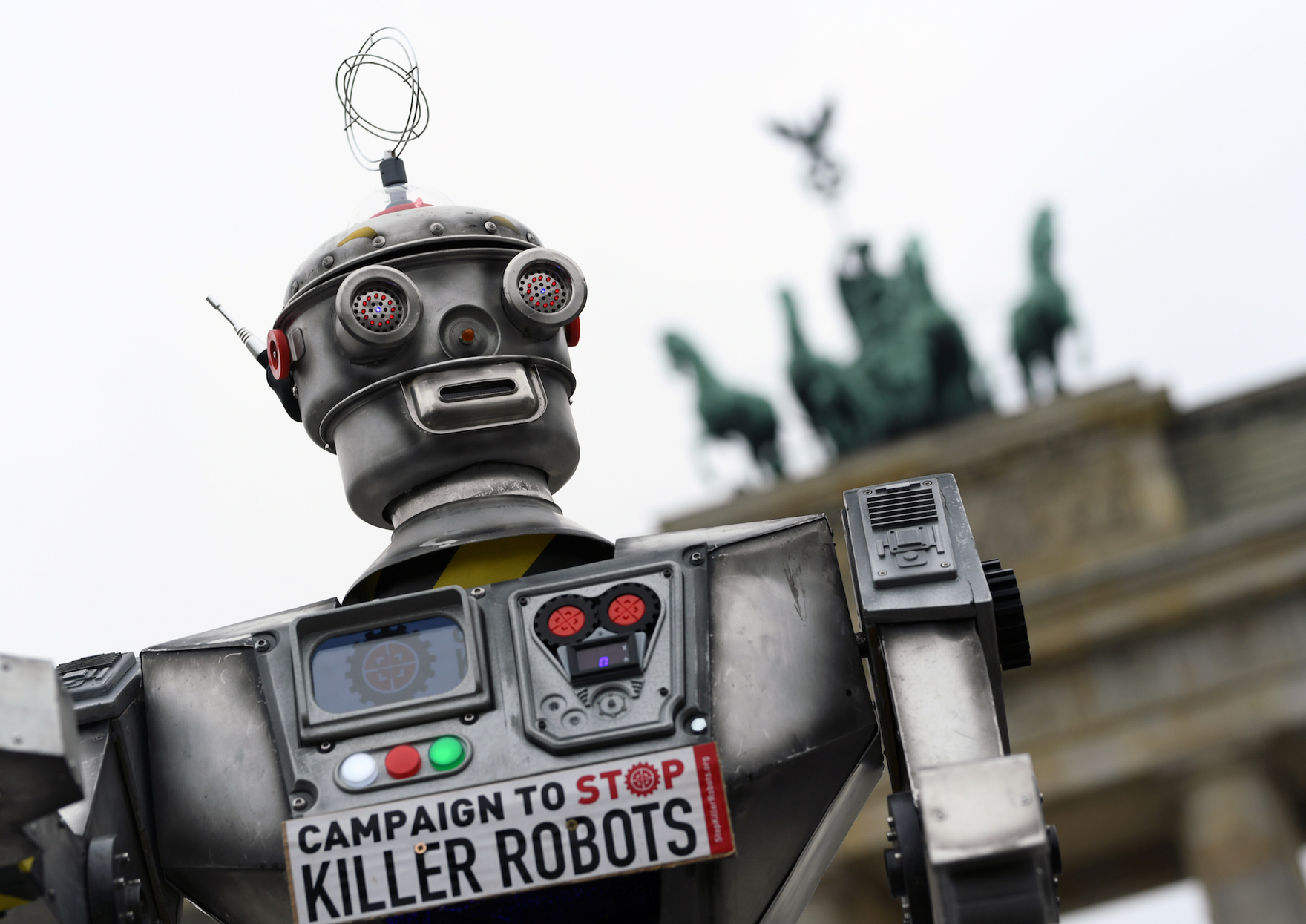
Allowing Killer Robots for Law Enforcement Would Be a Historic Mistake -  Centre for International Governance Innovation

The Path Forward: Ethical Leadership in an AI-Driven World

As we move toward a future where AI plays an increasingly prominent role in governance, it’s essential to focus on the ethical implications of these developments. The idea of robotic leadership raises important questions about fairness, accountability, and human rights.

If robots are to have a meaningful role in leadership, their decision-making processes must be transparent and aligned with human values. Ethical guidelines for AI systems must be established to ensure that they act in ways that promote the well-being of all members of society, not just the most powerful or privileged.

Moreover, there needs to be ongoing dialogue about the role of humans in an AI-driven world. While robots may be able to process information and make decisions at incredible speed, they cannot replace the human need for connection, empathy, and moral reasoning. The future of leadership should be one that integrates the best of both human and machine capabilities, creating a more just and effective society.


Conclusion

So, can robots lead societies? In the traditional sense, no. While robots and AI systems may become increasingly influential in decision-making, the role of a leader involves more than just data processing and efficiency. Leadership is about understanding people, fostering trust, and guiding a society through its complexities. Robots can assist in these processes, but the true essence of leadership—rooted in empathy, ethics, and human connection—remains uniquely human.

However, as AI continues to evolve, it’s likely that robots will play an ever-greater role in supporting leaders and shaping the future. The challenge will be ensuring that these machines are used responsibly and ethically, always with the goal of enhancing the well-being of society as a whole.


Tags: Autonomous RobotsEthicsFuture of WorkRobot Intelligence
ShareTweetShare

Related Posts

Can Robots Adapt to Unpredictable Real-World Environments?
Robotics

Can Robots Adapt to Unpredictable Real-World Environments?

December 2, 2025
Will Robots Achieve True Autonomy or Always Need Human Oversight?
Robotics

Will Robots Achieve True Autonomy or Always Need Human Oversight?

December 1, 2025
What Happens When Robots Start Designing Robots?
Robotics

What Happens When Robots Start Designing Robots?

November 30, 2025
Are We Ready for Robots to Shape Our Creative Industries?
Robotics

Are We Ready for Robots to Shape Our Creative Industries?

November 29, 2025
Could Robots One Day Replace Human Emotions in Caregiving?
Robotics

Could Robots One Day Replace Human Emotions in Caregiving?

November 28, 2025
How Do We Ensure Robot Ethics in Autonomous Machines?
Robotics

How Do We Ensure Robot Ethics in Autonomous Machines?

November 27, 2025
Leave Comment
  • Trending
  • Comments
  • Latest
Can Sustainability Drive Profits in Competitive Markets?

Can Sustainability Drive Profits in Competitive Markets?

October 17, 2025
Can the Spotlight Make or Break Your Career?

Can the Spotlight Make or Break Your Career?

October 14, 2025
Does the Spotlight Always Equal Success?

Does the Spotlight Always Equal Success?

October 16, 2025
Can the Spotlight Truly Capture the Essence of a Person?

Can the Spotlight Truly Capture the Essence of a Person?

October 16, 2025
Can Bionics Redefine Human Limitations?

Can Bionics Redefine Human Limitations?

Is Bionics the Future of Prosthetics?

Is Bionics the Future of Prosthetics?

Can We Truly Integrate Technology with Biology?

Can We Truly Integrate Technology with Biology?

How Close Are We to Creating Bionic Organs?

How Close Are We to Creating Bionic Organs?

How Can Spotlights Elevate Your Interior Design Game?

How Can Spotlights Elevate Your Interior Design Game?

December 2, 2025
Will We Ever Live on Mars? And Should We?

Will We Ever Live on Mars? And Should We?

December 2, 2025
Bionics: The Key to Human Immortality?

Bionics: The Key to Human Immortality?

December 2, 2025
How Can Data Privacy be Maintained in a Hyperconnected World?

How Can Data Privacy be Maintained in a Hyperconnected World?

December 2, 2025
CyberGait

Our content caters to engineers, researchers, and tech enthusiasts alike. Through focused articles on algorithms, biomimicry, and industry trends, we provide a comprehensive perspective on the future of movement, from laboratory breakthroughs to commercial products.

© 2025 cybergait.com. contacts:[email protected]

No Result
View All Result
  • Home
  • Bionics
  • Breakthroughs
  • Industry
  • Robotics
  • Spotlight

© 2025 cybergait.com. contacts:[email protected]

Welcome Back!

Login to your account below

Forgotten Password?

Retrieve your password

Please enter your username or email address to reset your password.

Log In