


















CyberGait
  • Home
  • Bionics
    Bionics: The Key to Human Immortality?

    Bionics: The Key to Human Immortality?

    Bionic Organs: Can They Save Lives or Create New Ethical Dilemmas?

    Bionic Organs: Can They Save Lives or Create New Ethical Dilemmas?

    The Future of Prosthetics: Is It Fully Bionic?

    The Future of Prosthetics: Is It Fully Bionic?

    What Happens When Bionics Merge with Artificial Intelligence?

    What Happens When Bionics Merge with Artificial Intelligence?

    Bionic Enhancements: Could They Improve Our Cognitive Abilities?

    Bionic Enhancements: Could They Improve Our Cognitive Abilities?

    How Far Can Bionic Eyes Take Us Beyond Human Vision?

    How Far Can Bionic Eyes Take Us Beyond Human Vision?

  • Breakthroughs
    Will We Ever Live on Mars? And Should We?

    Will We Ever Live on Mars? And Should We?

    Are We on the Brink of a Green Energy Revolution?

    Are We on the Brink of a Green Energy Revolution?

    Can Mind-Controlled Technology Revolutionize Communication?

    Can Mind-Controlled Technology Revolutionize Communication?

    What If We Could 3D Print Human Organs?

    What If We Could 3D Print Human Organs?

    Can Autonomous Vehicles Surpass Human Drivers in Safety?

    Can Autonomous Vehicles Surpass Human Drivers in Safety?

    Genomic Editing the Key to Immortality?

    Genomic Editing the Key to Immortality?

  • Industry
    How Can Data Privacy be Maintained in a Hyperconnected World?

    How Can Data Privacy be Maintained in a Hyperconnected World?

    Is the Gig Economy the Future of Employment?

    Is the Gig Economy the Future of Employment?

    Can Startups Compete with Corporate Giants in Innovation?

    Can Startups Compete with Corporate Giants in Innovation?

    The Future of Work: Truly Remote or Hybrid?

    The Future of Work: Truly Remote or Hybrid?

    How Does Blockchain Impact Global Supply Chains?

    How Does Blockchain Impact Global Supply Chains?

    Are We Overestimating the Power of Automation?

    Are We Overestimating the Power of Automation?

  • Robotics
    Can Robots Adapt to Unpredictable Real-World Environments?

    Can Robots Adapt to Unpredictable Real-World Environments?

    Will Robots Achieve True Autonomy or Always Need Human Oversight?

    Will Robots Achieve True Autonomy or Always Need Human Oversight?

    What Happens When Robots Start Designing Robots?

    What Happens When Robots Start Designing Robots?

    Are We Ready for Robots to Shape Our Creative Industries?

    Are We Ready for Robots to Shape Our Creative Industries?

    Could Robots One Day Replace Human Emotions in Caregiving?

    Could Robots One Day Replace Human Emotions in Caregiving?

    How Do We Ensure Robot Ethics in Autonomous Machines?

    How Do We Ensure Robot Ethics in Autonomous Machines?

  • Spotlight
    How Can Spotlights Elevate Your Interior Design Game?

    How Can Spotlights Elevate Your Interior Design Game?

    What Happens When You Use a Spotlight for Intimate Portraits?

    What Happens When You Use a Spotlight for Intimate Portraits?

    Why Do Spotlight Effects Matter in Cinematic Storytelling?

    Why Do Spotlight Effects Matter in Cinematic Storytelling?

    Could Spotlighting Be the Key to Perfect Product Photography?

    Could Spotlighting Be the Key to Perfect Product Photography?

    Spotlight Technology Changing the Future of Stage Design

    Spotlight Technology Changing the Future of Stage Design

    How Do Different Spotlights Affect Mood and Atmosphere?

    How Do Different Spotlights Affect Mood and Atmosphere?

CyberGait
  • Home
  • Bionics
    Bionics: The Key to Human Immortality?

    Bionics: The Key to Human Immortality?

    Bionic Organs: Can They Save Lives or Create New Ethical Dilemmas?

    Bionic Organs: Can They Save Lives or Create New Ethical Dilemmas?

    The Future of Prosthetics: Is It Fully Bionic?

    The Future of Prosthetics: Is It Fully Bionic?

    What Happens When Bionics Merge with Artificial Intelligence?

    What Happens When Bionics Merge with Artificial Intelligence?

    Bionic Enhancements: Could They Improve Our Cognitive Abilities?

    Bionic Enhancements: Could They Improve Our Cognitive Abilities?

    How Far Can Bionic Eyes Take Us Beyond Human Vision?

    How Far Can Bionic Eyes Take Us Beyond Human Vision?

  • Breakthroughs
    Will We Ever Live on Mars? And Should We?

    Will We Ever Live on Mars? And Should We?

    Are We on the Brink of a Green Energy Revolution?

    Are We on the Brink of a Green Energy Revolution?

    Can Mind-Controlled Technology Revolutionize Communication?

    Can Mind-Controlled Technology Revolutionize Communication?

    What If We Could 3D Print Human Organs?

    What If We Could 3D Print Human Organs?

    Can Autonomous Vehicles Surpass Human Drivers in Safety?

    Can Autonomous Vehicles Surpass Human Drivers in Safety?

    Genomic Editing the Key to Immortality?

    Genomic Editing the Key to Immortality?

  • Industry
    How Can Data Privacy be Maintained in a Hyperconnected World?

    How Can Data Privacy be Maintained in a Hyperconnected World?

    Is the Gig Economy the Future of Employment?

    Is the Gig Economy the Future of Employment?

    Can Startups Compete with Corporate Giants in Innovation?

    Can Startups Compete with Corporate Giants in Innovation?

    The Future of Work: Truly Remote or Hybrid?

    The Future of Work: Truly Remote or Hybrid?

    How Does Blockchain Impact Global Supply Chains?

    How Does Blockchain Impact Global Supply Chains?

    Are We Overestimating the Power of Automation?

    Are We Overestimating the Power of Automation?

  • Robotics
    Can Robots Adapt to Unpredictable Real-World Environments?

    Can Robots Adapt to Unpredictable Real-World Environments?

    Will Robots Achieve True Autonomy or Always Need Human Oversight?

    Will Robots Achieve True Autonomy or Always Need Human Oversight?

    What Happens When Robots Start Designing Robots?

    What Happens When Robots Start Designing Robots?

    Are We Ready for Robots to Shape Our Creative Industries?

    Are We Ready for Robots to Shape Our Creative Industries?

    Could Robots One Day Replace Human Emotions in Caregiving?

    Could Robots One Day Replace Human Emotions in Caregiving?

    How Do We Ensure Robot Ethics in Autonomous Machines?

    How Do We Ensure Robot Ethics in Autonomous Machines?

  • Spotlight
    How Can Spotlights Elevate Your Interior Design Game?

    How Can Spotlights Elevate Your Interior Design Game?

    What Happens When You Use a Spotlight for Intimate Portraits?

    What Happens When You Use a Spotlight for Intimate Portraits?

    Why Do Spotlight Effects Matter in Cinematic Storytelling?

    Why Do Spotlight Effects Matter in Cinematic Storytelling?

    Could Spotlighting Be the Key to Perfect Product Photography?

    Could Spotlighting Be the Key to Perfect Product Photography?

    Spotlight Technology Changing the Future of Stage Design

    Spotlight Technology Changing the Future of Stage Design

    How Do Different Spotlights Affect Mood and Atmosphere?

    How Do Different Spotlights Affect Mood and Atmosphere?

CyberGait
No Result
View All Result
Home Industry

Can Global Industries Adapt to Rapid Technological Change?

October 16, 2025
in Industry
Can Global Industries Adapt to Rapid Technological Change?

Outline:

  1. Introduction
    • Brief overview of technological change in global industries.
    • Importance of adaptability for industries today.
    • Purpose of the article.
  2. The Pace of Technological Change
    • Historical context: How technology has evolved over the years.
    • The exponential speed of technological development today.
    • Key drivers of change: AI, automation, IoT, and 5G.
  3. The Challenges of Adapting
    • Resistance to change: Cultural and organizational barriers.
    • Financial challenges: Investment in new technologies.
    • Talent gap: Skills shortage and the need for retraining.
  4. Key Sectors Facing Disruption
    • Manufacturing: Automation and smart factories.
    • Healthcare: AI and digital health transformation.
    • Retail: E-commerce, supply chains, and the future of brick-and-mortar.
    • Energy: Renewable technologies and smart grids.
  5. Strategies for Adapting
    • Innovation culture: Building a mindset of continuous improvement.
    • Strategic investment: Partnering with tech startups, R&D, and scaling.
    • Workforce development: Upskilling employees and embracing digital literacy.
    • Corporate agility: Implementing flexible business models.
  6. Success Stories
    • Case studies of industries that successfully adapted.
    • Examples from Tesla, Amazon, and healthcare pioneers.
    • The role of leadership in driving transformation.
  7. The Future: What’s Next?
    • The ongoing need for innovation.
    • Predicting future tech disruptions.
    • The role of AI, quantum computing, and beyond.
  8. Conclusion
    • Recap of key points.
    • Final thoughts on the importance of adaptability for future competitiveness.
  9. Suggested Search Keywords (for image search)
    • “Industry 4.0”
    • “Technological adaptation”
    • “Smart factories”
    • “AI transformation”
Industry 4.0: A Drive for Change Management – industryx.org

Article Draft:

Can Global Industries Adapt to Rapid Technological Change?

In today’s fast-evolving world, technology is no longer a passive force—it’s an active engine driving business transformation across industries. From AI-powered algorithms that predict consumer behavior to automated manufacturing lines running with unparalleled precision, global industries are confronted with a reality: adapt or risk becoming obsolete.

The question is, can these industries keep up with the dizzying pace of technological advancements? Or will they be left behind in a world where change is the only constant?


The Pace of Technological Change

The rate of technological development has never been more rapid. What once took decades to develop now happens in a few years, months, or even days. A prime example of this is Artificial Intelligence (AI), which has transitioned from a theoretical concept to a transformative force in industries like healthcare, finance, and retail. The rise of automation, Internet of Things (IoT), 5G connectivity, and machine learning is accelerating innovation and shaping how businesses operate, compete, and serve customers.

In the past, technological revolutions like the Industrial Revolution or the rise of the internet happened in defined waves, often with years of adaptation in between. Today, however, the “technological curve” is steeper than ever, and industries must race to stay ahead.


The Challenges of Adapting

Adapting to technological change is not without its hurdles.

  • Resistance to Change: Organizational inertia and cultural resistance are perhaps the most significant barriers to technological adoption. For many companies, adapting to new technologies requires altering long-established processes and mindsets—a difficult and often uncomfortable change. For employees, the introduction of new systems can feel like a threat to job security.
  • Financial Barriers: Incorporating new technologies often requires a hefty initial investment, whether it’s upgrading legacy systems or integrating cutting-edge tools. For many companies, particularly small and medium-sized enterprises (SMEs), securing the necessary capital is a daunting challenge.
  • The Talent Gap: The rapid rise of new technologies has created a skills gap. Finding workers who are proficient in emerging technologies, like AI, blockchain, or cybersecurity, has become a growing concern. The traditional workforce needs upskilling, and businesses must invest in training their employees to keep pace with the latest tools and systems.

Key Sectors Facing Disruption

Several industries are particularly vulnerable to technological disruption. Let’s explore some of the most affected:

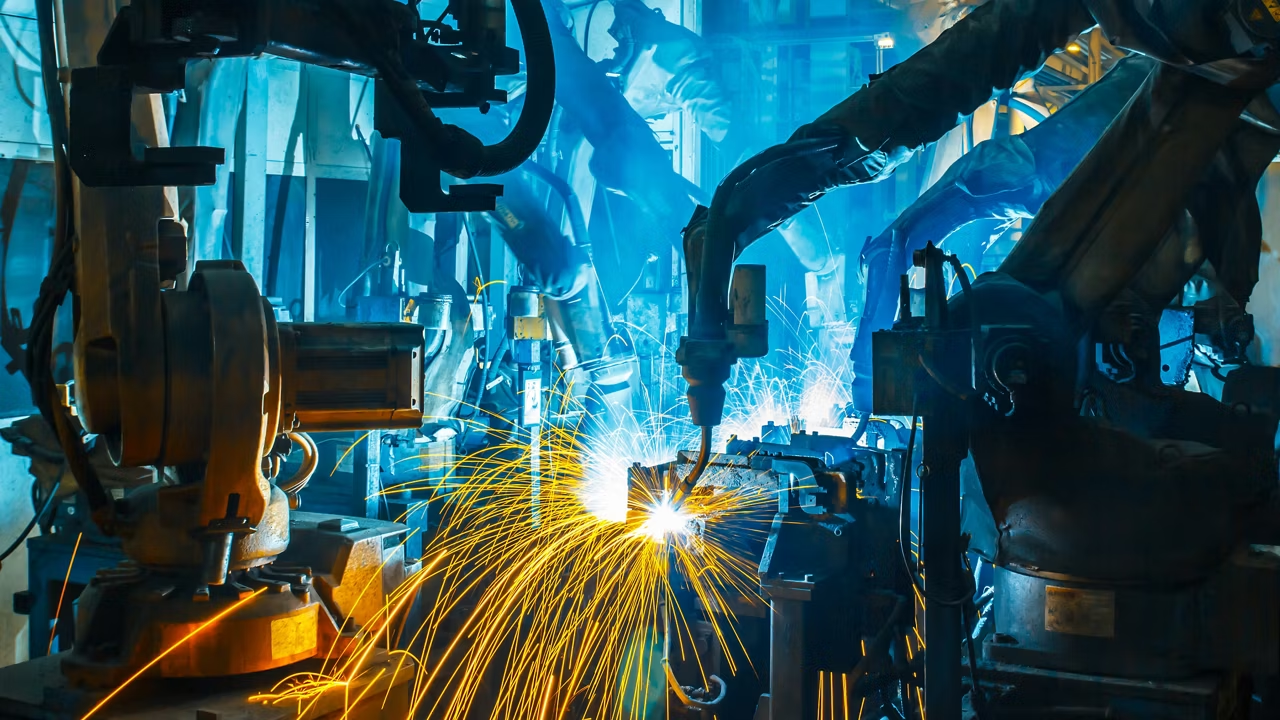
  • Manufacturing: The integration of automation and smart technologies in manufacturing processes is reshaping production lines. With innovations like robotics, 3D printing, and AI-driven supply chain management, manufacturers can streamline production and reduce costs. However, the shift also means that traditional workers need to adapt quickly to stay relevant in a world increasingly dominated by smart factories and automation.
  • Healthcare: The healthcare industry has seen some of the most profound transformations, driven by advancements in AI, telemedicine, and health data analytics. AI algorithms are improving diagnostic accuracy, while wearable technologies and health apps are empowering patients to take charge of their well-being. But with these advancements come new challenges related to privacy, data security, and ethical considerations.
  • Retail: The retail sector has experienced one of the most visible impacts of technological change. E-commerce has skyrocketed, with customers expecting personalized experiences, quick delivery times, and easy access to products. Traditional brick-and-mortar stores are now forced to adopt digital-first strategies, from implementing online shopping platforms to adopting AI-powered inventory management systems.
  • Energy: The energy sector is undergoing a transformation, with renewable technologies like solar, wind, and geothermal becoming more accessible and efficient. Smart grids, which leverage digital technologies to optimize energy distribution, are enabling greater sustainability. For established energy companies, the challenge lies in transitioning from fossil fuels to clean energy without sacrificing profitability.
Emerging tech to add 2.73 million tech jobs by 2028

Strategies for Adapting

As industries face the pressure of rapid technological change, adopting the right strategies is crucial for survival and success.

  • Building an Innovation Culture: To successfully navigate technological disruption, companies need to foster a culture of innovation. Encouraging experimentation, supporting creative thinking, and creating an environment where failure is seen as a stepping stone to success can help organizations stay ahead.
  • Strategic Investment: Many forward-thinking companies have realized that partnering with tech startups or investing in research and development (R&D) is vital for staying competitive. Collaborating with innovators allows companies to tap into fresh ideas while managing the costs and risks of developing new technologies in-house.
  • Workforce Development: In today’s world, upskilling is not just an option but a necessity. The pace of technological change requires businesses to provide continuous training opportunities for employees. Offering access to online courses, certifications, and workshops helps bridge the talent gap and ensures that the workforce remains capable of handling advanced technologies.
  • Corporate Agility: The most successful companies are those that implement flexible business models, allowing them to quickly pivot in response to market shifts. Agility doesn’t just mean being able to scale up or down—it also refers to an organization’s ability to quickly integrate new technologies and adapt to new business environments.

Success Stories

While adapting to rapid technological change can be challenging, it’s not impossible. Some industries and companies have managed to turn disruption into opportunity.

  • Tesla: Tesla’s success is a testament to the power of innovation. By combining AI, renewable energy, and cutting-edge manufacturing technologies, the electric vehicle giant has not only revolutionized the auto industry but has also pushed the boundaries of what’s possible in terms of sustainability.
  • Amazon: Amazon’s ability to leverage AI for personalized recommendations, along with its pioneering use of robotics in warehouses, has made it a leader in e-commerce. By embracing a “fail fast, fail cheap” mentality, Amazon continues to lead in both technology and customer experience.
  • Healthcare Innovators: Companies like Teladoc Health and the rise of telemedicine platforms have shown how healthcare can evolve in the digital age. The ability to provide remote consultations, coupled with AI-driven health diagnostics, has proven invaluable, especially during the COVID-19 pandemic.

The Future: What’s Next?

Looking forward, the pace of technological change is unlikely to slow down. Technologies like AI, blockchain, and quantum computing promise to further transform industries in ways we can only begin to imagine. For example, quantum computing could revolutionize fields such as medicine, materials science, and artificial intelligence by solving complex problems at speeds far beyond today’s capabilities.

Industries that are adaptable, agile, and willing to embrace these changes will be the ones that thrive. Those that resist change risk falling behind.


Conclusion

In conclusion, while global industries face significant challenges in adapting to rapid technological change, those that embrace innovation and invest in their people and processes will have the best chance at thriving. The key lies in cultivating a mindset that views technological disruption as an opportunity, not a threat. With the right strategies in place, companies can navigate the ever-evolving tech landscape and continue to lead their industries into the future.


Tags: AutomationDigital TransformationIndustry 4.0Robotics
ShareTweetShare

Related Posts

How Can Data Privacy be Maintained in a Hyperconnected World?
Industry

How Can Data Privacy be Maintained in a Hyperconnected World?

December 2, 2025
Is the Gig Economy the Future of Employment?
Industry

Is the Gig Economy the Future of Employment?

December 1, 2025
Can Startups Compete with Corporate Giants in Innovation?
Industry

Can Startups Compete with Corporate Giants in Innovation?

November 30, 2025
The Future of Work: Truly Remote or Hybrid?
Industry

The Future of Work: Truly Remote or Hybrid?

November 29, 2025
How Does Blockchain Impact Global Supply Chains?
Industry

How Does Blockchain Impact Global Supply Chains?

November 28, 2025
Are We Overestimating the Power of Automation?
Industry

Are We Overestimating the Power of Automation?

November 27, 2025
Leave Comment
  • Trending
  • Comments
  • Latest
Can Sustainability Drive Profits in Competitive Markets?

Can Sustainability Drive Profits in Competitive Markets?

October 17, 2025
Can the Spotlight Make or Break Your Career?

Can the Spotlight Make or Break Your Career?

October 14, 2025
Does the Spotlight Always Equal Success?

Does the Spotlight Always Equal Success?

October 16, 2025
Can the Spotlight Truly Capture the Essence of a Person?

Can the Spotlight Truly Capture the Essence of a Person?

October 16, 2025
Can Bionics Redefine Human Limitations?

Can Bionics Redefine Human Limitations?

Is Bionics the Future of Prosthetics?

Is Bionics the Future of Prosthetics?

Can We Truly Integrate Technology with Biology?

Can We Truly Integrate Technology with Biology?

How Close Are We to Creating Bionic Organs?

How Close Are We to Creating Bionic Organs?

How Can Spotlights Elevate Your Interior Design Game?

How Can Spotlights Elevate Your Interior Design Game?

December 2, 2025
Will We Ever Live on Mars? And Should We?

Will We Ever Live on Mars? And Should We?

December 2, 2025
Bionics: The Key to Human Immortality?

Bionics: The Key to Human Immortality?

December 2, 2025
How Can Data Privacy be Maintained in a Hyperconnected World?

How Can Data Privacy be Maintained in a Hyperconnected World?

December 2, 2025
CyberGait

Our content caters to engineers, researchers, and tech enthusiasts alike. Through focused articles on algorithms, biomimicry, and industry trends, we provide a comprehensive perspective on the future of movement, from laboratory breakthroughs to commercial products.

© 2025 cybergait.com. contacts:[email protected]

No Result
View All Result
  • Home
  • Bionics
  • Breakthroughs
  • Industry
  • Robotics
  • Spotlight

© 2025 cybergait.com. contacts:[email protected]

Welcome Back!

Login to your account below

Forgotten Password?

Retrieve your password

Please enter your username or email address to reset your password.

Log In