












CyberGait
  • Home
  • Bionics
    Bionics: The Key to Human Immortality?

    Bionics: The Key to Human Immortality?

    Bionic Organs: Can They Save Lives or Create New Ethical Dilemmas?

    Bionic Organs: Can They Save Lives or Create New Ethical Dilemmas?

    The Future of Prosthetics: Is It Fully Bionic?

    The Future of Prosthetics: Is It Fully Bionic?

    What Happens When Bionics Merge with Artificial Intelligence?

    What Happens When Bionics Merge with Artificial Intelligence?

    Bionic Enhancements: Could They Improve Our Cognitive Abilities?

    Bionic Enhancements: Could They Improve Our Cognitive Abilities?

    How Far Can Bionic Eyes Take Us Beyond Human Vision?

    How Far Can Bionic Eyes Take Us Beyond Human Vision?

  • Breakthroughs
    Will We Ever Live on Mars? And Should We?

    Will We Ever Live on Mars? And Should We?

    Are We on the Brink of a Green Energy Revolution?

    Are We on the Brink of a Green Energy Revolution?

    Can Mind-Controlled Technology Revolutionize Communication?

    Can Mind-Controlled Technology Revolutionize Communication?

    What If We Could 3D Print Human Organs?

    What If We Could 3D Print Human Organs?

    Can Autonomous Vehicles Surpass Human Drivers in Safety?

    Can Autonomous Vehicles Surpass Human Drivers in Safety?

    Genomic Editing the Key to Immortality?

    Genomic Editing the Key to Immortality?

  • Industry
    How Can Data Privacy be Maintained in a Hyperconnected World?

    How Can Data Privacy be Maintained in a Hyperconnected World?

    Is the Gig Economy the Future of Employment?

    Is the Gig Economy the Future of Employment?

    Can Startups Compete with Corporate Giants in Innovation?

    Can Startups Compete with Corporate Giants in Innovation?

    The Future of Work: Truly Remote or Hybrid?

    The Future of Work: Truly Remote or Hybrid?

    How Does Blockchain Impact Global Supply Chains?

    How Does Blockchain Impact Global Supply Chains?

    Are We Overestimating the Power of Automation?

    Are We Overestimating the Power of Automation?

  • Robotics
    Can Robots Adapt to Unpredictable Real-World Environments?

    Can Robots Adapt to Unpredictable Real-World Environments?

    Will Robots Achieve True Autonomy or Always Need Human Oversight?

    Will Robots Achieve True Autonomy or Always Need Human Oversight?

    What Happens When Robots Start Designing Robots?

    What Happens When Robots Start Designing Robots?

    Are We Ready for Robots to Shape Our Creative Industries?

    Are We Ready for Robots to Shape Our Creative Industries?

    Could Robots One Day Replace Human Emotions in Caregiving?

    Could Robots One Day Replace Human Emotions in Caregiving?

    How Do We Ensure Robot Ethics in Autonomous Machines?

    How Do We Ensure Robot Ethics in Autonomous Machines?

  • Spotlight
    How Can Spotlights Elevate Your Interior Design Game?

    How Can Spotlights Elevate Your Interior Design Game?

    What Happens When You Use a Spotlight for Intimate Portraits?

    What Happens When You Use a Spotlight for Intimate Portraits?

    Why Do Spotlight Effects Matter in Cinematic Storytelling?

    Why Do Spotlight Effects Matter in Cinematic Storytelling?

    Could Spotlighting Be the Key to Perfect Product Photography?

    Could Spotlighting Be the Key to Perfect Product Photography?

    Spotlight Technology Changing the Future of Stage Design

    Spotlight Technology Changing the Future of Stage Design

    How Do Different Spotlights Affect Mood and Atmosphere?

    How Do Different Spotlights Affect Mood and Atmosphere?

CyberGait
  • Home
  • Bionics
    Bionics: The Key to Human Immortality?

    Bionics: The Key to Human Immortality?

    Bionic Organs: Can They Save Lives or Create New Ethical Dilemmas?

    Bionic Organs: Can They Save Lives or Create New Ethical Dilemmas?

    The Future of Prosthetics: Is It Fully Bionic?

    The Future of Prosthetics: Is It Fully Bionic?

    What Happens When Bionics Merge with Artificial Intelligence?

    What Happens When Bionics Merge with Artificial Intelligence?

    Bionic Enhancements: Could They Improve Our Cognitive Abilities?

    Bionic Enhancements: Could They Improve Our Cognitive Abilities?

    How Far Can Bionic Eyes Take Us Beyond Human Vision?

    How Far Can Bionic Eyes Take Us Beyond Human Vision?

  • Breakthroughs
    Will We Ever Live on Mars? And Should We?

    Will We Ever Live on Mars? And Should We?

    Are We on the Brink of a Green Energy Revolution?

    Are We on the Brink of a Green Energy Revolution?

    Can Mind-Controlled Technology Revolutionize Communication?

    Can Mind-Controlled Technology Revolutionize Communication?

    What If We Could 3D Print Human Organs?

    What If We Could 3D Print Human Organs?

    Can Autonomous Vehicles Surpass Human Drivers in Safety?

    Can Autonomous Vehicles Surpass Human Drivers in Safety?

    Genomic Editing the Key to Immortality?

    Genomic Editing the Key to Immortality?

  • Industry
    How Can Data Privacy be Maintained in a Hyperconnected World?

    How Can Data Privacy be Maintained in a Hyperconnected World?

    Is the Gig Economy the Future of Employment?

    Is the Gig Economy the Future of Employment?

    Can Startups Compete with Corporate Giants in Innovation?

    Can Startups Compete with Corporate Giants in Innovation?

    The Future of Work: Truly Remote or Hybrid?

    The Future of Work: Truly Remote or Hybrid?

    How Does Blockchain Impact Global Supply Chains?

    How Does Blockchain Impact Global Supply Chains?

    Are We Overestimating the Power of Automation?

    Are We Overestimating the Power of Automation?

  • Robotics
    Can Robots Adapt to Unpredictable Real-World Environments?

    Can Robots Adapt to Unpredictable Real-World Environments?

    Will Robots Achieve True Autonomy or Always Need Human Oversight?

    Will Robots Achieve True Autonomy or Always Need Human Oversight?

    What Happens When Robots Start Designing Robots?

    What Happens When Robots Start Designing Robots?

    Are We Ready for Robots to Shape Our Creative Industries?

    Are We Ready for Robots to Shape Our Creative Industries?

    Could Robots One Day Replace Human Emotions in Caregiving?

    Could Robots One Day Replace Human Emotions in Caregiving?

    How Do We Ensure Robot Ethics in Autonomous Machines?

    How Do We Ensure Robot Ethics in Autonomous Machines?

  • Spotlight
    How Can Spotlights Elevate Your Interior Design Game?

    How Can Spotlights Elevate Your Interior Design Game?

    What Happens When You Use a Spotlight for Intimate Portraits?

    What Happens When You Use a Spotlight for Intimate Portraits?

    Why Do Spotlight Effects Matter in Cinematic Storytelling?

    Why Do Spotlight Effects Matter in Cinematic Storytelling?

    Could Spotlighting Be the Key to Perfect Product Photography?

    Could Spotlighting Be the Key to Perfect Product Photography?

    Spotlight Technology Changing the Future of Stage Design

    Spotlight Technology Changing the Future of Stage Design

    How Do Different Spotlights Affect Mood and Atmosphere?

    How Do Different Spotlights Affect Mood and Atmosphere?

CyberGait
No Result
View All Result
Home Breakthroughs

Can Artificial Intelligence Write Better Music Than Humans?

October 16, 2025
in Breakthroughs
Can Artificial Intelligence Write Better Music Than Humans?

In recent years, the rise of Artificial Intelligence (AI) has revolutionized countless industries, from healthcare to finance, transportation to entertainment. One of the most fascinating areas where AI has made waves is in the realm of music composition. The question, “Can Artificial Intelligence write better music than humans?” is no longer just a hypothetical; it’s a real debate that’s reshaping how we think about creativity, art, and the very essence of music.

Artificial Intelligence has made significant strides in areas like data analysis, pattern recognition, and problem-solving. But can these advances translate to the creative world of music? Is there a future where AI could not only assist human musicians but potentially surpass them in terms of musical quality? To answer these questions, we must delve into the nature of both music and AI, explore their synergies, and understand the boundaries between human and machine creativity.

The Nature of Music: What Makes It Great?

Before we can compare AI and human composers, it’s important to define what makes music “great.” Music is an incredibly subjective experience. What resonates with one person may not affect another the same way. That said, certain principles and elements are universally considered markers of musical excellence:

  • Melody and Harmony: The relationship between the notes creates structure and emotional depth. This is where much of a piece’s appeal lies—how the melody unfolds, how it resolves or evolves, and how it interacts with the harmony.
  • Rhythm: The pulse of a song, often considered its heartbeat. A strong, compelling rhythm can make music engaging, while a unique rhythm can introduce an element of surprise.
  • Emotion: One of the defining qualities of music is its ability to convey deep emotion. Whether joy, sadness, tension, or release, great music evokes an emotional response from the listener.
  • Innovation: Originality in sound, technique, and structure is a hallmark of groundbreaking music. Pushing the boundaries of what’s possible within the medium often leads to fresh, exciting compositions.

Humans have an innate ability to connect with these elements on a deeply emotional level. But as AI continues to improve, it’s beginning to create compositions that are technically flawless, musically complex, and sometimes even emotionally resonant. So, can AI create music that rivals human compositions in terms of these core elements?

Is AI-Generated Music the Future of Creativity or a Threat to Human  Artistry? | by Hari Balaji | Medium

The Rise of AI in Music Composition

To understand the potential of AI in music creation, it’s important to look at the current tools and algorithms that are already making an impact in this space. AI-driven music tools have been around for some time, but their sophistication has significantly improved in recent years. Here are some ways AI is currently being used in music:

1. AI-Generated Music:

AI systems like OpenAI’s MuseNet, Google’s Magenta, and IBM Watson’s Beat Maker can generate fully original pieces of music based on given parameters. These systems analyze vast datasets of existing music, learning the patterns, structures, and nuances of various genres, from classical to pop, jazz to electronic. Once trained, they can compose music in any of these styles.

  • Strengths: AI can produce compositions rapidly and in styles that match or even blend genres seamlessly. Some AI-generated tracks have been praised for their technical sophistication and the richness of their harmonic structures.
  • Limitations: While AI compositions are often complex, they can feel mechanical or formulaic. The human touch—the subtle variations, emotional depth, and nuances that come from lived experience—can be difficult for AI to replicate.

2. AI-Assisted Music Creation:

Rather than generating complete compositions, AI tools are often used to assist human composers in their creative process. These tools might suggest chord progressions, harmonies, melodies, or rhythms that complement a piece a composer is already working on.

  • Strengths: AI can provide inspiration and speed up the compositional process. Tools like Aiva, a widely known AI composer, are designed to help musicians in their work, suggesting alternatives and enhancing creativity.
  • Limitations: AI remains a tool. It can’t intuitively understand the emotion behind a piece in the way that a human artist can, and it often requires the guidance and oversight of a human creator to ensure the output resonates on a human level.

3. AI in Music Production:

AI is also revolutionizing how music is produced. Machine learning algorithms can help with tasks like mixing and mastering, adjusting levels, balancing frequencies, and even suggesting soundscapes or instruments that fit a given track.

  • Strengths: AI can process massive amounts of data quickly, ensuring the final product is sonically balanced and polished. It also opens up new creative possibilities, as AI can suggest combinations of sounds or styles that might not be immediately obvious.
  • Limitations: While AI might help produce technically perfect mixes, it can struggle with capturing the intangible “soul” that comes with music. Human producers bring a level of intuition and personal style to their work that AI currently cannot replicate.

The Human Touch: What AI Can’t Replicate

Despite the impressive capabilities of AI, there are still fundamental elements of music creation that it struggles to replicate, particularly when it comes to the more subjective and emotional aspects of music.

1. Emotional Depth:

Humans draw from a wide array of personal experiences, emotions, and cultural contexts when composing music. These elements are what allow music to resonate with listeners on a profound level. A composer’s grief, joy, love, or political beliefs can be woven into the fabric of their music in ways that connect deeply with listeners. While AI can mimic emotional cues, it does not have its own lived experiences or emotions to inform its creations.
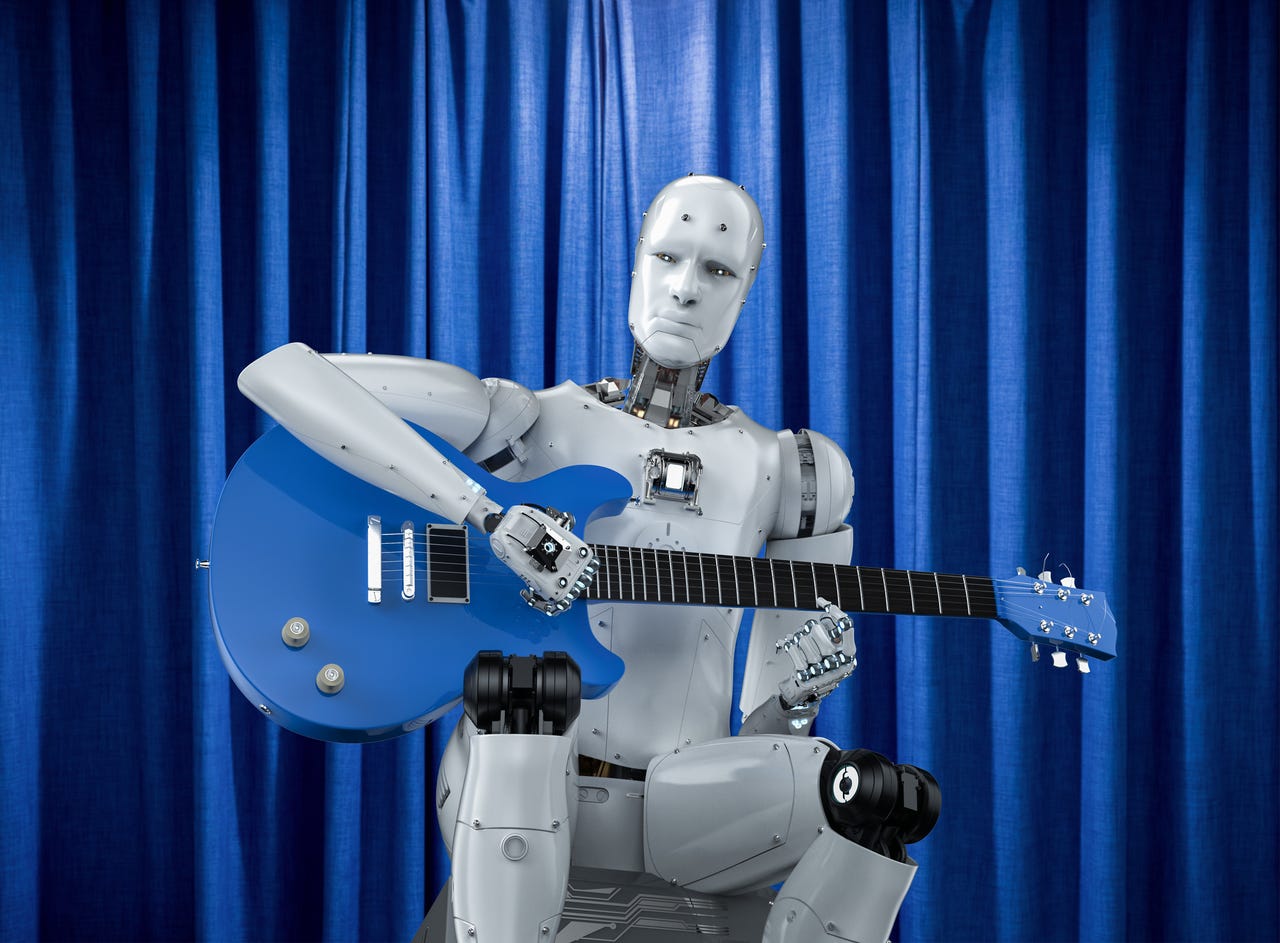
From Billie Eilish to Stevie Wonder, hundreds of musicians condemn AI's  'assault on human creativity' | ZDNET

2. Cultural Context:

Music is inherently cultural. It carries the stories, struggles, and joys of the societies that create it. While AI can analyze music from various cultures, it doesn’t understand the deeper cultural and social contexts that inform these musical traditions. This is something uniquely human—a reflection of our history, identity, and shared experiences.

3. Intentionality:

Humans have the ability to think consciously about the message they wish to convey through music. Whether it’s a protest song or a love ballad, human composers infuse their work with deliberate intention, creating music that is not only artful but also purposeful. AI, on the other hand, produces music based on mathematical algorithms, with no intentional message or deeper purpose beyond what it was programmed to create.

4. Spontaneity and Imperfection:

One of the most powerful aspects of human-created music is its imperfections. A slight offbeat, a vocal nuance, a unique harmonic mistake—these details are what make music feel alive. Musicians can take risks, explore the unknown, and introduce spontaneity into their compositions, often breaking the very rules they’ve learned. AI, by its nature, tends to follow rules and patterns, making it difficult for it to create the same kind of raw, unpredictable magic that humans can.

AI vs. Human Creativity: The Philosophical Debate

As AI continues to improve, we’re faced with deeper questions about the nature of creativity itself. Is creativity merely the product of complex patterns and data processing, or is it something uniquely human, tied to our experiences, emotions, and consciousness?

AI challenges the very definition of what it means to create. Some argue that creativity is not about breaking rules, but about understanding them deeply and knowing when and how to push beyond them. In this sense, AI might be seen as a brilliant tool that can expand our creative boundaries but can never fully replace human insight and intuition.

Others point out that if an AI can create music that moves people, does it matter if the music was created by a human or a machine? After all, the emotional impact of music is what ultimately matters. If an AI composition can elicit tears or joy from listeners, some might argue it has achieved the same goal as a human composer.

The Future of AI and Music

Looking ahead, the most likely scenario is not a world where AI replaces human musicians but one where AI and humans collaborate to create groundbreaking music. Already, musicians are experimenting with AI in their creative processes, using algorithms to spark new ideas or automate parts of their workflow while maintaining their own emotional connection to the music.

AI may never be able to replace the human spirit in music, but it can certainly enhance it. Whether by streamlining production, offering new creative possibilities, or introducing new ways of interacting with music, AI has the potential to usher in a new era of musical innovation.

Conclusion: The Harmonious Coexistence of Human and Machine

In the end, the question of whether AI can write better music than humans isn’t one that has a clear-cut answer. AI can certainly generate complex, technically proficient compositions, but it lacks the emotional depth, cultural context, and intentionality that human musicians bring to their craft. However, AI and humans are not necessarily in competition. Rather, they can complement each other, with AI assisting in the creative process while human musicians imbue their work with the nuances that make music an art form.

The future of music is not AI vs. humans but AI and humans working together. In this collaborative future, the lines between machine and human creativity may blur, but the resulting music could be more varied, rich, and inspiring than ever before.


Tags: AICreativityInnovationMusic
ShareTweetShare

Related Posts

Will We Ever Live on Mars? And Should We?
Breakthroughs

Will We Ever Live on Mars? And Should We?

December 2, 2025
Are We on the Brink of a Green Energy Revolution?
Breakthroughs

Are We on the Brink of a Green Energy Revolution?

December 1, 2025
Can Mind-Controlled Technology Revolutionize Communication?
Breakthroughs

Can Mind-Controlled Technology Revolutionize Communication?

November 30, 2025
What If We Could 3D Print Human Organs?
Breakthroughs

What If We Could 3D Print Human Organs?

November 29, 2025
Can Autonomous Vehicles Surpass Human Drivers in Safety?
Breakthroughs

Can Autonomous Vehicles Surpass Human Drivers in Safety?

November 28, 2025
Genomic Editing the Key to Immortality?
Breakthroughs

Genomic Editing the Key to Immortality?

November 27, 2025
Leave Comment
  • Trending
  • Comments
  • Latest
Can Sustainability Drive Profits in Competitive Markets?

Can Sustainability Drive Profits in Competitive Markets?

October 17, 2025
Can the Spotlight Make or Break Your Career?

Can the Spotlight Make or Break Your Career?

October 14, 2025
Does the Spotlight Always Equal Success?

Does the Spotlight Always Equal Success?

October 16, 2025
Can the Spotlight Truly Capture the Essence of a Person?

Can the Spotlight Truly Capture the Essence of a Person?

October 16, 2025
Can Bionics Redefine Human Limitations?

Can Bionics Redefine Human Limitations?

Is Bionics the Future of Prosthetics?

Is Bionics the Future of Prosthetics?

Can We Truly Integrate Technology with Biology?

Can We Truly Integrate Technology with Biology?

How Close Are We to Creating Bionic Organs?

How Close Are We to Creating Bionic Organs?

How Can Spotlights Elevate Your Interior Design Game?

How Can Spotlights Elevate Your Interior Design Game?

December 2, 2025
Will We Ever Live on Mars? And Should We?

Will We Ever Live on Mars? And Should We?

December 2, 2025
Bionics: The Key to Human Immortality?

Bionics: The Key to Human Immortality?

December 2, 2025
How Can Data Privacy be Maintained in a Hyperconnected World?

How Can Data Privacy be Maintained in a Hyperconnected World?

December 2, 2025
CyberGait

Our content caters to engineers, researchers, and tech enthusiasts alike. Through focused articles on algorithms, biomimicry, and industry trends, we provide a comprehensive perspective on the future of movement, from laboratory breakthroughs to commercial products.

© 2025 cybergait.com. contacts:[email protected]

No Result
View All Result
  • Home
  • Bionics
  • Breakthroughs
  • Industry
  • Robotics
  • Spotlight

© 2025 cybergait.com. contacts:[email protected]

Welcome Back!

Login to your account below

Forgotten Password?

Retrieve your password

Please enter your username or email address to reset your password.

Log In