




















CyberGait
  • Home
  • Bionics
    Bionics: The Key to Human Immortality?

    Bionics: The Key to Human Immortality?

    Bionic Organs: Can They Save Lives or Create New Ethical Dilemmas?

    Bionic Organs: Can They Save Lives or Create New Ethical Dilemmas?

    The Future of Prosthetics: Is It Fully Bionic?

    The Future of Prosthetics: Is It Fully Bionic?

    What Happens When Bionics Merge with Artificial Intelligence?

    What Happens When Bionics Merge with Artificial Intelligence?

    Bionic Enhancements: Could They Improve Our Cognitive Abilities?

    Bionic Enhancements: Could They Improve Our Cognitive Abilities?

    How Far Can Bionic Eyes Take Us Beyond Human Vision?

    How Far Can Bionic Eyes Take Us Beyond Human Vision?

  • Breakthroughs
    Will We Ever Live on Mars? And Should We?

    Will We Ever Live on Mars? And Should We?

    Are We on the Brink of a Green Energy Revolution?

    Are We on the Brink of a Green Energy Revolution?

    Can Mind-Controlled Technology Revolutionize Communication?

    Can Mind-Controlled Technology Revolutionize Communication?

    What If We Could 3D Print Human Organs?

    What If We Could 3D Print Human Organs?

    Can Autonomous Vehicles Surpass Human Drivers in Safety?

    Can Autonomous Vehicles Surpass Human Drivers in Safety?

    Genomic Editing the Key to Immortality?

    Genomic Editing the Key to Immortality?

  • Industry
    How Can Data Privacy be Maintained in a Hyperconnected World?

    How Can Data Privacy be Maintained in a Hyperconnected World?

    Is the Gig Economy the Future of Employment?

    Is the Gig Economy the Future of Employment?

    Can Startups Compete with Corporate Giants in Innovation?

    Can Startups Compete with Corporate Giants in Innovation?

    The Future of Work: Truly Remote or Hybrid?

    The Future of Work: Truly Remote or Hybrid?

    How Does Blockchain Impact Global Supply Chains?

    How Does Blockchain Impact Global Supply Chains?

    Are We Overestimating the Power of Automation?

    Are We Overestimating the Power of Automation?

  • Robotics
    Can Robots Adapt to Unpredictable Real-World Environments?

    Can Robots Adapt to Unpredictable Real-World Environments?

    Will Robots Achieve True Autonomy or Always Need Human Oversight?

    Will Robots Achieve True Autonomy or Always Need Human Oversight?

    What Happens When Robots Start Designing Robots?

    What Happens When Robots Start Designing Robots?

    Are We Ready for Robots to Shape Our Creative Industries?

    Are We Ready for Robots to Shape Our Creative Industries?

    Could Robots One Day Replace Human Emotions in Caregiving?

    Could Robots One Day Replace Human Emotions in Caregiving?

    How Do We Ensure Robot Ethics in Autonomous Machines?

    How Do We Ensure Robot Ethics in Autonomous Machines?

  • Spotlight
    How Can Spotlights Elevate Your Interior Design Game?

    How Can Spotlights Elevate Your Interior Design Game?

    What Happens When You Use a Spotlight for Intimate Portraits?

    What Happens When You Use a Spotlight for Intimate Portraits?

    Why Do Spotlight Effects Matter in Cinematic Storytelling?

    Why Do Spotlight Effects Matter in Cinematic Storytelling?

    Could Spotlighting Be the Key to Perfect Product Photography?

    Could Spotlighting Be the Key to Perfect Product Photography?

    Spotlight Technology Changing the Future of Stage Design

    Spotlight Technology Changing the Future of Stage Design

    How Do Different Spotlights Affect Mood and Atmosphere?

    How Do Different Spotlights Affect Mood and Atmosphere?

CyberGait
  • Home
  • Bionics
    Bionics: The Key to Human Immortality?

    Bionics: The Key to Human Immortality?

    Bionic Organs: Can They Save Lives or Create New Ethical Dilemmas?

    Bionic Organs: Can They Save Lives or Create New Ethical Dilemmas?

    The Future of Prosthetics: Is It Fully Bionic?

    The Future of Prosthetics: Is It Fully Bionic?

    What Happens When Bionics Merge with Artificial Intelligence?

    What Happens When Bionics Merge with Artificial Intelligence?

    Bionic Enhancements: Could They Improve Our Cognitive Abilities?

    Bionic Enhancements: Could They Improve Our Cognitive Abilities?

    How Far Can Bionic Eyes Take Us Beyond Human Vision?

    How Far Can Bionic Eyes Take Us Beyond Human Vision?

  • Breakthroughs
    Will We Ever Live on Mars? And Should We?

    Will We Ever Live on Mars? And Should We?

    Are We on the Brink of a Green Energy Revolution?

    Are We on the Brink of a Green Energy Revolution?

    Can Mind-Controlled Technology Revolutionize Communication?

    Can Mind-Controlled Technology Revolutionize Communication?

    What If We Could 3D Print Human Organs?

    What If We Could 3D Print Human Organs?

    Can Autonomous Vehicles Surpass Human Drivers in Safety?

    Can Autonomous Vehicles Surpass Human Drivers in Safety?

    Genomic Editing the Key to Immortality?

    Genomic Editing the Key to Immortality?

  • Industry
    How Can Data Privacy be Maintained in a Hyperconnected World?

    How Can Data Privacy be Maintained in a Hyperconnected World?

    Is the Gig Economy the Future of Employment?

    Is the Gig Economy the Future of Employment?

    Can Startups Compete with Corporate Giants in Innovation?

    Can Startups Compete with Corporate Giants in Innovation?

    The Future of Work: Truly Remote or Hybrid?

    The Future of Work: Truly Remote or Hybrid?

    How Does Blockchain Impact Global Supply Chains?

    How Does Blockchain Impact Global Supply Chains?

    Are We Overestimating the Power of Automation?

    Are We Overestimating the Power of Automation?

  • Robotics
    Can Robots Adapt to Unpredictable Real-World Environments?

    Can Robots Adapt to Unpredictable Real-World Environments?

    Will Robots Achieve True Autonomy or Always Need Human Oversight?

    Will Robots Achieve True Autonomy or Always Need Human Oversight?

    What Happens When Robots Start Designing Robots?

    What Happens When Robots Start Designing Robots?

    Are We Ready for Robots to Shape Our Creative Industries?

    Are We Ready for Robots to Shape Our Creative Industries?

    Could Robots One Day Replace Human Emotions in Caregiving?

    Could Robots One Day Replace Human Emotions in Caregiving?

    How Do We Ensure Robot Ethics in Autonomous Machines?

    How Do We Ensure Robot Ethics in Autonomous Machines?

  • Spotlight
    How Can Spotlights Elevate Your Interior Design Game?

    How Can Spotlights Elevate Your Interior Design Game?

    What Happens When You Use a Spotlight for Intimate Portraits?

    What Happens When You Use a Spotlight for Intimate Portraits?

    Why Do Spotlight Effects Matter in Cinematic Storytelling?

    Why Do Spotlight Effects Matter in Cinematic Storytelling?

    Could Spotlighting Be the Key to Perfect Product Photography?

    Could Spotlighting Be the Key to Perfect Product Photography?

    Spotlight Technology Changing the Future of Stage Design

    Spotlight Technology Changing the Future of Stage Design

    How Do Different Spotlights Affect Mood and Atmosphere?

    How Do Different Spotlights Affect Mood and Atmosphere?

CyberGait
No Result
View All Result
Home Breakthroughs

Can Augmented Reality Redefine Education?

October 15, 2025
in Breakthroughs
Can Augmented Reality Redefine Education?

Augmented Reality (AR) is no longer confined to the realm of sci-fi. Over the last decade, technological advancements have made AR more accessible and effective, creating new opportunities to revolutionize various sectors—none more promising than education. From interactive textbooks to immersive 3D experiences, AR’s potential to reshape the learning environment is both vast and compelling. This article explores how AR could fundamentally alter the way we learn, teaching us not only new concepts but also enhancing our engagement and understanding of the world around us.


The Evolution of Learning

For centuries, education has been anchored in traditional methods: teachers instructing students through lectures, books, and written assignments. While these methods have their merits, they often fall short in catering to diverse learning styles and engaging students in ways that truly ignite curiosity.

With the advent of technology, education has evolved, especially with the rise of digital tools like e-learning platforms, gamification, and virtual simulations. However, despite these innovations, much of education is still fundamentally two-dimensional. It’s static—limited by the confines of screens or paper. AR, however, has the potential to shift this paradigm dramatically, creating learning environments that are dynamic, interactive, and immersive.


What is Augmented Reality?

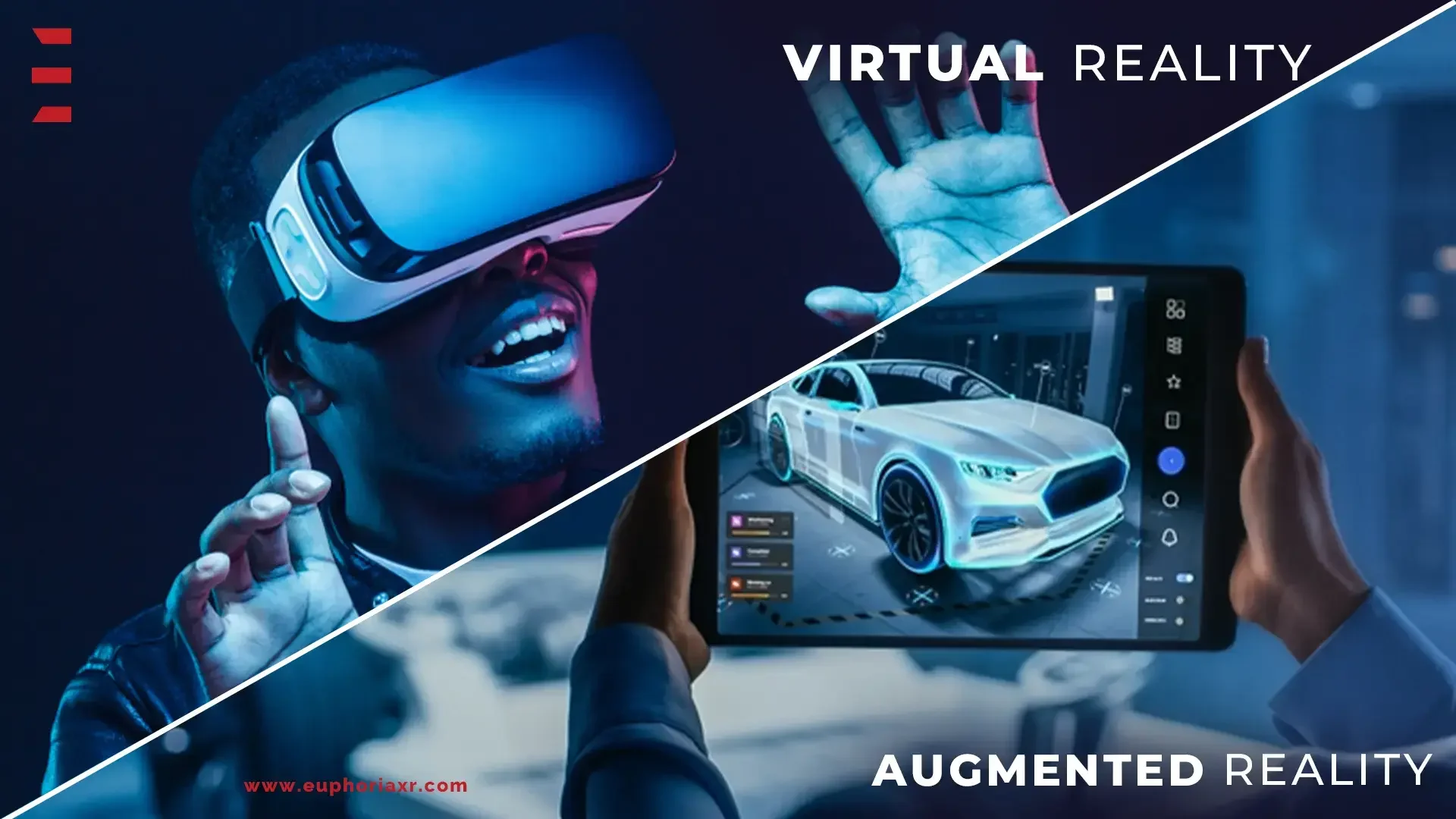
Before diving into its impact on education, it’s important to understand what AR is. Unlike Virtual Reality (VR), which immerses users in a completely digital world, AR overlays digital content onto the physical world. Through devices like smartphones, AR glasses, or tablets, users can see and interact with digital information in real-time, within their environment. This creates a blend of the virtual and the real, enhancing the way we perceive and interact with the world.

For example, AR can display 3D models of historical artifacts, biological organisms, or even molecular structures in a classroom, which can be manipulated and explored by students. Unlike traditional methods that rely solely on imagination or static images in textbooks, AR allows learners to engage directly with digital representations of concepts, making learning more tactile and visual.

Virtual & Augmented Reality in Education: Transforming Learning Through  Immersive Technology

AR’s Role in Transforming Education

1. Enhanced Visual Learning

One of the most significant advantages of AR in education is its ability to enhance visual learning. Many students, especially those in the STEM fields (Science, Technology, Engineering, and Mathematics), find it challenging to comprehend abstract concepts when presented solely in text or 2D diagrams. For instance, understanding complex biological processes or mechanical systems can be daunting through textbook descriptions alone.

AR allows students to visualize these processes in 3D. Imagine studying the human circulatory system not through static images, but through a detailed 3D heart model that beats, pumps blood, and can be rotated and explored from every angle. This hands-on interaction helps solidify concepts by providing a more immersive and experiential understanding.

2. Interactive and Engaging Learning

Education is often criticized for being passive. Lectures can become monotonous, and textbook readings can feel disconnected from real-world applications. AR provides a bridge between theoretical knowledge and practical application by creating interactive, gamified experiences that engage students on multiple levels.

In history classes, for example, students could virtually visit ancient Rome or experience key moments in history by stepping into the shoes of historical figures. Through AR, students are no longer passive recipients of information but active participants in their learning journey. This sense of immersion is far more engaging than simply reading about history or watching a documentary.

3. Personalized Learning Experiences

Each student has a unique learning style. Some are visual learners, others auditory, and still others learn best by doing. One of the promises of AR is its ability to cater to these diverse learning needs. By offering interactive 3D models, auditory cues, and hands-on activities, AR allows teachers to customize lessons in ways that traditional methods cannot.

For instance, students who struggle with reading comprehension can use AR to interact with stories or scenarios, seeing the characters and settings come to life before them. This multimodal approach helps ensure that students of all learning preferences can engage with the material in a way that best suits them.

4. Bridging the Gap Between Classroom and Real World

One of the most exciting aspects of AR is its ability to bring the real world into the classroom and vice versa. By integrating the physical world with virtual content, AR allows students to bridge the gap between theoretical knowledge and real-world application.

Take the example of a chemistry class. Instead of merely learning about the periodic table on paper, students can use AR to visualize atomic structures, manipulate elements, and even observe chemical reactions happening right before their eyes. By seamlessly blending classroom theory with real-world interaction, AR makes learning feel relevant and applicable to students’ daily lives.

5. Collaboration and Social Learning

AR can also enhance collaboration in the classroom. Traditional group work often involves students discussing or working on problems together, but AR can take collaboration to the next level. With AR, students can work together on shared virtual objects or models, discussing and manipulating the virtual content in real time.

This type of collaborative learning encourages teamwork, communication, and problem-solving skills—essential competencies in today’s interconnected world. Whether it’s building a virtual ecosystem in biology class or designing a 3D engineering model, AR fosters an environment of shared knowledge creation.


Practical Applications of AR in Education

1. Interactive Textbooks

In the future, textbooks may no longer be confined to the pages of a book. Through AR, students could point their devices at a textbook, and instantly, supplementary content like videos, 3D models, and quizzes could appear, enhancing their learning experience. Instead of flipping through pages, students could interact with content in a more engaging and meaningful way.

2. Virtual Field Trips

Imagine a class of students studying marine biology who can’t travel to the ocean. Through AR, they could experience a virtual underwater ecosystem, interact with marine life, and even simulate underwater exploration—all from their classroom. This not only eliminates the need for expensive and logistically challenging field trips, but it also makes experiential learning possible for students who might otherwise never have the opportunity to explore these environments.

What is the Role of Augmented Reality in Education? - Sphere Technology  Holdings, Inc

3. Language Learning

For language learners, AR could provide immersive environments to practice vocabulary and conversational skills in real-world contexts. For example, students learning French could “walk” through a virtual Paris, interacting with objects and people in French. This immersive environment accelerates language acquisition by surrounding students with the target language in a meaningful, contextual setting.

4. Medical and Technical Training

In fields like medicine, engineering, and technical training, AR holds enormous promise. Medical students can practice surgeries on virtual patients before performing them in real life. Engineering students can explore complex mechanical systems or design prototypes in 3D. These applications allow students to gain practical experience without the risks associated with real-world practice.


Challenges and Considerations

Despite the promise of AR, its widespread adoption in education faces several challenges.

1. Access to Technology

AR requires specific hardware, such as smartphones, tablets, or AR glasses. While these devices are becoming more accessible, there are still significant barriers in many parts of the world. Without access to the necessary technology, students may be excluded from the benefits of AR-based learning.

2. Teacher Training

For AR to be effective, teachers must be trained to use AR tools and integrate them into their curricula. This requires investment in professional development and a shift in teaching methodologies, which may take time and resources.

3. Content Creation

The creation of high-quality, educational AR content is time-consuming and expensive. Educational publishers and tech companies must invest in developing the resources needed to ensure that AR tools are not only engaging but also pedagogically sound.


The Future of AR in Education

As AR technology continues to evolve, the possibilities for education are endless. We may see fully immersive, interactive classrooms where students engage with content in ways that were previously unimaginable. Virtual teachers or AI-driven tutors could help personalize learning experiences further, providing immediate feedback and tailored lessons to students based on their progress and needs.

Moreover, the integration of AR with Artificial Intelligence (AI), Internet of Things (IoT), and 5G networks could make learning even more connected and responsive. Imagine a classroom where all devices are interconnected, and learning experiences adapt in real-time based on student input and interaction.

However, to fully realize this vision, we must address the challenges of access, teacher preparedness, and content creation. Only with a concerted effort from educators, policymakers, and tech companies can AR truly become a transformative force in education.


Conclusion

Augmented Reality holds immense potential to redefine education. By enhancing visual learning, providing immersive experiences, and catering to diverse learning styles, AR promises to make education more engaging, interactive, and personalized. From interactive textbooks to virtual field trips and advanced medical training, the applications of AR in education are vast and exciting.

However, its successful integration into mainstream education will require overcoming challenges related to technology access, teacher training, and content development. If these hurdles are addressed, AR could be the key to unlocking a new era of learning that is more engaging, effective, and accessible for all.


Tags: 3D PrintingAIInnovationSustainability
ShareTweetShare

Related Posts

Will We Ever Live on Mars? And Should We?
Breakthroughs

Will We Ever Live on Mars? And Should We?

December 2, 2025
Are We on the Brink of a Green Energy Revolution?
Breakthroughs

Are We on the Brink of a Green Energy Revolution?

December 1, 2025
Can Mind-Controlled Technology Revolutionize Communication?
Breakthroughs

Can Mind-Controlled Technology Revolutionize Communication?

November 30, 2025
What If We Could 3D Print Human Organs?
Breakthroughs

What If We Could 3D Print Human Organs?

November 29, 2025
Can Autonomous Vehicles Surpass Human Drivers in Safety?
Breakthroughs

Can Autonomous Vehicles Surpass Human Drivers in Safety?

November 28, 2025
Genomic Editing the Key to Immortality?
Breakthroughs

Genomic Editing the Key to Immortality?

November 27, 2025
Leave Comment
  • Trending
  • Comments
  • Latest
Can Sustainability Drive Profits in Competitive Markets?

Can Sustainability Drive Profits in Competitive Markets?

October 17, 2025
Can the Spotlight Make or Break Your Career?

Can the Spotlight Make or Break Your Career?

October 14, 2025
Does the Spotlight Always Equal Success?

Does the Spotlight Always Equal Success?

October 16, 2025
Can the Spotlight Truly Capture the Essence of a Person?

Can the Spotlight Truly Capture the Essence of a Person?

October 16, 2025
Can Bionics Redefine Human Limitations?

Can Bionics Redefine Human Limitations?

Is Bionics the Future of Prosthetics?

Is Bionics the Future of Prosthetics?

Can We Truly Integrate Technology with Biology?

Can We Truly Integrate Technology with Biology?

How Close Are We to Creating Bionic Organs?

How Close Are We to Creating Bionic Organs?

How Can Spotlights Elevate Your Interior Design Game?

How Can Spotlights Elevate Your Interior Design Game?

December 2, 2025
Will We Ever Live on Mars? And Should We?

Will We Ever Live on Mars? And Should We?

December 2, 2025
Bionics: The Key to Human Immortality?

Bionics: The Key to Human Immortality?

December 2, 2025
How Can Data Privacy be Maintained in a Hyperconnected World?

How Can Data Privacy be Maintained in a Hyperconnected World?

December 2, 2025
CyberGait

Our content caters to engineers, researchers, and tech enthusiasts alike. Through focused articles on algorithms, biomimicry, and industry trends, we provide a comprehensive perspective on the future of movement, from laboratory breakthroughs to commercial products.

© 2025 cybergait.com. contacts:[email protected]

No Result
View All Result
  • Home
  • Bionics
  • Breakthroughs
  • Industry
  • Robotics
  • Spotlight

© 2025 cybergait.com. contacts:[email protected]

Welcome Back!

Login to your account below

Forgotten Password?

Retrieve your password

Please enter your username or email address to reset your password.

Log In