



The rise of robotics and artificial intelligence (AI) is no longer a distant concept confined to science fiction. These technological advances are beginning to significantly influence various sectors, and one of the most intriguing areas where their impact is becoming apparent is in the creative industries. From filmmaking and music production to fashion design and visual arts, robots and AI tools are transforming how art is created, produced, and consumed.
But are we truly ready for robots to shape our creative industries? While the potential is vast, the integration of robots into creative spaces presents a complex mix of opportunities, challenges, and ethical questions. As technology evolves, it’s essential to examine both the advantages and the drawbacks of this technological shift, and what it means for the future of creativity itself.
The Rise of AI and Robots in Creative Fields
A New Era in Artistic Creation
The involvement of machines in creative endeavors isn’t entirely new. Automation and technology have long played a role in the production of art, from the invention of the printing press to the development of graphic design software. However, in recent years, AI and robotics have advanced to the point where they are capable of not only assisting but also creating original works in their own right.
Robots and AI can now paint, compose music, write stories, and even produce films. These tools work by analyzing vast amounts of data from human-created works and then generating new pieces based on learned patterns. AI-generated art, for instance, has gained significant attention for its ability to create works that are indistinguishable from those produced by human artists. A well-known example is the portrait “Edmond de Belamy,” created by the Paris-based art collective Obvious using a machine-learning algorithm, which was sold at Christie’s for over $432,000 in 2018.
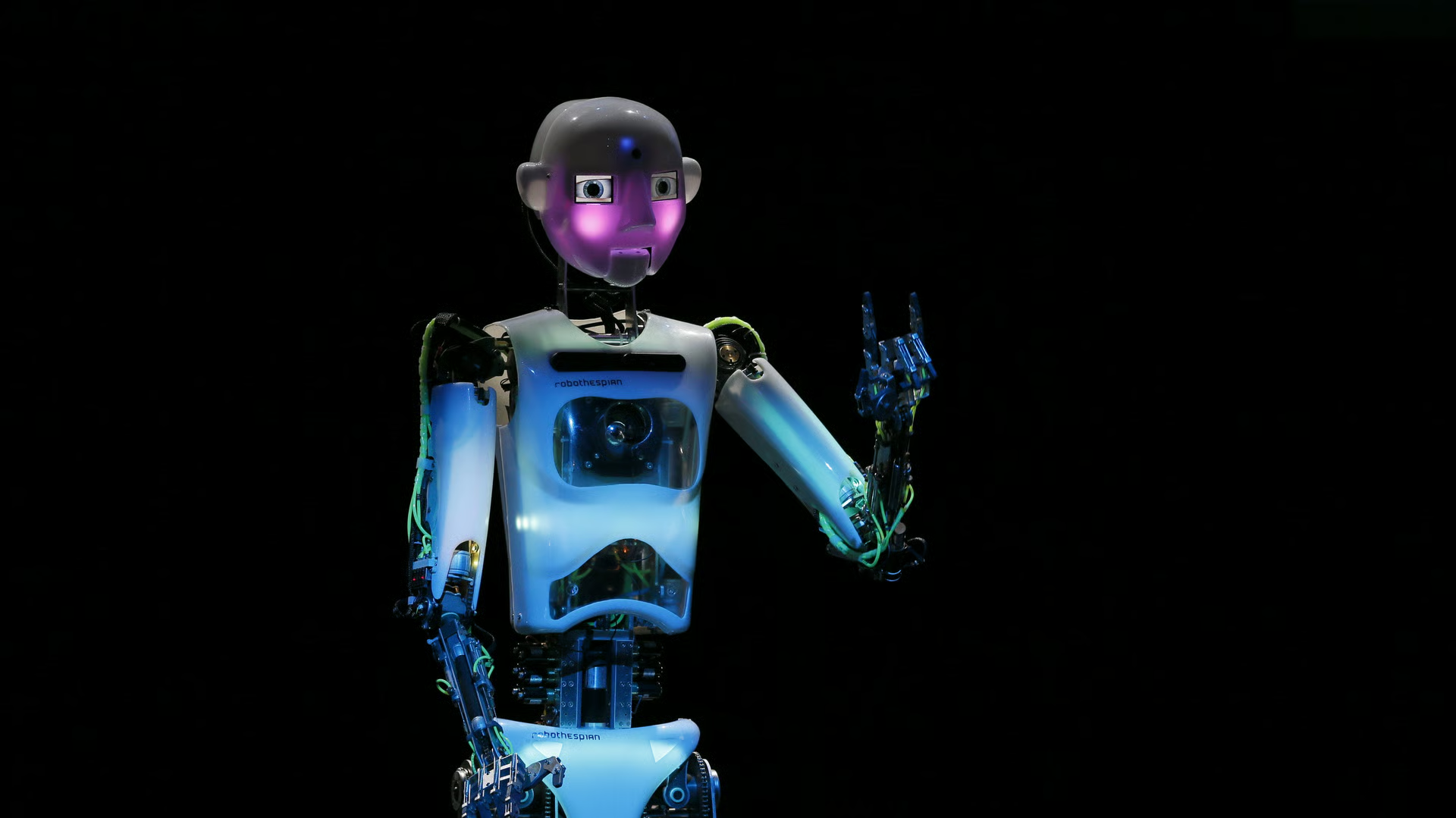
Music composition is another area where robots are gaining ground. AI music generators like OpenAI’s Jukedeck or Amper Music can produce entire songs from scratch, while robotic performers—such as the Shimon robot, capable of creating jazz music—are pushing the boundaries of what it means to collaborate with technology.
AI as a Creative Tool, Not a Replacement
In many creative industries, AI and robots are being viewed less as competitors and more as collaborators. Instead of replacing human creators, these technologies augment their abilities, streamline their workflows, and open up new realms of possibility. In fields like fashion design, AI can analyze trends, predict consumer preferences, and suggest new styles or cuts, empowering designers to create more relevant and innovative collections.
For filmmakers, AI-driven tools can assist in storyboarding, video editing, and visual effects. In fact, AI is already being used in Hollywood to help with tasks like script analysis and optimizing marketing campaigns for movies. These tools provide valuable insights that help creatives make informed decisions, ultimately leading to more efficient production processes and innovative outcomes.
Even in the realm of literature, AI-generated writing is showing potential. While some might argue that a computer cannot replace the nuance and emotional depth of a human writer, AI tools like GPT-3 are already capable of generating complex narratives and stories, offering inspiration or even producing entire novels. These advancements are raising important questions about authorship, originality, and the nature of creativity itself.

The Advantages of Robots in Creative Industries
Efficiency and Speed
One of the most obvious benefits of integrating robots and AI into creative industries is the enhanced efficiency and speed they offer. Tasks that traditionally took days or even weeks—such as editing a video or composing a piece of music—can now be completed in a fraction of the time. For commercial industries where time is money, this can lead to significant cost savings and faster time-to-market.
In fields like architecture and industrial design, robots can quickly prototype physical models, allowing designers to test out ideas and adjust designs without the need for lengthy manual processes. The same is true in film and animation, where AI can assist with rendering and visual effects, reducing the time needed for post-production work.
Expanding Creative Boundaries
Another key benefit is the way robots and AI can push the boundaries of creativity itself. Artists who incorporate AI into their workflows often describe it as a tool that inspires new ideas and opens doors to novel creative approaches. Rather than following predictable patterns, AI-generated content can offer unexpected results that push the artist to think in new ways.
For example, in visual arts, AI can generate new color palettes, compositions, and styles that artists might not have considered. By collaborating with AI, creatives can experiment with forms and techniques that challenge traditional artistic conventions, leading to the birth of entirely new genres or styles.
Accessibility and Democratization of Creativity
Robots and AI are also making creative tools more accessible to a wider audience. With AI-powered platforms, even individuals without formal artistic training can create complex visual works, write scripts, or compose music. This democratization of creativity could potentially reshape entire industries by lowering the barriers to entry and empowering a new generation of creators.
Music and video production tools, for example, have become increasingly user-friendly, allowing anyone with a smartphone or computer to create professional-quality content. In the art world, AI-driven tools like DeepArt and Artbreeder enable users to turn their ideas into artworks without needing to master the traditional techniques of painting or drawing.
The Ethical Implications of AI in Creativity
The Question of Authorship and Ownership

As AI-generated works become more prevalent, a major ethical dilemma arises: who owns the rights to a work created by a robot or AI? In traditional creative industries, ownership of intellectual property is usually attributed to the individual or entity that created the work. But in the case of AI, the line between creator and tool becomes blurred. If a robot creates a piece of music or a painting, who holds the copyright?
Currently, many legal frameworks don’t account for AI-generated works, and some argue that this could lead to conflicts over intellectual property rights. If robots are creating works autonomously, does the creator of the AI have the right to claim ownership? Or is it the company that developed the AI? Or should AI-generated works be considered public domain, free for anyone to use and adapt?
Job Displacement and the Future of Employment
The rise of AI in creative fields also raises concerns about job displacement. As robots become more capable of producing high-quality creative works, what does this mean for human creators? Could artists, musicians, and designers find their jobs at risk, replaced by faster, cheaper, and more efficient machines?
While some argue that AI will never fully replace human creativity and intuition, others are concerned that the automation of creative processes could lead to job losses, particularly in roles related to routine tasks such as video editing, graphic design, and music production. In these fields, AI may already be capable of performing many tasks, leaving fewer opportunities for humans to fill.
At the same time, new jobs may be created in the form of AI management, data analysis, and the development of new creative technologies. However, as with any technological disruption, there will likely be a period of adjustment, during which those in affected industries may face challenges as they transition to new roles.
The Risk of Homogenization
Another concern is the risk of homogenization. If AI is trained on data sets derived from existing human-created works, there is a danger that it may reinforce existing trends and styles, leading to a lack of diversity in creative output. In the art world, for example, AI-generated works that rely on past data may end up mimicking old styles, rather than pushing the envelope with fresh, innovative ideas.
Creativity, by its nature, thrives on diversity of thought, expression, and experience. If robots and AI are only drawing from the same sources of inspiration, there is a risk that creativity will become formulaic and predictable. It is crucial that AI and robots are used in ways that encourage diversity and fresh perspectives, rather than simply replicating what has already been done.
Looking to the Future: How Can We Prepare?
As we move forward, there are several steps we can take to ensure that robots and AI contribute positively to the creative industries.
Embrace Technology, But Preserve Human Input
Rather than seeing robots as a threat to creativity, we should view them as valuable tools that can enhance the creative process. The key is to strike a balance between human ingenuity and technological innovation. Human creators must remain at the center of the creative process, using AI as a tool to unlock new possibilities and refine their work. Collaboration, not competition, should be the guiding principle.
Develop Ethical Guidelines and Frameworks
As AI becomes more integrated into creative industries, it is essential to develop ethical guidelines and frameworks that address issues like authorship, ownership, and job displacement. These guidelines should ensure that the rights of human creators are protected, while also fostering an environment where technology can be used to benefit society as a whole.
Education and Reskilling
To address concerns about job displacement, education and reskilling will be key. Creative professionals will need to adapt to new technologies, learning how to use AI and robotics in their workflows, while also developing skills that machines cannot replicate, such as emotional intelligence and critical thinking.
Conclusion: The Creative Future is Hybrid
The integration of robots and AI into the creative industries is inevitable, but the future of creativity will not be a simple binary of human versus machine. Instead, it will be a hybrid model where humans and robots collaborate to push the boundaries of what is possible. By embracing the potential of AI and robotics, while also addressing the ethical and social challenges they present, we can build a future where creativity flourishes, fueled by the power of both human imagination and technological innovation.